
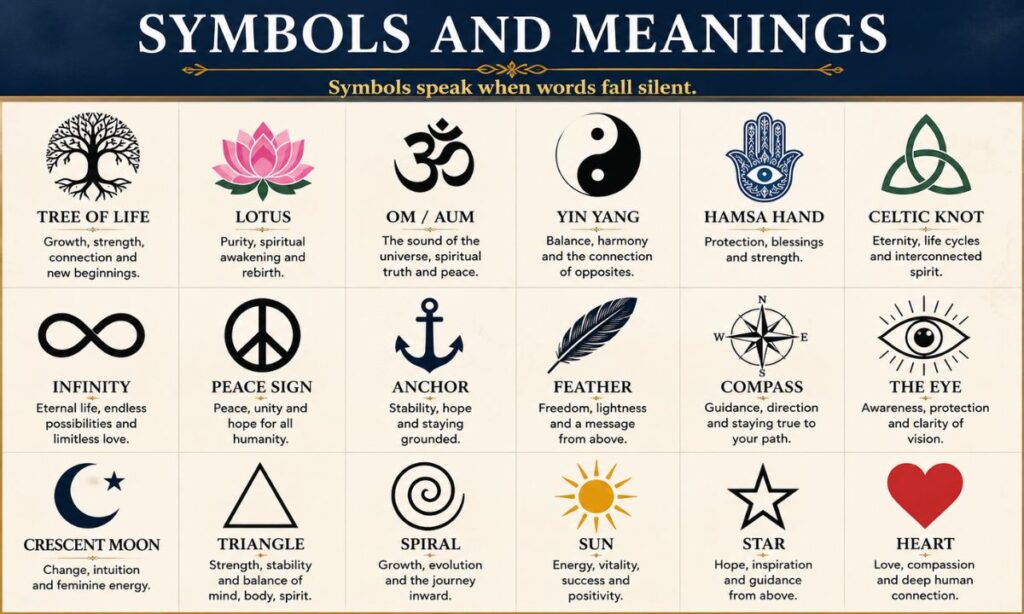
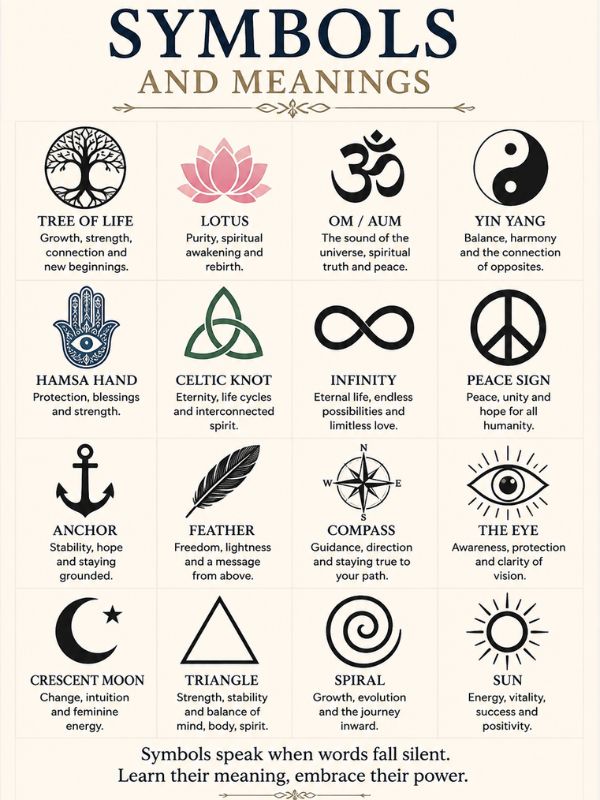
Symbols and Meanings Buddhist symbols have been used for thousands of years. They carry deep meaning and quiet wisdom. Each symbol tells a story about the path to peace. Some represent the Buddha’s teachings directly. Others reflect nature, purity, and balance. Together, they form a rich visual language of faith.
In this guide, you will discover over 90 Buddhist symbols. Each one holds its own special meaning. Some symbols offer protection from harm. Others invite calmness and inner clarity. You will learn what they represent in daily life. This knowledge can deepen your spiritual understanding
☸️What Are Buddhist Symbols and Meanings?☸️🪷🛞🐚
- Buddhist symbols are visual images that carry deep spiritual meaning and represent core teachings of the Buddha’s path.
- Each symbol reflects a specific idea such as purity, wisdom, compassion, or the journey toward enlightenment itself.
- Practitioners use these symbols in temples, homes, art, and personal jewelry to stay connected to Buddhist values daily.
- The lotus flower represents purity rising from muddy water, showing that beauty can emerge from difficult circumstances and struggle.
- The dharma wheel symbolizes the Buddha’s teachings and the eightfold path leading practitioners toward liberation from suffering.
- Many symbols originated in ancient India and later spread across Asia, adapting to local cultures and traditions.
- Buddhist symbols are not worshipped as idols but serve as reminders of deeper truths about existence, impermanence, and inner peace.
- They appear in mandalas, statues, paintings, and everyday objects used during meditation and prayer practices.
- Understanding these symbols helps both practitioners and curious observers appreciate the philosophy behind Buddhist art and ritual.
- Colors, shapes, and numbers within each symbol often hold additional layered meanings worth exploring further.
- Ultimately, these symbols act as bridges between abstract spiritual concepts and tangible everyday reminders of mindful living.
☸️Understanding Buddhist Symbols And Their Deep Meanings☸️🪷🛞🐚
- Buddhist symbols carry layered meanings that go far beyond their simple visual appearance, rooted in centuries of philosophical tradition.
- Each symbol often represents multiple concepts simultaneously, such as compassion, wisdom, protection, and the impermanent nature of life.
- The eight auspicious symbols, known as Ashtamangala, are frequently studied together because they complement each other’s teachings.
- Scholars trace many symbols back to pre-Buddhist Indian traditions that were later reinterpreted through a Buddhist philosophical lens.
- Depth in meaning also comes from regional interpretation, since Tibetan, Zen, and Theravada traditions emphasize different aspects of the same image.
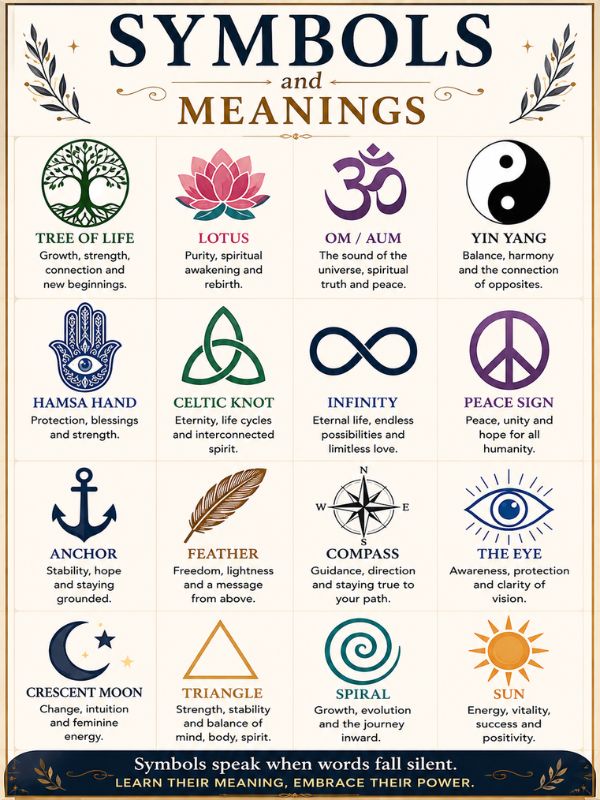
- Symbols and Meanings
- Color choices within symbols, like gold for enlightenment or white for purity, add further symbolic weight to artwork.
- Numbers matter too, since repeated patterns like eight spokes or lotus petals reference specific teachings and stages.
- Studying these symbols deeply requires looking at historical context, regional variation, and the personal experience of practitioners.
- Many symbols evolved gradually, absorbing new meanings as Buddhism traveled through China, Japan, Thailand, and Tibet.
- This layered complexity is part of why Buddhist symbolism remains a rich subject for ongoing study and reflection.
- True understanding comes from combining textual study with observation of how symbols function in real practice.
- Symbols and Meanings
☸️What Are The 8 Symbols Of Buddhism?☸️🪷🛞🐚
- The eight auspicious symbols, called Ashtamangala, form one of the most recognized groups in Buddhist iconography and teaching.
- The lotus flower represents purity and spiritual awakening rising above the muddy waters of worldly attachment and suffering.
- The dharma wheel, or dharmachakra, symbolizes the Buddha’s teachings and the path toward enlightenment through right action.
- The endless knot represents the interconnected nature of all things, showing how wisdom and compassion are linked.
- The parasol symbolizes protection from harmful forces and represents royal dignity within spiritual and worldly life.
- The golden fish pair represents freedom, fearlessness, and living without obstruction, much like fish swimming freely in water.
- The victory banner symbolizes triumph over ignorance, obstacles, and negative forces that block spiritual progress and growth.
- The treasure vase represents spiritual and material abundance, holding endless wealth that never diminishes despite constant use.
- The conch shell symbolizes the far-reaching sound of the dharma teachings spreading across the world to awaken beings.
- Together, these eight symbols create a complete visual summary of core Buddhist values and teachings for practitioners.
- Symbols and Meanings
- Symbols and Meanings
🌀 Popular Buddhist Symbols And Their Uses In Daily Life🏯🛕
- Many Buddhist symbols appear in everyday objects, helping practitioners stay mindful of spiritual values throughout ordinary daily routines.
- The lotus flower is commonly used in home decor, artwork, and jewelry as a reminder of purity and resilience.
- Prayer flags featuring symbols and mantras are hung outdoors, believed to spread blessings and positive energy through the wind.
- Malas, or prayer beads, often feature small symbolic charms used during meditation to count mantras and maintain focus.
- Buddha statues placed in homes or gardens serve as visual anchors for meditation, reflection, and daily spiritual practice.
- The dharma wheel appears on flags, clothing, and temple architecture as a constant reminder of the Buddhist path.
- Endless knot designs are popular in textiles, showing the interconnectedness of actions and their consequences in life.
- Symbols and Meanings
- Singing bowls, often decorated with symbolic engravings, are used for sound meditation and creating a calming atmosphere.
- Many people wear symbolic jewelry like lotus pendants or dharma wheel rings to carry reminders throughout their day.
- These everyday uses keep ancient teachings relevant and accessible within modern, fast-paced daily life.
Buddhist Symbols And Meanings For Tattoos🐍 🐢 🦌 🕉️
- Buddhist symbols have become increasingly popular tattoo choices because they carry meaningful, personal, and spiritually significant messages for wearers.
- The lotus flower tattoo often represents personal growth, resilience, and rising above hardship despite difficult life circumstances faced.
- Dharma wheel tattoos symbolize commitment to a spiritual path and a reminder to follow ethical, mindful living daily.
- Om symbol tattoos represent the sound of the universe and are associated with meditation, unity, and inner peace.
- Bodhi leaf tattoos reference the tree under which Buddha achieved enlightenment, symbolizing awakening and spiritual clarity.
- Endless knot tattoos represent the interconnected nature of life, choices, and the cycle of cause and effect.
- Many people choose small, minimalist symbol tattoos as subtle personal reminders of mindfulness and inner calm.
- Symbols and Meanings
- Placement often matters too, with wrists, forearms, and backs being popular spots for visible daily reminders.
- Before getting a Buddhist symbol tattoo, understanding its true meaning helps avoid unintentional disrespect toward the tradition.
- Symbols and Meanings
- Choosing a tattoo artist familiar with Buddhist iconography ensures accurate, respectful, and meaningful representation of the chosen symbol.
Buddhist Symbols And Their Meanings🐍 🐢 🦌 🕉️
- Buddhist symbols each carry distinct meanings that reflect core teachings about suffering, compassion, wisdom, and the path to liberation.
- The lotus represents purity emerging from difficulty, while the dharma wheel represents the Buddha’s teachings and eightfold path.
- The Bodhi tree symbolizes enlightenment itself, referencing the exact tree under which Buddha achieved awakening.
- The endless knot shows interconnectedness, illustrating how every action and choice ripples outward through interconnected existence.
- The parasol represents protection from suffering, while the treasure vase symbolizes limitless spiritual and material abundance available.
- The golden fish represent freedom and fearlessness, moving effortlessly through life’s challenges without becoming trapped or stuck.
- The victory banner symbolizes overcoming obstacles, ignorance, and negative influences on the path toward enlightenment.
- The conch shell represents the spreading of dharma teachings, awakening beings across distant lands through sound.
- Symbols and Meanings
- Om, though pre-Buddhist in origin, is widely used to represent universal sound, unity, and meditative focus.
- Together these symbols form a rich visual language expressing the depth of Buddhist philosophy and practice.
Buddhist Symbol For Inner Peace🌳 🌙 ☀️ ⭐
- The lotus flower stands as one of the strongest symbols representing inner peace within Buddhist tradition and daily practice.
- Rising clean from muddy water, it represents how calm clarity can emerge despite surrounding chaos and difficulty.
- The dharma wheel also relates to inner peace, since following its eightfold path leads toward reduced suffering.
- Meditation postures depicted in Buddha statues, with closed eyes and relaxed hands, visually represent achievable stillness and calm.
- The color white frequently symbolizes purity and peaceful clarity within Buddhist artwork, robes, and architectural design choices.
- Singing bowls are often used alongside these symbols, producing calming sounds that support meditative, peaceful states of mind.
- The Bodhi leaf, referencing Buddha’s enlightenment, also represents the peaceful clarity that follows genuine spiritual awakening.
- Many practitioners keep a small lotus statue or image nearby as a visual anchor during meditation sessions.
- Symbols and Meanings
- Wearing lotus-themed jewelry serves as a portable reminder to return to calm, centered awareness throughout the day.
- These symbols collectively encourage practitioners to seek stillness amid the natural chaos of everyday modern life.
Enlightenment Symbols And Meanings📿 🙏 🧘 🧘♂️
- Enlightenment symbols in Buddhism visually represent the awakened state achieved by the Buddha and sought by practitioners everywhere.
- The Bodhi tree is the most direct symbol, referencing the exact tree under which Buddha reached enlightenment.
- The lotus flower also represents enlightenment, showing spiritual blossoming that rises above worldly attachment and confusion.
- Golden light or a halo around Buddha statues visually represents the radiant clarity achieved through complete spiritual awakening.
- The dharma wheel represents enlightenment through teaching, since Buddha’s first sermon set the wheel of dharma turning.
- An empty circle, sometimes used in Zen art, represents enlightenment as boundless, formless, and beyond conceptual description.
- The Buddha’s hand gestures, called mudras, often symbolize specific moments connected to his enlightenment and teaching journey.
- Flames or radiant light patterns sometimes surround sacred images, representing wisdom burning away ignorance and confusion.
- Symbols and Meanings
- Many enlightenment symbols emphasize transformation, showing a clear before-and-after shift from suffering toward clarity and peace.
- Together, these symbols remind practitioners that enlightenment remains an achievable, ongoing goal within committed spiritual practice.
Enlightenment Buddhist Symbols🔻 ⭕ ♾️ 🌀
- Several distinct symbols within Buddhism specifically represent the concept and pursuit of enlightenment across different traditions and regions.
- The Bodhi tree remains central, marking the physical location where Siddhartha Gautama became the enlightened Buddha.
- The lotus flower represents the blossoming of wisdom, rising unstained above the muddy waters of ignorance and desire.
- The dharma wheel represents enlightenment shared through teaching, spreading awakened wisdom to others through structured guidance.
- Mudras, or hand gestures, on Buddha statues often depict specific enlightenment-related moments like touching the earth.
- The Bodhi leaf, shaped distinctly, is used separately from the tree to represent enlightenment in simplified artistic form.
- Radiant halos in traditional artwork symbolize the inner light believed to emanate from an enlightened, awakened being.
- Symbols and Meanings
- The number eight appears frequently, referencing the eightfold path that leads practitioners toward enlightenment and lasting peace.
- Empty circles, common in Zen calligraphy, represent enlightenment as vast, complete, and beyond ordinary conceptual limitation.
- These symbols together create a visual vocabulary for describing an experience that words alone struggle to capture.
What Does The Buddhist Symbol Mean?☸ ॐ ☯ 🔱
- The meaning of a Buddhist symbol depends heavily on which specific symbol is being referenced within the broader tradition.
- The lotus generally means purity and spiritual growth rising above difficulty, mud, and worldly attachment or confusion.
- The dharma wheel means the Buddha’s teachings and the structured eightfold path leading toward liberation from suffering.
- The endless knot means interconnectedness, showing how every choice and action links to broader consequences over time.
- Symbols and Meanings
- The Bodhi leaf means enlightenment, directly referencing the tree under which Buddha achieved spiritual awakening centuries ago.
- The conch shell means the spread of dharma teachings, awakening listeners the way sound travels across great distances.
- The treasure vase means abundance, representing endless spiritual wealth that never depletes no matter how much is given.
- The parasol means protection, shielding beings from suffering, harmful forces, and negative spiritual influences along their path.
- The golden fish mean freedom and fearlessness, symbolizing the ability to move through life without becoming trapped.
- Understanding each symbol individually helps clarify the specific message intended within Buddhist artwork and teaching materials.
Tibetan Buddhist Symbols And Meanings☸️ 🪷 🛞 🐚
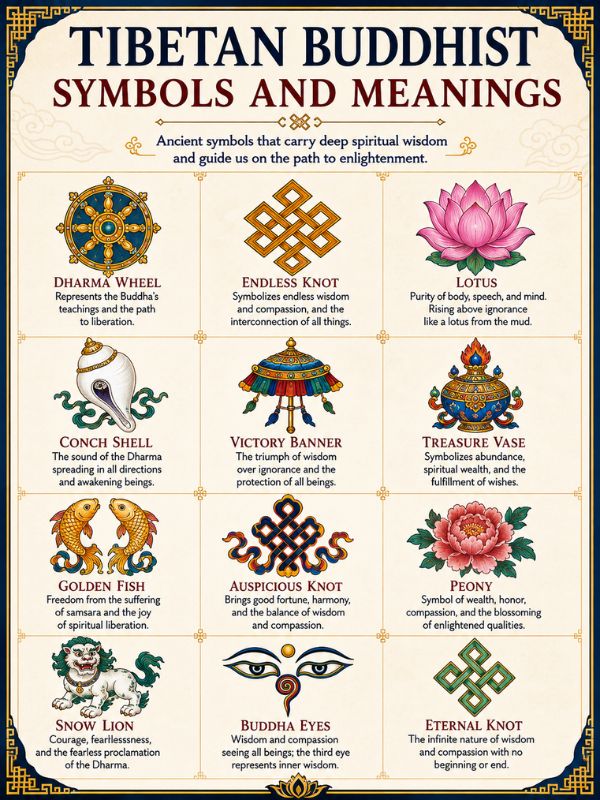
- Tibetan Buddhism features a rich collection of symbols, many drawn from the eight auspicious signs known as Ashtamangala.
- The endless knot is especially prominent in Tibetan art, representing interconnected wisdom, compassion, and the nature of causality.
- Prayer flags, printed with symbols and mantras, are strung outdoors and believed to carry blessings on the wind.
- The vajra, a ritual thunderbolt symbol, represents indestructible wisdom capable of cutting through ignorance and confusion instantly.
- Mandalas are central to Tibetan practice, representing the universe and used as tools for meditation and visualization.
- The wheel of life, or bhavachakra, illustrates the cycle of rebirth and the causes leading to continued suffering.
- Symbols and Meanings
- Snow lions, unique to Tibetan symbolism, represent fearlessness, joy, and the unconditioned state of an enlightened mind.
- Stupas, architectural structures shaped symbolically, represent Buddha’s enlightened mind and often contain sacred relics inside.
- The double dorje, or crossed vajra, symbolizes stability and the indestructible foundation of Buddhist teaching.
- These symbols together reflect Tibetan Buddhism’s unique blend of ritual, philosophy, and vivid visual storytelling tradition.
Strength Buddhist Symbols And Meanings🔥 💎 🌸 🌺
- Several Buddhist symbols specifically represent inner strength, resilience, and the courage needed to face life’s ongoing challenges.
- The lotus flower represents strength through resilience, blooming beautifully despite growing from muddy, difficult, and unclean conditions.
- The vajra symbolizes indestructible strength, representing a mind so clear it cannot be shaken by confusion or doubt.
- The snow lion, found in Tibetan tradition, represents fearless strength combined with joyful, confident, and unconditioned energy.
- The endless knot represents the strength found in resilience and interconnected support, showing no struggle is faced alone.
- Mount Meru, referenced in Buddhist cosmology, symbolizes immovable strength and stability at the center of existence itself.
- Symbols and Meanings
- The dharma wheel represents the strength of consistent practice, turning steadily forward despite obstacles along the path.
- Bodhisattva figures, depicted with calm strength, represent the courage required to help others despite personal hardship faced.
- The victory banner symbolizes strength gained through overcoming ignorance, fear, and negative obstacles on the spiritual path.
- These strength-related symbols remind practitioners that true power comes from calm, steady, and compassionate inner resolve.
Enlightenment Buddhist Symbols And Meanings🌈 💧 🏔️ 🪔
- Enlightenment-focused symbols within Buddhism illustrate the transformative journey from confusion and suffering toward clarity and lasting peace.
- The Bodhi tree remains the most direct representation, marking the exact site of Buddha’s historic spiritual awakening.
- The lotus flower represents enlightenment as a natural unfolding, blossoming gradually above the muddy waters of daily struggle.
- The dharma wheel represents enlightenment shared outward, spreading Buddha’s teachings to guide others toward the same clarity.
- Mudras depicted in statues capture specific enlightenment moments, such as touching the earth as a witness.
- Golden halos surrounding sacred figures represent the radiant inner light believed to accompany true spiritual awakening.
- Symbols and Meanings
- The number eight, referencing the eightfold path, appears throughout enlightenment symbolism as a roadmap toward liberation.
- Empty circles used in Zen tradition represent enlightenment as complete, boundless, and impossible to fully capture in words.
- Flames sometimes surround images, symbolizing wisdom actively burning away layers of ignorance and delusion over time.
- Together, these symbols express both the process and the achieved state of full spiritual enlightenment.
Zen Buddhist Symbols And Meanings🧘♀️ 🕯️ ⚜️ 🔶
- Zen Buddhism favors minimalist, simple symbols that reflect its emphasis on direct experience over elaborate ritual or explanation.
- The enso, a hand-drawn circle, represents enlightenment, the universe, and the beauty found in imperfection and impermanence.
- Bamboo frequently appears in Zen art, symbolizing flexibility, resilience, and quiet strength found through simplicity and restraint.
- Rock gardens, though not symbols in the traditional sense, represent stillness, balance, and mindful attention to present awareness.
- The empty bowl symbolizes non-attachment and simplicity, reflecting the Zen value of letting go of excess desire.
- Symbols and Meanings
- Tea ceremonies incorporate symbolic gestures representing mindfulness, respect, and full presence within each simple, deliberate action.
- The moon is a common Zen symbol, representing enlightenment reflected clearly on a calm, undisturbed surface of water.
- Cherry blossoms symbolize impermanence, reminding practitioners that beauty and life are fleeting, temporary, and worth appreciating fully.
- Calligraphy brushstrokes themselves become symbolic, representing spontaneous, unforced expression flowing directly from a focused, present mind.
- These minimalist symbols reflect Zen’s core value of finding profound meaning within simple, everyday moments.
Thai Buddhist Symbols And Meanings🧿 🪷 🌊 🐚
- Thai Buddhism blends traditional Buddhist symbols with distinct local artistic styles, colors, and culturally specific interpretations throughout the country.
- The Buddha statue itself varies regionally, often depicted in the distinctive “calling the earth to witness” seated posture.
- Golden stupas, called chedis, are common throughout Thailand, representing enlightenment and often housing sacred relics inside them.
- The naga, a mythical serpent, appears frequently in Thai temple architecture, symbolizing protection and guardianship over sacred spaces.
- Symbols and Meanings
- Saffron-colored robes worn by monks symbolize simplicity, humility, and detachment from material possessions and worldly status.
- The lotus remains prominent in Thai symbolism, often used in offerings placed before Buddha statues during daily worship.
- Amulets featuring symbolic images are widely worn in Thailand, believed to offer protection and spiritual blessing to wearers.
- Temple murals often depict the Buddha’s life story, using symbolic scenes to teach moral and spiritual lessons visually.
- The wheel of dharma appears on Thai flags and temple decorations, representing the spread of Buddhist teaching.
- Symbols and Meanings
- These distinctly Thai interpretations show how core Buddhist symbols adapt within specific cultural artistic traditions.
Tattoo Buddhist Symbols And Meanings🛕 🏯 ☸ ॐ ☯
- Tattoo enthusiasts often choose Buddhist symbols for their deep spiritual meaning, aesthetic beauty, and personal significance in daily life.
- The lotus tattoo represents resilience and purity, symbolizing personal growth despite facing difficult or muddy life circumstances.
- The Bodhi leaf tattoo references Buddha’s enlightenment, often chosen to represent a personal moment of clarity or awakening.
- Om symbol tattoos represent universal sound and unity, popular among those drawn to meditation and mindful living practices.
- The dharma wheel tattoo symbolizes commitment to ethical living and a structured path toward reduced suffering and peace.
- Small mandala tattoos represent wholeness and the interconnected nature of the universe, often chosen for their intricate detail.
- Endless knot tattoos symbolize how life’s choices remain interconnected, reminding wearers that actions carry lasting consequences.
- Buddha face tattoos, though sometimes controversial, are chosen by some to represent peace, wisdom, and calm reflection.
- Placement and size matter culturally, since respectful placement avoids areas considered inappropriate within Buddhist tradition and belief.
- Researching accurate meanings before tattooing ensures the chosen symbol authentically represents the wearer’s intended spiritual message.
List Of Buddhist Symbols And Meanings🦁 🐍 🐢 🦌
- A comprehensive list of Buddhist symbols includes the lotus, dharma wheel, Bodhi tree, and the eight auspicious Ashtamangala signs.
- The lotus flower represents purity and spiritual growth, rising clean above muddy, difficult, and challenging worldly conditions.
- The dharma wheel represents Buddha’s teachings and the eightfold path leading practitioners toward liberation from suffering.
- The Bodhi tree marks the exact site of Buddha’s enlightenment, symbolizing awakening and spiritual clarity achieved.
- The endless knot represents interconnectedness, showing how every action ripples outward through cause and effect relationships.
- The parasol represents protection from harmful forces, while the treasure vase symbolizes limitless spiritual and material abundance.
- The golden fish represent freedom and fearlessness, while the victory banner symbolizes triumph over ignorance and ego.
- The conch shell represents the spreading of dharma teachings across distances, awakening listeners through powerful sound.
- The vajra, common in Tibetan tradition, represents indestructible wisdom capable of cutting through confusion instantly.
- This foundational list provides a helpful starting point for anyone exploring Buddhist symbolism and iconography further.
Family Buddhist Symbols And Meanings🌳 🌙 ☀️ ⭐
- Certain Buddhist symbols carry meanings closely connected to family unity, protection, harmony, and interconnected relationships between loved ones.
- The endless knot represents family bonds especially well, showing how lives remain interconnected across generations and time.
- The lotus flower can represent family growth, since multiple blossoms often emerge together from a single connected root system.
- The treasure vase symbolizes shared abundance, representing prosperity and blessings meant to be shared among family members.
- The parasol represents protection extended over loved ones, shielding family members from harm and negative outside influences.
- Prayer flags are often hung by families together, believed to send blessings and positive intentions toward loved ones.
- The wheel of life illustrates interconnected relationships and shared karma between family members across different lifetimes and generations.
- Buddha statues placed in family homes serve as shared reminders of compassion, patience, and mindful daily interaction.
- The double happiness symbol, though originally Chinese, is sometimes used alongside Buddhist imagery to represent family harmony.
- These symbols collectively encourage families to nurture patience, compassion, and mutual support within their shared daily lives.
Inner Strength Buddhist Symbols And Meanings🙏 🧘 🧘♂️
- Inner strength within Buddhism is represented through symbols emphasizing resilience, unshakeable calm, and courage during difficult life circumstances.
- The vajra represents indestructible inner strength, symbolizing a mind so clear it remains unshaken by doubt or confusion.
- The lotus represents strength through quiet resilience, blooming beautifully despite growing from muddy, difficult, and unclean conditions.
- The snow lion, found in Tibetan symbolism, represents fearless, joyful strength combined with confident and unconditioned inner energy.
- Mount Meru symbolizes immovable strength and stability, referenced in Buddhist cosmology as the center of existence itself.
- The endless knot represents strength drawn from interconnected support, reminding practitioners that struggles are never faced entirely alone.
- Bodhisattva figures depicted with calm expressions represent the quiet strength required to help others despite personal hardship.
- The dharma wheel represents strength found in consistent practice, moving steadily forward regardless of obstacles encountered along the way.
- The victory banner symbolizes strength gained through overcoming ignorance, fear, and negative influences on the spiritual path.
- These symbols collectively remind practitioners that lasting strength comes from calm, steady, compassionate inner resolve.
Protection Buddhist Symbols And Meanings⭕ ♾️ 🌀
- Protection is a common theme across Buddhist symbolism, represented through several distinct images used in art and ritual.
- The parasol symbolizes protection from suffering, harmful forces, and negative spiritual influences along a practitioner’s chosen path.
- The vajra represents protective, indestructible wisdom capable of cutting through confusion, fear, and harmful negative energy instantly.
- The naga, a mythical serpent found in many Buddhist traditions, symbolizes guardianship over sacred spaces and temples.
- Protective amulets, often inscribed with symbolic images or mantras, are worn to invite blessings and ward off harm.
- Prayer flags are believed to send protective blessings outward on the wind, benefiting both the wearer and others.
- The conch shell, besides representing teaching, is also believed to offer protective, awakening sound against negative influences.
- Guardian statues placed at temple entrances symbolically protect sacred spaces from harmful or disruptive outside forces.
- The double vajra symbolizes stability and protective strength, representing an unshakeable foundation against confusion and doubt.
- These protective symbols collectively offer practitioners a sense of spiritual safety throughout daily life and practice.
Inner Peace Buddhist Symbols And Meaningsॐ ☯ 🔱
- Inner peace within Buddhism is frequently represented through calm, balanced symbols emphasizing stillness, clarity, and mindful daily awareness.
- The lotus flower remains central here, representing peaceful clarity rising above the muddy chaos of everyday worldly struggle.
- The color white throughout Buddhist art symbolizes purity and peaceful calm, often used in robes, statues, and temple design.
- Meditative Buddha postures, with closed eyes and relaxed hands, visually represent an achievable and grounded inner stillness.
- Singing bowls produce calming tones that support meditative peace, often used alongside symbolic imagery during quiet practice.
- The enso circle in Zen tradition represents peaceful acceptance of imperfection, impermanence, and the present moment fully.
- The Bodhi leaf represents the peaceful clarity that follows genuine spiritual awakening and sustained mindful practice over time.
- Water imagery, including calm lakes or gentle streams, symbolizes the undisturbed clarity associated with a peaceful mind.
- Wearing lotus-themed jewelry offers a small, portable reminder to return to calm awareness throughout a busy day.
- These peaceful symbols collectively encourage stillness amid the natural noise and chaos of modern daily life.
Theravada Buddhist Symbols And Meanings🐍 🐢 🦌 🕉️
- Theravada Buddhism, practiced widely across Southeast Asia, emphasizes symbols closely tied to the historical Buddha’s original teachings and life.
- The Bodhi tree holds special significance, marking the precise location where Buddha achieved enlightenment under its branches.
- The dharma wheel represents the Buddha’s first sermon and the structured eightfold path central to Theravada practice.
- Golden stupas, common throughout Thailand, Sri Lanka, and Myanmar, represent enlightenment and often house sacred relics within.
- The alms bowl symbolizes monastic simplicity, humility, and dependence on community generosity within daily Theravada monastic life.
- Saffron robes worn by monks represent detachment from material possessions and commitment to a disciplined spiritual path.
- The lotus remains widely used in offerings, symbolizing purity and devotion placed before Buddha statues during worship.
- Footprints of the Buddha, carved symbolically into stone, represent his physical presence and lasting spiritual influence.
- The triple gem symbol represents the Buddha, the dharma teachings, and the monastic community, or sangha, together.
- These Theravada-specific symbols emphasize the tradition’s close connection to the historical Buddha and his original teachings.
Spiritual Buddhist Symbols And Meanings🌳 🌙 ☀️ ⭐
- Spiritual symbols within Buddhism represent abstract concepts like awakening, compassion, wisdom, and the interconnected nature of all existence.
- The lotus flower represents spiritual growth, rising clean above the muddy waters of confusion, desire, and worldly attachment.
- The dharma wheel represents the spiritual path itself, guiding practitioners through structured teachings toward liberation from suffering.
- The Bodhi tree represents spiritual awakening directly, marking the site of Buddha’s historic enlightenment experience centuries ago.
- Mandalas represent the spiritual universe in miniature, used as tools for meditation, visualization, and focused spiritual reflection.
- The endless knot represents spiritual interconnectedness, showing how compassion and wisdom remain linked throughout genuine practice.
- Om, though pre-Buddhist, is widely used to represent universal spiritual sound, unity, and meditative focused awareness.
- The vajra represents spiritual clarity so strong it can cut through confusion, doubt, and ignorance instantly.
- Prayer flags represent spiritual intention carried outward, believed to spread blessings across distances through natural wind.
- These spiritual symbols collectively form a visual language expressing ideas that words alone often struggle to capture.
Lotus Flower Buddhist Symbols And Meanings📿 🙏 🧘 🧘♂️
- The lotus flower stands among the most recognized and meaningful symbols within Buddhist art, teaching, and daily spiritual practice.
- It represents purity and spiritual growth, rising clean and beautiful above the muddy, difficult waters it grows within.
- Different lotus colors carry distinct meanings, with white representing purity and pink representing the historical Buddha himself.
- The lotus also represents non-attachment, since its petals remain unstained despite growing directly from murky, imperfect conditions.
- Buddha statues are frequently depicted seated upon a lotus throne, symbolizing enlightenment rising above worldly desire and confusion.
- The unopened lotus bud represents potential, while a fully bloomed lotus represents complete spiritual awakening and realized clarity.
- Lotus imagery appears throughout Buddhist temples, artwork, offerings, and personal jewelry as a constant reminder of resilience.
- The flower’s daily cycle, closing at night and reopening each morning, symbolizes rebirth and continuous spiritual renewal.
- Offering lotus flowers before Buddha statues represents devotion, respect, and personal commitment to spiritual growth and practice.
- This flower’s universal appeal makes it one of Buddhism’s most enduring and widely recognized symbolic images.
Frequently Asked Questions
What is the most important symbol in Buddhism?
The dharma wheel is often considered the most important symbol, representing Buddha’s teachings and the path toward enlightenment.
Why is the lotus flower significant in Buddhism?
The lotus represents purity and spiritual growth, rising clean and beautiful above muddy, difficult worldly conditions and attachment.
What do the eight auspicious symbols represent?
The Ashtamangala represent core Buddhist values including protection, wisdom, abundance, freedom, and victory over ignorance and suffering.
Is it disrespectful to get a Buddhist symbol tattoo?
It can be seen as disrespectful if the symbol is misused or placed inappropriately, so research and respect matter greatly.
What does the endless knot symbolize?
The endless knot symbolizes interconnectedness, showing how every action and choice links to broader consequences over time.
What is the difference between Tibetan and Zen Buddhist symbols?
Tibetan symbols tend to be elaborate and ritualistic, while Zen symbols favor minimalist imagery reflecting simplicity and direct experience.
Can non-Buddhists use Buddhist symbols?
Non-Buddhists can use these symbols respectfully, though understanding their true meaning helps avoid unintentional cultural or spiritual disrespect.
What color represents enlightenment in Buddhism?
Gold and white are commonly used to represent enlightenment, purity, and the radiant clarity of an awakened mind.
Conclusion
Buddhist symbols carry deep meaning. They date back thousands of years. Each symbol tells a story. Some symbols bring protection. Others guide people toward peace. Many are still used today in art, jewelry, and temples.
The Lotus Flower stands for purity. The Dharma Wheel represents Buddha’s teachings. The Endless Knot shows how all things connect. Bells and vajras symbolize wisdom and strength. Prayer flags carry blessings on the wind. Together, these symbols help people find calm and clarity in daily life.
