
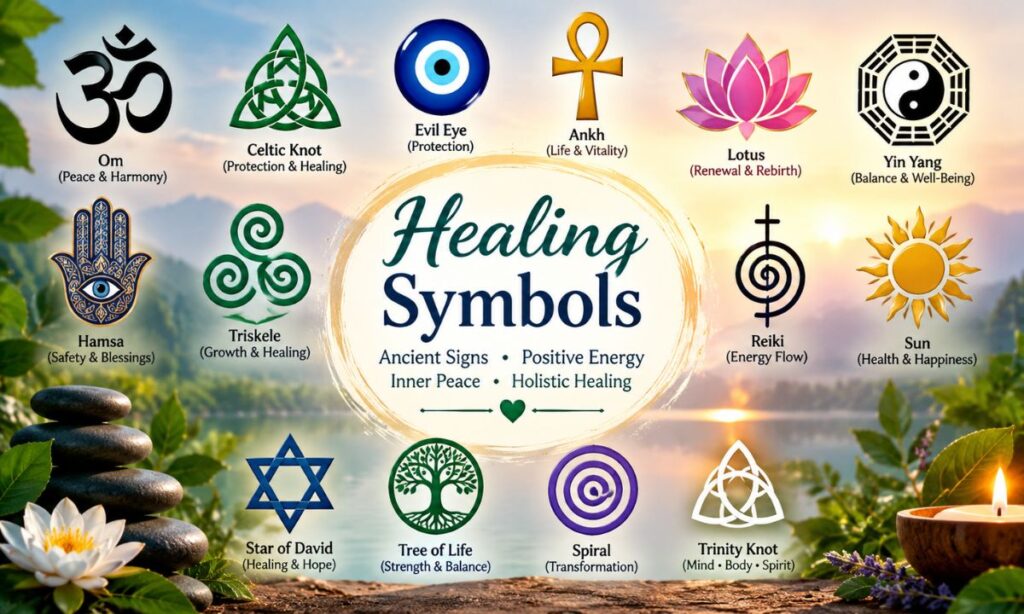
Healing symbols are visual signs, shapes, and sacred images that cultures around the world have used for thousands of years to represent recovery, protection, balance, and spiritual renewal. From the ancient Egyptian Ankh to the modern Reiki symbols, these images carry meaning that goes far beyond decoration. People wear them as tattoos, hang them in their homes, meditate on them, and even use them during energy healing sessions because they believe these signs carry real spiritual and emotional weight.
This guide brings together more than 100 of the most meaningful healing symbols from history and modern spiritual practice, explains what they mean, and shows you exactly how you can use them in daily life, whether that’s through jewelry, meditation, art, or tattoos.
What Are Healing Symbols?
Healing symbols are images or signs that represent recovery, protection, and inner transformation, and people have used them across nearly every culture in human history. They are not tied to one religion or one country. Instead, they show up again and again in different forms because the human need to heal, physically, emotionally, and spiritually, is universal.
Throughout history, healers, priests, shamans, and ordinary people carved these signs into stone, painted them on walls, stitched them into fabric, and later tattooed them onto skin. A symbol like the spiral or the lotus flower shows up independently in cultures that never had contact with each other, which tells us something important: humans naturally reach for the same visual language when trying to express hope, growth, and renewal. Anthropologists and religious scholars have long noted this pattern of shared symbolism across unconnected civilizations.
Today, healing symbols and meanings are studied by historians, used by energy practitioners like Reiki masters, and worn by everyday people who simply feel a pull toward a particular design. Whether or not you believe a symbol has literal power, there’s no question that these images help people focus their intention, process grief, and mark important turning points in their lives.
Spiritual and Healing Symbols Tattoos
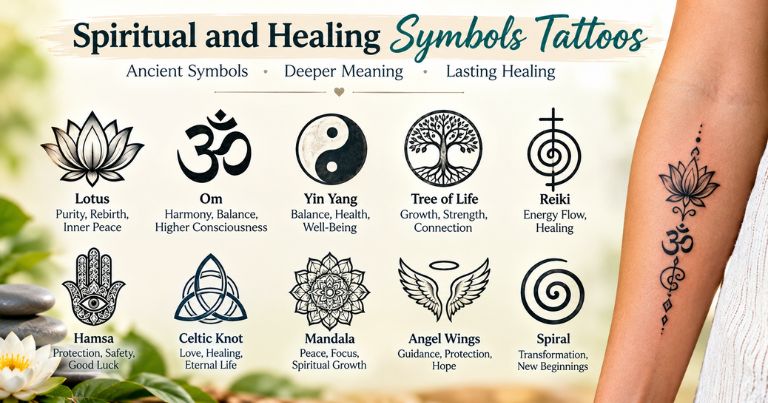
Spiritual healing symbols have become one of the most popular tattoo categories in the United States, especially among people recovering from illness, loss, or major life changes. A tattoo is permanent, and for many people that permanence is the point: it’s a daily reminder of strength and survival.
Tattoo artists across the country report that clients often come in after a difficult chapter, a cancer diagnosis, a divorce, the loss of a loved one, wanting something meaningful rather than purely decorative. This is where healing symbols tattoos come in. They give people a way to carry their story on their body without needing to explain every detail in words.
Below are the main categories people search for when looking into healing tattoos, broken down by the emotional need behind them.
Healing Symbols Tattoos
Popular choices include the lotus flower, the phoenix, the semicolon (representing continuing a story that could have ended), the Ankh, and the Tree of Life. Each of these carries a slightly different message, but all point toward the same theme: moving forward after hardship.
Tattoos About Healing
Many people choose simple line art, like a single mountain, a wave, or a sun rising over water, to represent their healing journey. These minimalist designs are popular because they feel personal without being overly symbolic to outsiders.
Strength Healing Symbols Tattoos
Symbols like the lion, the anchor, and the mountain are common choices for people who want to represent resilience through hardship. These images are less about spirituality and more about grit, the idea of holding steady through a storm.
Spiritual Strength Healing Symbols Tattoos
For those who want both spiritual and emotional meaning combined, symbols like the triquetra, the mandala, or a Reiki symbol paired with a lotus are common. These designs blend sacred geometry with personal storytelling.
Healing Symbols And Meanings With Ancient And Spiritual Origins
Healing symbols and meanings trace back to ancient civilizations that believed certain shapes could channel protective or restorative energy. Long before modern medicine, people relied on ritual, symbolism, and belief systems to make sense of illness and recovery.
Ancient Egyptians, for example, associated the Ankh with life force and used it in healing rituals performed by priests who also acted as early physicians. In India, sacred geometry and mantras were combined visually to represent balance in the body’s energy centers, or chakras. These systems developed independently, yet they share a common thread: the belief that a symbol, when focused on with intention, can support the body’s natural ability to heal.
Modern practitioners of energy work still lean on these ancient designs, not because they replace medical treatment, but because they offer a mental and emotional anchor during difficult times. Below are the main variations of this search topic and what they typically refer to.
Healing Symbols And Meanings
This general category includes any symbol tied to physical or emotional recovery, from the caduceus used in Western medicine to the sacred lotus of Buddhist tradition.
Symbols For Healing
This phrase usually refers to symbols people actively choose to use during recovery, whether from illness, addiction, or emotional trauma.
Symbols Meaning Healing
These are symbols whose core, literal definition centers on restoration, such as the phoenix, which represents rising again after being destroyed.
Symbols That Represent Healing
This includes broader nature based imagery, like a rising sun or blooming flower, that metaphorically stands for recovery even without a formal spiritual origin.
Symbolism For Healing
This term is often used in art therapy and psychology, where a symbol is chosen not for religious reasons but because it visually represents a person’s emotional state.
Healing Symbol
Used in the singular, this usually points to one specific design a person has chosen, like a single feather or a particular knot pattern.
Healing Symbolism
This is the academic or descriptive term for the entire study of how cultures use images to represent recovery and transformation.
Spiritual And Cultural Healing Symbols From Around The World
Spiritual healing symbols vary widely depending on geography, religion, and cultural history, yet they consistently point toward the same core ideas of balance, protection, and life force. Studying them side by side reveals just how creative humans have been in visualizing something as invisible as healing energy.
Energy based systems like Reiki, Pranic healing, and Sekhem each developed their own specific symbols meant to direct or amplify healing intention. These aren’t decorative; practitioners are trained to draw them in a specific order and with specific intention during a session. Meanwhile, ancient civilizations like the Celts, Egyptians, and Native American tribes developed their own protective and healing marks rooted in nature, ancestry, and spiritual belief.
It’s worth noting that many of these symbols are sacred to the cultures that created them. Using them respectfully, and understanding their origin rather than treating them as a trend, matters a great deal to the communities they come from.
Spiritual Symbol For Healing
A general term for any sacred image used in prayer, meditation, or ritual to support emotional or physical recovery.
Spiritual Healing Symbols
This broad category covers everything from the Christian cross used in prayers for recovery to the Hindu Om symbol used in meditation for balance.
Energy Healing Symbols
These are specific marks used by energy workers to direct what they describe as life force energy toward a person’s body or aura.
Pranic Healing Symbols
Pranic healing, developed by Master Choa Kok Sui, uses specific hand movements and visualized symbols rather than physical drawings, focusing on cleansing the body’s energy field.
Reiki Healing Symbols
Reiki, a Japanese energy healing practice founded by Mikao Usui in the early 20th century, uses a small set of sacred symbols that practitioners learn during formal attunement training.
Reiki Healing Symbols And Meanings
The four traditional Reiki symbols each serve a different purpose, from increasing power to supporting emotional and mental healing across distance.
Healing Symbols Reiki
This is simply an alternate phrasing search for the same core set of Reiki symbols described above.
Sekhem Healing Symbols
Sekhem, also called SKHM, is an energy healing modality said to draw on ancient Egyptian concepts of life force, using its own distinct set of symbols.
Sacred Geometry Healing Symbols
Shapes like the Flower of Life, the Metatron’s Cube, and the Sri Yantra are believed by many spiritual practitioners to represent the mathematical patterns underlying creation itself.
Ancient Healing Symbols
This umbrella term includes any symbol with documented historical use in healing rituals, often thousands of years old.
Ancient Egyptian Healing Symbols
Beyond the Ankh, Egyptians used the Eye of Horus for protection and health, believing it warded off illness and harm.
Egyptian Healing Symbols
An alternate phrasing covering the same set of symbols, including the scarab beetle, associated with rebirth and renewal.
Celtic Healing Symbols
The Celtic Tree of Life and the Triquetra represent interconnectedness and balance, concepts closely tied to physical and spiritual wellness in Celtic belief.
Native American Healing Symbols
The Medicine Wheel is one of the most recognized Native American healing symbols, representing balance between the physical, emotional, mental, and spiritual aspects of life.
Shamanic Healing Symbols
Shamans across cultures, from Siberia to South America, use animal totems and spiral imagery to represent journeys between the physical and spirit worlds during healing rituals.
Symbols Of Healers
Historically, healers marked their tools, clothing, or homes with symbols like the caduceus or specific plant imagery to signal their role in the community.
Healing Symbols Witchcraft
In modern witchcraft and pagan practice, symbols like the pentacle and moon phases are used in spellwork focused on health and emotional restoration.
Healed Symbol
This typically refers to a personal symbol someone adopts after completing a recovery journey, often chosen to mark the end of a difficult chapter.
Healing Symbols In Nature And Visual Inspiration
Healing symbols in nature remind us that some of the most powerful imagery isn’t man-made at all, it’s something we observe directly in the world around us. Nature has always been a teacher when it comes to resilience and renewal.
A tree regrowing after a fire, a river carving a new path around an obstacle, or a flower blooming after winter are all natural events that humans have turned into lasting symbols. These images resonate because they show recovery actually happening, rather than just representing an abstract idea. This is part of why nature imagery remains one of the most requested categories for healing symbols pictures used in art, journaling, and tattoos.
Visual inspiration matters because it helps people connect an abstract feeling, like hope or resilience, to something concrete they can picture in their mind. This is a technique used in both spiritual practice and modern psychology.
Symbols Of Healing In Nature
Common examples include the lotus rising from muddy water, butterflies emerging from a chrysalis, and trees with visible new growth after damage.
Healing Symbols Pictures
People often search for downloadable or printable images of the lotus, mandala, and Tree of Life to use in journals, vision boards, or meditation spaces.
Symbols Of Healing
Beyond nature, this includes universal images like open hands, a rising sun, and interlocking circles representing connection and support.
Deep Symbolic Meaning
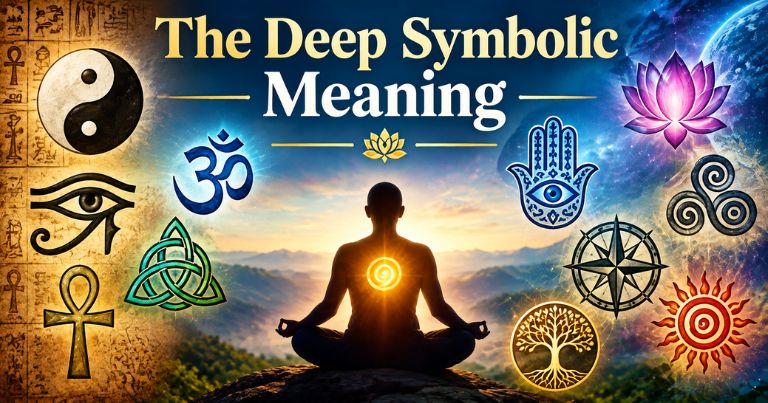
Healing symbols carry meaning on more than one level, and understanding all three helps explain why the same image can affect people so differently depending on their background and beliefs. A symbol isn’t just decorative; it works on spiritual, psychological, and cultural levels at the same time.
On a spiritual level, many people believe symbols act as a kind of channel or focus point for energy, prayer, or intention. This doesn’t require religious belief in the traditional sense; even secular people often describe feeling calmer or more focused when meditating on a specific shape or pattern.
On a psychological level, symbols function as anchors for memory and emotion. A tattoo of a phoenix, for instance, might not carry any spiritual weight for the wearer at all, but it still serves as a daily visual reminder of a specific moment of personal transformation. Psychologists who study symbolism, building on foundational work by figures like Carl Jung, have long noted that repeated exposure to a meaningful image can genuinely shift a person’s mindset over time.
Spiritual Level
At this level, a symbol is treated as sacred or energetically significant, often used in prayer, ritual, or meditation practice.
Psychological Level
Here, the symbol works as a personal cue or reminder, reinforcing an intention or memory every time the person sees it.
Cultural Level
At the cultural level, a symbol carries collective meaning shared by an entire community or tradition, often passed down for generations.
Types and Variations of Healing Symbols
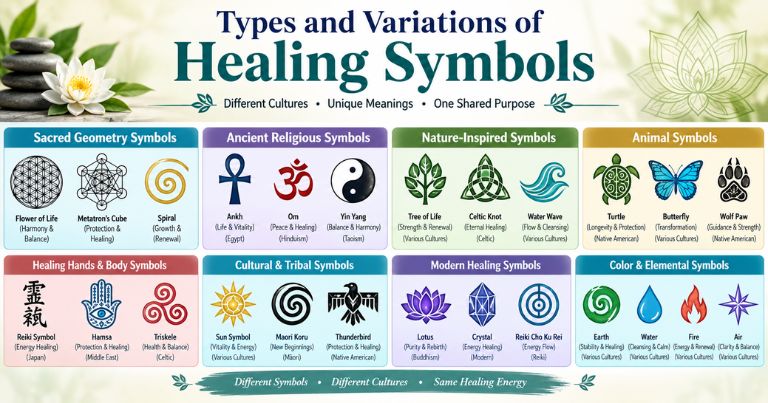
There are dozens of specific healing symbols, but a handful appear again and again across spiritual practices, tattoo studios, and jewelry stores throughout the United States. Knowing the background of each one helps you choose a symbol that actually fits your personal story rather than picking something at random.
Each of these symbols has a distinct visual design and a specific origin story, and many of them have been adapted slightly over time as they moved between cultures. Below is a table summarizing the six most requested healing symbols, along with their origin and core meaning.
| Symbol | Origin | Core Meaning |
|---|---|---|
| The Ankh | Ancient Egypt | Life force, vitality, eternal life |
| The Lotus Flower | Egypt, India, Buddhism | Purity, rebirth, rising above hardship |
| The Caduceus | Ancient Greece | Balance, medicine, healing profession |
| The Reiki Symbols | Japan | Directing energy, emotional and physical healing |
| The Tree of Life | Celtic, Norse, global traditions | Growth, connection, strength through roots |
| The Spiral | Global, prehistoric origins | Continuous growth, transformation, life cycles |
1. The Ankh
The Ankh is shaped like a cross with a loop at the top and represents life itself in ancient Egyptian belief. It was carved into temple walls and carried by gods in artwork as a symbol of vitality and eternal existence.
2. The Lotus Flower
The lotus grows out of muddy water yet blooms perfectly clean, which is exactly why so many spiritual traditions use it to represent rising above difficulty. It appears prominently in Egyptian, Hindu, and Buddhist art.
3. The Caduceus
Though often confused with the medical Rod of Asclepius, the Caduceus, a staff with two snakes and wings, has become a widely recognized symbol of the medical and healing profession in Western culture.
4. The Reiki Symbols
These sacred marks are taught only through formal Reiki training and are believed to help practitioners focus and direct healing energy during a session.
5. The Tree of Life
Found in Celtic, Norse, and many other traditions, the Tree of Life represents the connection between roots, growth, and strength, showing how healing often requires being grounded before you can grow.
6. The Spiral
One of the oldest symbols in human history, found carved into stone as far back as the Neolithic period, the spiral represents ongoing transformation rather than a single fixed outcome.
Healing Symbols Across Cultures
Comparing healing symbols across cultures shows a clear pattern: nearly every civilization developed its own visual language for recovery, protection, and renewal, often without any contact with other regions doing the same. This comparison helps explain why healing symbolism feels universal rather than tied to just one tradition.
Ancient Egypt centered its healing imagery around the Ankh and the Eye of Horus, both closely tied to gods associated with life and protection. In India, healing symbolism developed through Hindu and Buddhist traditions, focusing on the lotus, the mandala, and chakra based sacred geometry representing balance across the body’s energy centers. China contributed the yin and yang symbol, representing balance between opposing forces as the foundation of health in traditional Chinese medicine.
Celtic culture leaned heavily on knotwork and tree imagery to represent unbroken connection and endurance, while Native American traditions developed the Medicine Wheel, a symbol still used today in ceremonies focused on restoring balance across mind, body, spirit, and emotion. The table below compares these traditions side by side.
| Culture | Signature Symbol | Healing Focus |
|---|---|---|
| Ancient Egypt | Ankh, Eye of Horus | Life force and divine protection |
| India | Lotus, Mandala, Chakra symbols | Energy balance across the body |
| China | Yin and Yang | Balance between opposing forces |
| Celtic Culture | Triquetra, Tree of Life | Endurance and interconnectedness |
| Native American Traditions | Medicine Wheel | Balance across mind, body, spirit, emotion |
Ancient Egypt
Egyptian priests doubled as early physicians, and their healing symbols were carved directly into temple walls used for medical treatment as well as worship.
India
Chakra symbolism, still widely used in yoga and meditation across the United States today, originated from ancient Hindu texts describing energy centers throughout the body.
China
Traditional Chinese medicine, which developed alongside acupuncture and herbal treatment, is built entirely around the idea of restoring yin and yang balance within the body.
Celtic Culture
Celtic knotwork designs have no beginning or end, symbolizing the belief that healing and life itself are part of a continuous, unbroken cycle.
Native American Traditions
The Medicine Wheel is divided into four directions, each representing a different aspect of a person’s wellbeing, and is still used in modern ceremonies led by tribal healers.
Healing Symbols in Art, Movies and Pop Culture
Healing symbols show up constantly in modern American film, television, and art, often without audiences even realizing the deeper meaning behind them. Filmmakers frequently use imagery like rising phoenixes, blooming flowers, or light breaking through darkness to visually signal a character’s emotional turning point.
Superhero films in particular lean on the phoenix and rebirth imagery to represent characters overcoming near destruction, a direct nod to ancient mythology repackaged for modern audiences. Popular tattoo culture on shows and social media has also pushed symbols like the lotus and semicolon into mainstream visibility, turning what were once niche spiritual symbols into widely recognized signs of personal resilience.
Fine artists, meanwhile, have used sacred geometry and mandala patterns for decades in gallery work meant to promote calm and reflection in viewers. This crossover between ancient symbolism and modern visual storytelling shows just how deeply these images are wired into human emotional response, regardless of whether the audience knows the symbol’s original spiritual context.
Spiritual and Dream Meaning of Healing Symbols
Seeing a healing symbol in a dream is often interpreted as a sign that your subconscious mind is processing recovery, whether that’s physical, emotional, or spiritual in nature. Dream interpretation traditions across many cultures treat these images as meaningful rather than random.
Dreaming of a lotus blooming, for example, is commonly interpreted as a sign that you are moving past a difficult period and beginning to grow again. Similarly, dreaming of light, water, or a rising sun often reflects an internal shift toward clarity and emotional balance. These interpretations aren’t scientifically proven, but they’ve persisted across generations precisely because so many people report similar experiences after difficult life events.
Some spiritual practitioners suggest keeping a dream journal specifically to track when healing symbols appear, arguing that patterns over time can reveal what a person’s subconscious mind is working through. Whether or not you take this literally, the practice of reflection itself often supports genuine emotional processing.
Positive vs Negative Meaning
Most healing symbols carry an overwhelmingly positive meaning, but a few can shift depending on context, orientation, or the specific tradition interpreting them. Understanding both sides matters if you’re choosing a symbol for something permanent, like a tattoo.
The spiral, for instance, generally represents growth and positive transformation, but in some interpretations an inward facing spiral can represent turning inward during depression rather than expanding outward into recovery. Similarly, a symbol used correctly within its original cultural context carries very different weight than the same symbol used carelessly or out of context, which can come across as disrespectful rather than meaningful.
Positive Meaning
In its standard positive interpretation, a healing symbol represents growth, protection, balance, and the successful completion of a difficult chapter.
Negative Meaning
In rarer negative interpretations, certain symbols can represent an unfinished or stalled healing process, particularly when reversed or used outside their intended context.
Why Humans Are Attracted to Healing Symbols
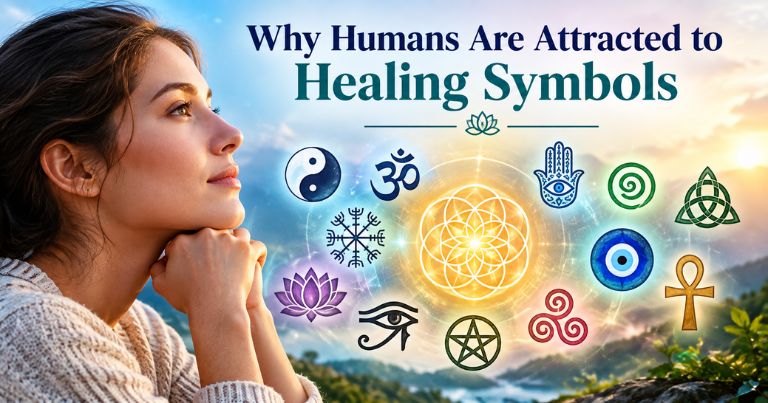
People are drawn to healing symbols because our brains are wired to find comfort and meaning in visual patterns, especially during periods of stress or uncertainty. This isn’t just spiritual belief, it’s basic human psychology at work.
“Symbolic thinking is one of the defining features of human cognition, allowing people to represent complex emotional experiences through simple, repeatable images.” This is one reason healing symbols have survived across thousands of years and countless cultures without any single group inventing them all. When life feels chaotic, a simple, consistent image gives the mind something stable to hold onto.
There’s also a strong social element at play. Wearing a healing symbol, whether as jewelry or a tattoo, often opens the door to conversation with others who have gone through similar experiences, creating a quiet form of community even among strangers. This shared recognition is part of why symbols like the semicolon tattoo became a genuine movement rather than just a passing trend.
Frequently Asked Questions About Healing Symbols
These frequently asked questions cover the exact things people search for when they first start exploring healing symbols and meanings, based on real search patterns across platforms like Reddit and Quora.
What is the most powerful healing symbol?
There isn’t one single symbol considered more powerful than the rest since meaning depends heavily on personal belief and cultural background, though the Ankh, the lotus, and the Reiki symbols are among the most widely recognized worldwide.
Do healing symbols really work?
There’s no scientific proof that a symbol alone can heal the body, but many people report genuine emotional and psychological benefits from focusing on meaningful imagery during recovery.
Can I use healing symbols in daily life?
Yes, many people incorporate healing symbols into jewelry, home decor, journaling, and meditation practice as a way to stay focused on personal growth and recovery.
Are healing symbols religious?
Some are tied directly to specific religions, like the Om symbol in Hinduism, while others, like the spiral or the rising sun, are considered more universal and secular in nature.
What does it mean to dream about healing symbols?
Dreaming about healing imagery is often interpreted as a sign that your subconscious mind is working through recovery or personal transformation, though interpretations vary by tradition.
Conclusion
Healing symbols have survived across thousands of years and dozens of unrelated cultures because they answer a need that never goes away: the human desire to make sense of pain and find a path back to balance. Whether you’re drawn to the ancient Egyptian Ankh, the sacred geometry behind Reiki practice, or a simple spiral inspired by nature itself, choosing a symbol that genuinely resonates with your own story is far more meaningful than picking one just because it’s trending.
At the end of the day, these symbols work not because of magic, but because of meaning. When you attach intention to an image, whether through a tattoo, a piece of jewelry, or a few quiet minutes of meditation, you give yourself a visual anchor to return to whenever life feels uncertain. That, more than anything, is why healing symbols have never gone out of style.
