

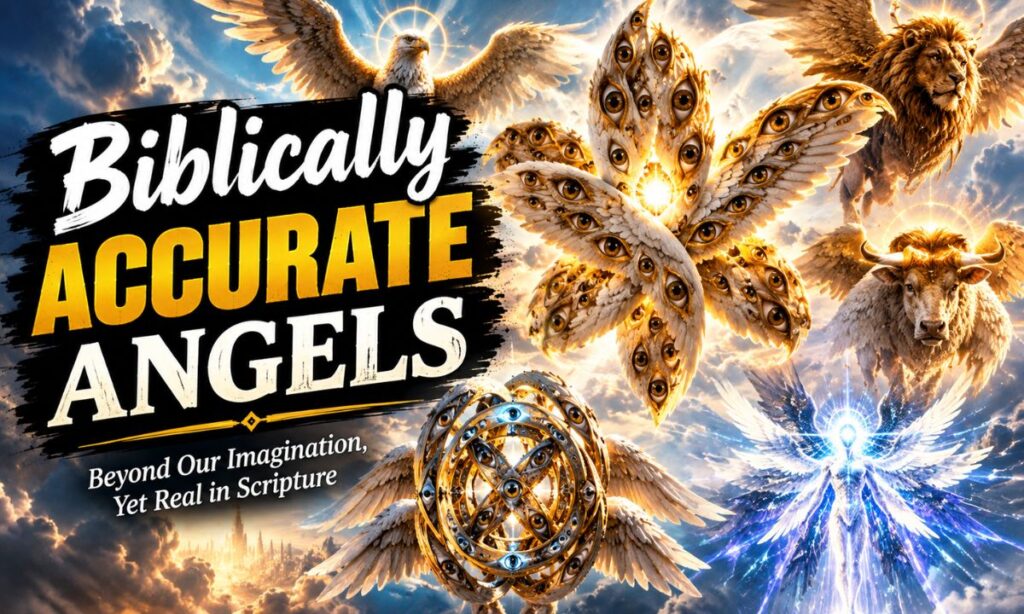
Biblically Accurate Angels Angels are often shown as soft, glowing figures with white wings. Many people think they look like gentle babies or kind ladies in long robes. But the Bible paints a very different picture. Angels in Scripture are powerful and full of glory. Often, people who saw them fell down in fear. The first words an angel speaks are usually “Do not be afraid.” That tells us how awe-striking they truly are.
The Bible names many kinds of heavenly beings. There are seraphim with six wings and cherubim with four faces. There are wheels full of eyes and mighty archangels like Michael and Gabriel. Some angels bring messages from God. Others guard His people, fight in battles, or praise Him around His throne. Each one has a special job in God’s plan.
In this guide, you will find over 190 angel references. Each one comes with a Bible verse and a simple illustration idea. You will learn what the Bible really says, not just what movies show. Take your time and read each verse with an open heart. May this study help you see God’s heavenly host in a new light and bring you closer to Him.
The Most Common Angels: They Looked Like Ordinary Men
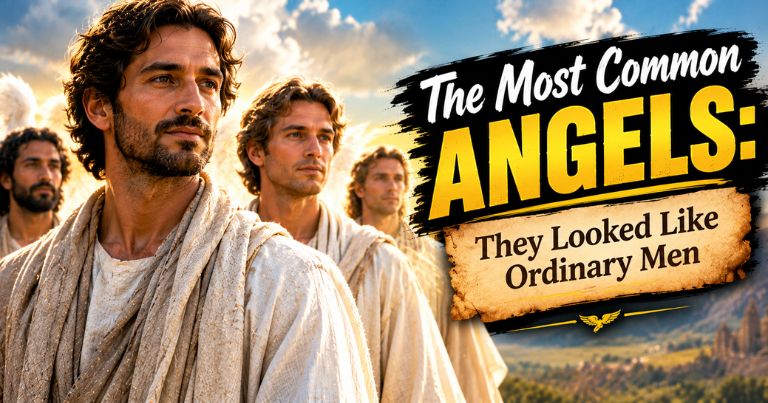
- Most angels in the Bible look like regular men. People often meet them without knowing who they are at first.
- In Genesis 18, three visitors stop by Abraham’s tent. He gives them food and water, and one of them is the Lord.
- Hebrews 13:2 says some people have welcomed angels without realizing it. That verse reminds us to be kind to every stranger.
- In Genesis 19, two angels visit Lot in Sodom. The townspeople see them as normal men, and that causes real trouble.
- Joshua 5:13 shows a man standing with a drawn sword. Joshua asks whose side he is on, like he would ask any soldier.
- Judges 13 tells how an angel appears to Manoah’s wife. She later says he looked like a man of God, yet awesome.
- Mark 16:5 says the women at the tomb saw a young man in a white robe. He was an angel with good news.
- In Acts 1:10, two men in white stand beside the disciples after Jesus rises. They speak calmly and give clear words of hope.
- Daniel 10:5 describes a man dressed in linen with a golden belt. His look is bright, but his form is still human.
- These angels do not always have wings or glowing rings. The Bible rarely mentions wings on the angels who talk with people.
- Angels in human form can eat, walk, and speak. Genesis 18 shows them sharing a meal under the shade of the trees.
- Some people mistake them for prophets or travelers. Only later do they learn a heavenly messenger stood right in front of them.
- Luke 24:4 says two men in shining clothes appear at the empty tomb. Their bright clothes are the main clue.
- Many angels bring a message and leave quickly. Their visits are short, but they change lives and history forever.
- Gideon sees an angel sitting under an oak tree in Judges 6. He looks like a tired traveler resting in the shade.
- This shows God can send help in quiet and simple ways. Not every angel visit has thunder, fire, or loud trumpets.
- Common angels also guard and protect. Psalm 91:11 promises that God will command His angels to watch over you.
- They often carry God’s words to humble people. Mary, Joseph, and the shepherds all heard good news from angels.
- Because angels can look so ordinary, we should stay kind and open. You never know who God might send your way.
- Remember, ordinary looks do not mean weak power. Even in plain form, these angels follow God’s orders with great strength.
Cherubim: Guardians With Multiple Faces and Wings
- Cherubim are powerful guardians of God’s holy places. They are very different from the chubby baby angels in modern art.
- In Genesis 3:24, God places cherubim at the east of Eden. They hold a flaming sword to guard the way to life.
- Ezekiel 1 describes four living creatures. Each one has four faces: a man, a lion, an ox, and an eagle.
- Ezekiel 10 says these living creatures are cherubim. This links the wild vision in chapter 1 to the temple guardians.
- Each cherub in Ezekiel has four wings. Under the wings, there is something like human hands, which is a strange detail.
- Their whole bodies, backs, hands, and wings are full of eyes. This shows they see everything and miss nothing.
- Exodus 25:18-20 tells Moses to make two golden cherubim. They stand on top of the Ark of the Covenant.
- Their wings stretch over the mercy seat. Their faces look toward each other and bow down toward the place of God’s presence.
- Psalm 80:1 says God sits enthroned between the cherubim. That shows they stand close to His glory and honor.
- In 1 Kings 6, Solomon builds huge cherubim of olive wood. Each one is ten cubits tall and covered in gold.
- Cherubim were also stitched into the temple curtains. They stood as a quiet reminder that God’s house is holy ground.
- Psalm 18:10 says God rode on a cherub and flew. This shows their power to carry His glory across the sky.
- Ezekiel 28:14 mentions an anointed guardian cherub. Many readers link this verse to a high angel who later fell.
- The sound of their wings is loud. Ezekiel 10:5 says it could be heard all the way to the outer court.
- They move like lightning and never turn as they go. Ezekiel 1:12 says each one goes straight ahead wherever the Spirit leads.
- Cherubim are not cute or tiny. They are fierce guardians who protect what is holy and keep sin away.
- Their many faces carry meaning. The lion shows strength, the ox shows service, the man shows wisdom, and the eagle shows speed.
- Hebrews 9:5 mentions the “cherubim of glory” over the mercy seat. This confirms they are linked with God’s glory.
- Artists often draw them as winged toddlers, but Scripture never does. The Bible shows a bold and awe-filled sight.
- When you read about cherubim, think of power and holiness. They remind us that God’s presence is both beautiful and mighty.
Seraphim: Six-Winged Beings of Fire
- Seraphim appear by name only in Isaiah 6. The word comes from a Hebrew term that can mean “burning ones.”
- Isaiah sees the Lord sitting on a high throne. The seraphim stand above Him, and the temple fills with His robe.
- Each seraph has six wings. Isaiah 6:2 says two cover the face, two cover the feet, and two are used for flying.
- Covering their faces shows deep respect. Even these fiery beings cannot look straight at the full glory of God.
- They call to one another, “Holy, holy, holy is the Lord Almighty.” This is one of the most famous songs in Scripture.
- Their voices are so loud that the doorposts shake. The temple fills with smoke as the sound rolls through it.
- Isaiah cries out that he is a man of unclean lips. He feels lost in front of such a holy sight.
- One seraph flies to Isaiah with a burning coal from the altar. He touches Isaiah’s lips with it.
- The seraph says Isaiah’s guilt is taken away and his sin is forgiven. It is a picture of God’s cleansing grace.
- Seraphim are close to God’s throne, which shows their high rank. They spend their time in worship and holy service.
- They do not look like gentle ladies or soft glowing children. They are blazing beings of heat, light, and awe.
- Their name hints at fire, and fire in the Bible often shows purity. It burns away what is unholy.
- Revelation 4:8 describes living creatures with six wings who never stop praising. Many readers link them to the seraphim.
- The seraphim show us what true worship looks like. It is humble, constant, and filled with wonder and reverence.
- Isaiah 6 also shows that holy beings serve as messengers. The seraph does not keep the coal but delivers God’s mercy.
- After the vision, Isaiah hears God ask, “Whom shall I send?” Isaiah answers, “Here am I. Send me.”
- This scene proves that meeting God’s holiness can change a life. Isaiah leaves the temple ready to speak for God.
- Some people mix up seraphim and cherubim, but the Bible keeps them apart. Seraphim have six wings, while cherubim in Ezekiel have four.
- Numbers 21 uses a similar Hebrew word for fiery serpents. Still, Isaiah’s seraphim are heavenly worshippers, not snakes.
- Next time you picture heaven, imagine fiery voices crying “holy.” That is the real sound around God’s throne.
- Biblically Accurate Angels Biblically Accurate Angels Biblically Accurate Angels Biblically Accurate Angels Biblically Accurate Angels Biblically Accurate Angels
- Biblically Accurate Angels Biblically Accurate Angels Biblically Accurate Angels Biblically Accurate Angels Biblically Accurate Angels Biblically Accurate Angels
Ophanim: The “Wheels Within Wheels”
- The word “ophanim” means “wheels” in Hebrew. These beings show up in Ezekiel’s famous vision by the Chebar River.
- Ezekiel 1:15 says he saw a wheel on the ground beside each living creature. Each wheel had four faces.
- The wheels looked like they sparkled like beryl, a shiny gemstone. Their color and shine caught Ezekiel’s eye right away.
- Ezekiel 1:16 says each wheel looked like a wheel inside a wheel. That is where the famous phrase comes from.
- This design lets the wheels move in any direction without turning. They go forward, sideways, or any way the Spirit points.
- Ezekiel 1:18 says the rims were tall and awe-striking. They were full of eyes all around.
- Those many eyes suggest they watch everything. Nothing on earth or in heaven is hidden from God’s sight.
- The wheels moved when the living creatures moved. Ezekiel 1:21 says the spirit of the creatures was in the wheels.
- This link shows the wheels are not just machines. They are alive, aware, and joined to God’s heavenly purpose.
- Many Bible readers see the ophanim as a different group from cherubim. Others think the wheels belong to the cherubim themselves.
- The Bible itself does not give a long list of ranks. Later Jewish and Christian writers added many details.
- Daniel 7:9 also mentions the throne of God having wheels of burning fire. This supports the idea of a moving throne.
- The wheels in Ezekiel 10 sit next to the cherubim at the temple. They show God’s glory leaving Jerusalem for a time.
- Because of this, the wheels remind us that God is not stuck in one place. His glory can travel anywhere.
- Some people call them “thrones,” based on Colossians 1:16. This link comes from tradition rather than a direct Bible statement.
- Ezekiel does not call the wheels angels outright. He describes them as part of the living vision of God’s glory.
- Their look is far from the soft angels seen on greeting cards. They are huge, bright, and full of watching eyes.
- Ezekiel fell facedown when he saw this vision. That shows how powerful and holy the whole scene felt to him.
- Ophanim teach us that God sees and moves in ways we cannot fully grasp. His ways are higher than ours.
- If you want a truly biblical angel picture, start with Ezekiel’s wheels. They are strange, but they are straight from Scripture.
- Biblically Accurate Angels Biblically Accurate Angels Biblically Accurate Angels Biblically Accurate Angels Biblically Accurate Angels Biblically Accurate Angels
- Biblically Accurate Angels Biblically Accurate Angels Biblically Accurate Angels Biblically Accurate Angels Biblically Accurate Angels Biblically Accurate Angels
Archangels and Named Angels in Scripture
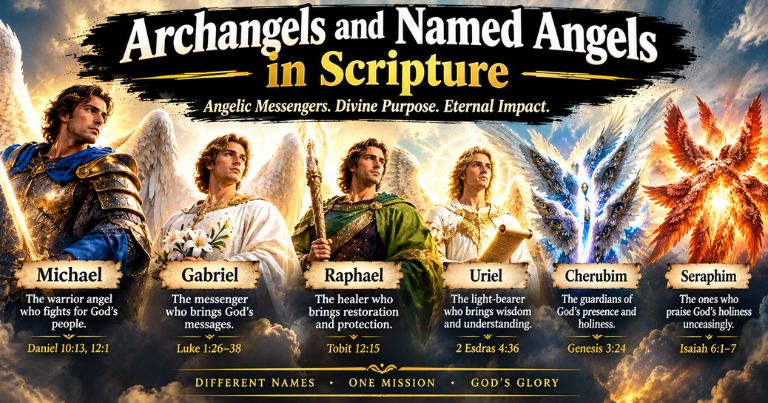
- The Bible names only a few angels. Michael and Gabriel are the two that appear most clearly in the text.
- Michael is called “one of the chief princes” in Daniel 10:13. He helps fight spiritual battles for God’s people.
- Daniel 12:1 calls Michael “the great prince” who protects Israel. This shows his strong role as a defender.
- Jude 1:9 is the only verse that calls Michael an archangel. It says he argued with the devil over Moses’ body.
- Revelation 12:7 says Michael and his angels fight the dragon in heaven. Michael’s side wins that war.
- Gabriel first appears in Daniel 8, where he explains a vision. He speaks in a calm and clear voice.
- In Daniel 9, Gabriel flies swiftly to Daniel at the time of the evening sacrifice. He brings wisdom and understanding.
- Luke 1:19 shows Gabriel telling Zechariah, “I stand in the presence of God.” That line reveals his close place near the throne.
- Gabriel tells Zechariah that his wife Elizabeth will have a son. That son becomes John the Baptist.
- In Luke 1:26-38, Gabriel visits Mary in Nazareth. He tells her she will give birth to Jesus.
- Gabriel’s message to Mary starts with, “Greetings, you who are highly favored.” Then he calms her fears with kind words.
- Raphael appears in the book of Tobit, which is in Catholic and Orthodox Bibles. Protestant Bibles do not include it.
- Tobit 12:15 says Raphael is one of seven angels who stand before God. Raphael means “God heals.”
- Uriel is named in 2 Esdras, another book outside most Protestant Bibles. He explains deep visions to Ezra.
- 1 Thessalonians 4:16 mentions the voice of an archangel at Christ’s return. It does not give a name.
- Revelation 8:2 speaks of seven angels who stand before God. Each one receives a trumpet for coming events.
- The word “archangel” means “chief angel.” It shows rank and leadership among God’s heavenly messengers.
- Satan is also named in Scripture, though he is a fallen angel. Isaiah 14 and Ezekiel 28 are often linked to his fall.
- Angel names often reflect their jobs. Michael means “Who is like God?” and Gabriel means “God is my strength.”
- Remember, angels never ask for worship. They always point people back to the Lord who sent them.
| Angel | Bible Reference | Main Role |
|---|---|---|
| Michael | Daniel 10:13; Jude 1:9; Revelation 12:7 | Warrior and defender of God’s people |
| Gabriel | Daniel 8:16; Luke 1:19, 26 | Messenger of God’s plans and promises |
| Raphael | Tobit 12:15 (Catholic and Orthodox) | Healer and guide |
| Uriel | 2 Esdras 4:1 (extra-biblical) | Teacher of visions and wisdom |
| Satan | Isaiah 14; Luke 10:18; Revelation 12:9 | Fallen angel and accuser |
Comparison Table: Angels, Cherubim, Seraphim, and Ophanim
- This section puts the main angel types side by side. A quick look makes their differences much easier to remember.
- Common angels often look like men. They deliver messages, give guidance, and protect people during hard times.
- Cherubim have four faces and four wings in Ezekiel. They guard God’s holy places and carry His glory.
- Seraphim have six wings and burn like fire. They worship near God’s throne and cry out “Holy, holy, holy.”
- Ophanim are wheels within wheels covered in eyes. They move with the Spirit and show God’s all-seeing power.
- Only seraphim are tied to the six-wing description in Isaiah 6. Cherubim in Ezekiel 1 have four wings each.
- Many angels never show wings in the Bible. Wings appear mostly with cherubim and seraphim, not with every messenger.
- Cherubim stand guard at Eden and the Ark. Seraphim hover above the throne, and ophanim move beside the cherubim.
- Common angels talk with people face to face. The other types are usually seen in visions, not in everyday life.
- Seraphim speak in worship. Common angels speak in messages. Cherubim and ophanim mostly act and move without long speeches.
- Fire is a strong theme for seraphim. Eyes are a strong theme for ophanim. Many faces are a strong theme for cherubim.
- Each type shows a different side of God’s greatness. Together, they paint a bigger picture of heaven.
- Some of these rankings come from tradition, not direct Bible lists. It helps to separate what Scripture says from later writing.
- A simple rule helps: if a being is bright, strange, and terrifying, it is likely a heavenly guard or worshipper.
- If a being looks normal and speaks kindly, it is most likely a messenger angel. That is the pattern in many stories.
- Use the table below as a quick study guide. Look up each verse to see the description for yourself.
- The table also helps teachers, parents, and artists who want to draw angels more accurately from the Bible.
- Notice how none of these types looks like a soft, sleepy baby. Biblical angels are bold, strong, and full of purpose.
- You can compare them again after reading each section. The details will stick better when you see them in one place.
- Keep your Bible open as you study. The verses bring each angel type to life much better than any picture.
| Type | Key Look | Main Job | Key Verse |
|---|---|---|---|
| Common Angels | Look like ordinary men | Deliver messages and protect | Genesis 18; Hebrews 13:2 |
| Cherubim | Four faces and four wings | Guard holy places | Ezekiel 10; Genesis 3:24 |
| Seraphim | Six wings, burning with fire | Worship at God’s throne | Isaiah 6:2-3 |
| Ophanim | Wheels within wheels with eyes | Move with God’s Spirit | Ezekiel 1:15-21 |
Common Angel Encounters in the Bible
- The Bible is full of real angel visits. They happen to kings, shepherds, prophets, and everyday people.
- In Genesis 16, an angel finds Hagar in the desert. He comforts her and promises her a future.
- In Genesis 22, an angel stops Abraham from harming Isaac. The call comes just in time to save the boy.
- Jacob wrestles with a heavenly being at Peniel in Genesis 32. He walks away with a limp and a new name.
- In Exodus 3, the angel of the Lord appears to Moses in a burning bush. The bush burns but never burns up.
- Numbers 22 tells how Balaam’s donkey sees an angel with a sword. Balaam does not see it until later.
- In 1 Kings 19, an angel feeds the tired prophet Elijah. He gives him bread and water to keep going.
- Daniel 6 says God sent an angel to shut the lions’ mouths. Daniel walks out of the den without a scratch.
- In Daniel 3, a fourth figure walks in the fiery furnace. Nebuchadnezzar says he looks like a son of the gods.
- Matthew 1 shows an angel talking to Joseph in a dream. He tells him to take Mary as his wife.
- Luke 2 describes an angel appearing to shepherds in the fields. A great crowd of heavenly hosts joins in praise.
- Matthew 4:11 says angels came and cared for Jesus after His time of testing in the wilderness.
- In Luke 22:43, an angel strengthens Jesus in the garden. It happens just before His arrest.
- Matthew 28 describes an angel rolling the stone from the tomb. His look is like lightning, and his clothes are white as snow.
- In Acts 5, an angel opens the prison doors for the apostles. He tells them to go back and keep teaching.
- Acts 12 shows an angel freeing Peter from chains. Peter thinks he is dreaming until he reaches the street.
- Acts 27 tells how an angel stands by Paul during a storm at sea. He promises that everyone on board will live.
- Revelation 1 starts with an angel showing John what will soon happen. It sets the stage for the whole book.
- These stories show that angels act in many ways. They rescue, guide, warn, strengthen, and bring good news.
- Each meeting leaves people changed. They respond with worship, obedience, or courage to follow God’s plan.
- Biblically Accurate Angels Biblically Accurate Angels Biblically Accurate Angels Biblically Accurate Angels Biblically Accurate Angels Biblically Accurate Angels
- Biblically Accurate Angels Biblically Accurate Angels Biblically Accurate Angels Biblically Accurate Angels Biblically Accurate Angels Biblically Accurate Angels
Why Angels Often Say “Fear Not”
- Angels often begin by saying “Do not be afraid.” This phrase appears again and again across Scripture.
- Zechariah hears it in Luke 1:13 when Gabriel appears at the altar. He is shaken and filled with fear.
- Mary hears it in Luke 1:30. She is deeply troubled by the greeting and wonders what it means.
- Joseph hears it in Matthew 1:20. The angel tells him not to be afraid to take Mary as his wife.
- The shepherds hear it in Luke 2:10. God’s glory shines around them, and they are terrified.
- At the tomb in Matthew 28:5, the angel tells the women not to be afraid. Then he gives them hopeful news.
- These verses show that angels truly look and feel powerful. Their presence makes even strong people shake.
- The fear is not just about their looks. It also comes from meeting something holy and from another world.
- Daniel falls to the ground in Daniel 10. He loses his strength and cannot stand until the angel touches him.
- John falls at the feet of the angel in Revelation 1 and 22. He is overwhelmed by what he sees.
- If angels were small, cute, and soft, no one would need to calm them down. Fear points to real power.
- The words “fear not” also carry comfort. They tell us that God’s messengers come with peace, not harm.
- Most of the time, the message that follows is good news. It speaks of hope, rescue, or a great promise.
- Angels use calm words to help people listen. A scared heart cannot hear well, so they ease the fear first.
- This pattern also shows God’s kindness. He knows how small we feel next to His heavenly servants.
- Even Jesus told His followers not to be afraid. Fear is a common human reaction to the holy.
- You can take this to heart in your own life. When fear comes, remember that God is close and in control.
- Psalm 34:7 says the angel of the Lord camps around those who fear Him. He rescues them from danger.
- Fearing God in the Bible also means respecting Him deeply. That respect brings peace instead of dread.
- So the next time you read “fear not,” picture a mighty being speaking softly. That is real biblical comfort.
- Biblically Accurate Angels Biblically Accurate Angels Biblically Accurate Angels Biblically Accurate Angels Biblically Accurate Angels Biblically Accurate Angels
- Biblically Accurate Angels Biblically Accurate Angels Biblically Accurate Angels Biblically Accurate Angels Biblically Accurate Angels Biblically Accurate Angels
How Traditional Angel Art Differs From Scripture
- Most angel art shows white wings, glowing halos, and soft faces. The Bible rarely describes angels that way.
- Wings appear only on cherubim and seraphim in Scripture. Most other angels show up looking like regular men.
- Halos do not appear anywhere in the Bible. Artists added them later to show holiness and glory.
- Baby angels, often called cherubs, come from Renaissance art. Real cherubim in Ezekiel are fierce and have four faces.
- Many paintings show women with long hair and flowing gowns. The Bible always uses male words for angels who speak.
- Angels in the Bible are strong and often carry swords. Joshua 5 and Numbers 22 both show armed angels.
- Artists love gentle smiles, but biblical angels cause people to fall down in fear. That is a big difference.
- Pop culture also adds ideas, like people turning into angels after death. The Bible does not teach that.
- Early Christian art often showed angels as plain young men in robes. Wings came later, around the fourth century.
- Seraphim in Isaiah have six wings and burn with fire. Few paintings show that fiery and bold appearance.
- Ophanim, the wheels full of eyes, almost never show up in popular art. They seem too strange to draw.
- Real biblical angels are not “cute.” Words like mighty, glorious, and terrifying fit them much better.
- Art is not wrong, but it can mislead us. It helps to compare each picture with the verses.
- A good rule is to read the passage first and look at the art second. Scripture should shape your image.
- Some modern illustrators now try to draw angels as Ezekiel describes. Their work looks wild but stays true to the text.
- When drawing angels, you can start with a man in bright clothes. Then add wings only if the verse says so.
- Use eyes, wheels, flames, and many faces for the heavenly guardians. These details come straight from the Bible.
- This is why a “biblically accurate” angel often surprises people. It looks nothing like the angel on a Christmas card.
- The goal is not to scare anyone but to be honest about the text. Truth brings clearer worship.
- When you see an angel picture, ask yourself, “Where is this in the Bible?” That question keeps your view grounded.
What Do Angels Really Look Like According to the Bible
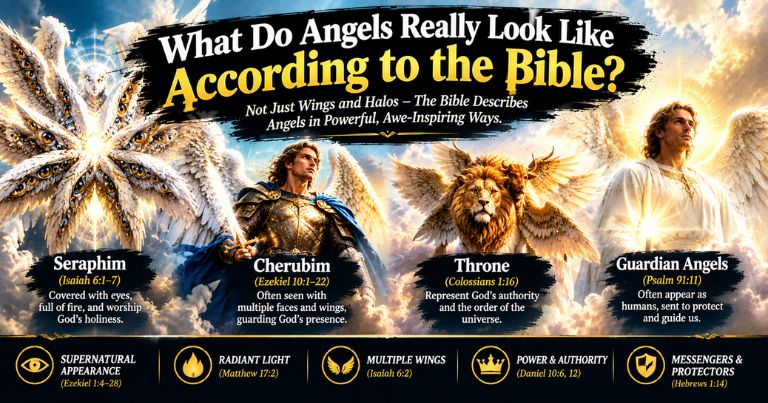
- The Bible gives many different angel looks. There is no single picture that fits every angel.
- Some angels look like normal men. People in Genesis, Judges, and Acts treat them as human visitors.
- Others shine with bright light. Luke 2:9 says the glory of the Lord shone around the shepherds.
- Matthew 28:3 says the angel at the tomb looked like lightning. His clothes were as white as snow.
- Some angels carry swords. Joshua 5:13 and 1 Chronicles 21:16 show angels with drawn blades.
- Cherubim have four faces and four wings. Their bodies are covered in eyes and shine like burning coals.
- Seraphim have six wings and cry out in worship. They glow with a fiery look that fills the temple.
- Ophanim appear as sparkling wheels with eyes along the rims. They move in step with the Spirit.
- Some angels wear linen robes with golden belts. Daniel 10 and Revelation 15 both mention this kind of clothing.
- Revelation 10:1 describes an angel wrapped in a cloud, with a rainbow over his head and fiery legs.
- Angels come in many sizes. Some look human-sized, and others seem huge, like the one with one foot on the sea.
- Their faces can shine like the sun. Revelation 10 also shows a face glowing with bright light.
- Wings are not required. Many angels walk, talk, and eat without any mention of wings at all.
- Their looks match their jobs. Messengers look like men, while guardians and worshippers look more mighty and strange.
- Most people who see them respond with fear. That tells us angels are far above normal human beings.
- The Bible also says angels are spirits. Hebrews 1:14 calls them “ministering spirits” sent to serve those who will inherit salvation.
- This means they can take on human form when needed. Their true form is beyond what our eyes can handle.
- No verse describes angels as ghosts of people. They are a separate group of beings made by God.
- Colossians 1:16 says God created everything, including thrones, rulers, and powers. That includes every heavenly being.
- To sum up, angels look strong, holy, and different. They rarely look like what we see on cards and posters.
- Biblically Accurate Angels Biblically Accurate Angels Biblically Accurate Angels Biblically Accurate Angels Biblically Accurate Angels Biblically Accurate Angels
- Biblically Accurate Angels Biblically Accurate Angels Biblically Accurate Angels Biblically Accurate Angels Biblically Accurate Angels Biblically Accurate Angels
What Are the 12 Types of Angels
- The Bible does not give a list of exactly 12 angel types. That number comes from later traditions and writings.
- A well-known tradition lists nine choirs of angels. It comes from a writer named Pseudo-Dionysius in the fifth or sixth century.
- That list includes seraphim, cherubim, thrones, dominions, virtues, powers, principalities, archangels, and angels. It is not an official Bible list.
- Some modern teachers add other groups to reach 12. They may include guardian angels, warrior angels, and messenger angels.
- The Bible itself uses several titles for heavenly beings. Colossians 1:16 names thrones, dominions, rulers, and authorities.
- Ephesians 1:21 mentions rule, authority, power, and dominion. Paul uses these terms to show Christ’s rank above them all.
- Romans 8:38 includes angels, rulers, and powers. These words appear in a list of things that cannot separate us from God’s love.
- Isaiah 6 gives us seraphim. Ezekiel gives us cherubim and wheels. Jude and 1 Thessalonians give us the archangel.
- Daniel 10 shows “chief princes,” like Michael, who lead other angels in battle. That suggests rank and order.
- Revelation 5 and 7 mention living creatures and many angels around the throne. They sing, bow, and serve without rest.
- The tradition of orders is helpful for study but should not be treated as Scripture. Always check each claim.
- Many Christians find it useful to group angels by their work. Messengers, guardians, warriors, and worshippers are easy categories.
- Others group them by rank, such as angels, archangels, and cherubim. Each group has a different level of authority.
- Because angels are heavenly, we cannot know every detail. God has told us what we need and left the rest.
- Matthew 26:53 mentions “twelve legions of angels.” That is a number of troops, not twelve types.
- That verse shows how many angels God could send. Twelve legions would be tens of thousands of beings.
- Hebrews 12:22 speaks of “innumerable angels in festal gathering.” The Bible says the total is too big to count.
- If you meet the “12 types” idea online, treat it as a teaching tool. Compare it with the verses.
- A safe approach is to stick to what the Bible names. Seraphim, cherubim, archangels, and angels are clear groups.
- Study with an open mind and a humble heart. God’s heavenly host is much bigger than any chart.
- Biblically Accurate Angels Biblically Accurate Angels Biblically Accurate Angels Biblically Accurate Angels Biblically Accurate Angels Biblically Accurate Angels
- Biblically Accurate Angels Biblically Accurate Angels Biblically Accurate Angels Biblically Accurate Angels Biblically Accurate Angels Biblically Accurate Angels
What Do Angels Really Look Like According to the Bible Ezekiel
- Ezekiel gives one of the most detailed angel descriptions in Scripture. His vision is found in chapters 1 and 10.
- He sees a great storm cloud coming from the north. Flashing fire and bright light surround it.
- In the middle, he sees four living creatures. They shine like burning coals and gleam like polished bronze.
- Each creature has four faces. One face is a man, one a lion, one an ox, and one an eagle.
- Each one also has four wings. Two wings spread out to touch the next creature, and two cover its body.
- Their legs are straight, and their feet look like calves’ hooves. They sparkle like burnished bronze.
- Under their wings, Ezekiel sees human hands. This detail shows these beings can act and serve with skill.
- They move like flashes of lightning. They never turn when they go, but go straight ahead.
- Beside each creature is a wheel within a wheel. The rims are tall and filled with eyes all around.
- Above their heads stretches a sparkling expanse, like crystal. Over it sits a throne of sapphire.
- On the throne is a figure that looks like a man, glowing like fire. A rainbow shines around Him.
- Ezekiel 10 later calls the living creatures cherubim. This clears up who they are in the first vision.
- In chapter 10, one face is called a cherub instead of an ox. Scholars discuss this change but agree on the meaning.
- The sound of their wings is like rushing water. Ezekiel 1:24 compares it to the voice of the Almighty.
- When they stop, they lower their wings. Then a voice speaks from above the expanse.
- Ezekiel falls facedown when he sees the glory of the Lord. He is overwhelmed by the sight.
- This scene is the main source for the “biblically accurate angel” images online. Many such pictures borrow from Ezekiel.
- Note that Ezekiel avoids exact claims. He uses words like “looked like” and “something like” many times.
- That careful language shows he is describing something beyond normal speech. Human words cannot capture heaven fully.
- The goal of the vision is not to scare us. It shows that God is glorious, holy, and in control.
- Biblically Accurate Angels Biblically Accurate Angels Biblically Accurate Angels Biblically Accurate Angels Biblically Accurate Angels Biblically Accurate Angels
- Biblically Accurate Angels Biblically Accurate Angels Biblically Accurate Angels Biblically Accurate Angels Biblically Accurate Angels Biblically Accurate Angels
What Do Angels Look Like According to Revelation
- Revelation has some of the most dramatic angel scenes in the Bible. John sees many different heavenly beings.
- In Revelation 4, four living creatures surround the throne. They are covered in eyes and have six wings each.
- The first looks like a lion, the second like an ox, the third has a human face, and the fourth is like an eagle.
- They never stop saying, “Holy, holy, holy, is the Lord God Almighty.” Their worship goes on day and night.
- Revelation 5:11 says John saw and heard many angels around the throne. They numbered thousands upon thousands.
- Revelation 7:11 shows all the angels standing around the throne. They fall on their faces and worship God.
- In Revelation 8, seven angels receive seven trumpets. Each trumpet brings a powerful event to the earth.
- Revelation 10 shows a mighty angel coming down from heaven. He wears a cloud, and a rainbow is over his head.
- That angel’s face is like the sun, and his legs are like fiery pillars. He plants one foot on the sea.
- He holds a small scroll and cries out with a voice like a roaring lion. Seven thunders answer him.
- Revelation 12 describes Michael and his angels fighting the dragon. They win, and the dragon is thrown down.
- Revelation 14 shows angels flying in mid-air with the eternal gospel. They call all nations to worship God.
- Revelation 15 describes seven angels dressed in clean, shining linen. They wear golden sashes across their chests.
- Revelation 18:1 says an angel with great authority lights up the earth with his glory.
- Revelation 19 shows armies of heaven following Christ on white horses. They wear fine linen, white and clean.
- Revelation 20 shows an angel holding a chain and the key to the Abyss. He locks the dragon away.
- Revelation 21 shows angels standing at the twelve gates of the new Jerusalem. They guard the holy city.
- John twice falls to worship an angel in Revelation 19 and 22. Both times, the angel tells him not to.
- The angel says, “Worship God!” This line proves that angels never accept worship for themselves.
- Overall, Revelation shows angels as powerful, glorious, and active. They serve God’s plan from the first page to the last.
What Do Angels Look Like in Human Form
- Angels often come in human form so people can speak with them. This helps them deliver God’s message in a calm way.
- In Genesis 18, three men visit Abraham. They sit, eat, and talk, which shows how human they appeared.
- Genesis 19 says two angels came to Sodom in the evening. Lot welcomed them as guests and fed them.
- In Judges 13, Manoah’s wife describes the angel as a man of God. She says his look was awesome.
- Manoah asks the man his name and offers him a meal. He does not realize he is an angel until later.
- Gideon’s visitor sits under an oak and talks like a normal person. Only after the fire does Gideon understand.
- Mark 16:5 calls the angel at the tomb a “young man.” He is dressed in a long white robe.
- Luke 24 mentions two men in clothes that gleam like lightning. Their shine is the only sign they are not common men.
- Acts 10:30 describes the angel who spoke with Cornelius as a man in shining clothes.
- Hebrews 13:2 says some have entertained angels without knowing it. That tells us they can blend in easily.
- Human-form angels usually have no wings. The verses do not mention wings in these visits.
- They can walk, talk, and eat. Genesis 18 and 19 show them sharing food with their hosts.
- Many of them wear white or bright clothes. This color points to holiness and heavenly glory.
- They are almost always male in the Bible. Scripture uses male pronouns and words like “man” for them.
- They often speak with calm authority. Their words are short and direct, and they carry God’s will.
- Sometimes people see something odd about them. Their light, knowledge, or sudden disappearance hints at who they are.
- In Judges 13:20, the angel goes up in the flame of the altar. Manoah and his wife fall on their faces.
- In Acts 12, the angel simply walks Peter out of prison. Then he disappears when the job is done.
- Because angels can look ordinary, kindness matters. Treat strangers with care, since you may never know.
- Human form does not make angels human. They stay a separate order of beings, made by God to serve.
Types of Angels and Their Duties
- Angels do many jobs in the Bible. Some bring messages, some fight, and some praise God without rest.
- Messenger angels share God’s words with people. Gabriel announcing the births of John and Jesus is a prime case.
- Guardian angels protect God’s people. Psalm 91:11 and Matthew 18:10 both point to this kind of care.
- Warrior angels fight spiritual battles. Michael and his angels fight the dragon in Revelation 12.
- Worship angels praise God near His throne. Seraphim and living creatures never stop singing His holiness.
- Guarding angels protect holy places. Cherubim guard Eden and the Ark of the Covenant.
- Angels deliver people from danger. In Acts 12, an angel frees Peter from prison and chains.
- Angels strengthen those who suffer. After Jesus’ testing in the desert, angels came and served Him.
- Angels carry out God’s judgment. In 2 Kings 19:35, one angel strikes down many enemy soldiers in one night.
- Angels announce big events. They told the shepherds about Jesus’ birth and the women about His rising.
- Angels help believers in prayer. In Daniel 10, an angel arrives to bring an answer to Daniel’s prayer.
- Angels rejoice over repentance. Luke 15:10 says there is joy among the angels when one sinner repents.
- Angels will gather God’s people at the end. Matthew 24:31 says they will collect the chosen from all directions.
- Angels will also help in the final judgment. Matthew 13:41 says they will weed out what is evil.
- They serve those who will inherit salvation. Hebrews 1:14 says this clearly and gives us comfort.
- They do not take orders from us. They follow God’s commands alone, as Psalm 103:20 explains.
- We should never pray to angels. The Bible tells us to pray to God, who sends them as He chooses.
- Their duties show God’s care for His people. He sends help even when we cannot see it.
- Different jobs mean different looks, because their work shapes how they appear. A messenger looks plain, and a guard looks fierce.
- Understanding these duties helps us trust God more. His help is wide, deep, and always at work.
| Duty | Example Angel | Key Bible Verse |
|---|---|---|
| Messenger | Gabriel | Luke 1:26-28 |
| Guardian | Angels watching over believers | Psalm 91:11 |
| Warrior | Michael | Revelation 12:7 |
| Worshipper | Seraphim | Isaiah 6:3 |
| Gatekeeper | Cherubim | Genesis 3:24 |
| Rescuer | Angel who freed Peter | Acts 12:7 |
Angel Real Face in Bible
- The Bible gives only a few clues about angel faces. It never shows one clear picture for all of them.
- Cherubim have four faces in Ezekiel 1 and 10. They show a man, a lion, an ox, and an eagle.
- Seraphim cover their faces with two wings. Isaiah 6:2 says this act shows respect before God’s glory.
- Acts 6:15 says Stephen’s face looked like the face of an angel. It does not say how an angel’s face looks.
- Many readers take this to mean a peaceful, bright, and calm look. It is a thoughtful hint, not a full description.
- Matthew 28:3 says the angel’s appearance was like lightning. His face may have shone with that same bright glow.
- Revelation 10:1 says the mighty angel’s face was like the sun. This shows both power and shining glory.
- Daniel 10:6 describes a man with a face like lightning and eyes like flaming torches. Many link him to an angel.
- Judges 13:6 says the angel’s look was “very awesome.” The woman could not even bring herself to ask his name.
- Daniel 8:15 says Gabriel appeared “like a man.” This hints that his face looked human at that moment.
- Human-form angels usually have normal faces. People often fail to spot them until their message is shared.
- Others have faces too bright to look at. People fall down because they cannot bear the full light.
- No verse describes angel faces as soft and childlike. That idea comes from later art, not from Scripture.
- Their faces show their mood too. Some angels bring joy, while others bring a stern warning.
- We do not know whether angels have a fixed face. They can appear differently to fit their task.
- Because they are spirits, they can show up in many forms. Hebrews 1:14 calls them ministering spirits.
- The safest view is that their faces reflect God’s glory. They are bright, serious, and full of life.
- We should avoid claiming too much about their looks. The Bible leaves much of this a holy mystery.
- Focus on the message, not the face. Angels always point to God and His plans for us.
- One day, believers may see them clearly. Until then, the verses give us enough to trust and admire.
Pictures of Real Angels in Heaven
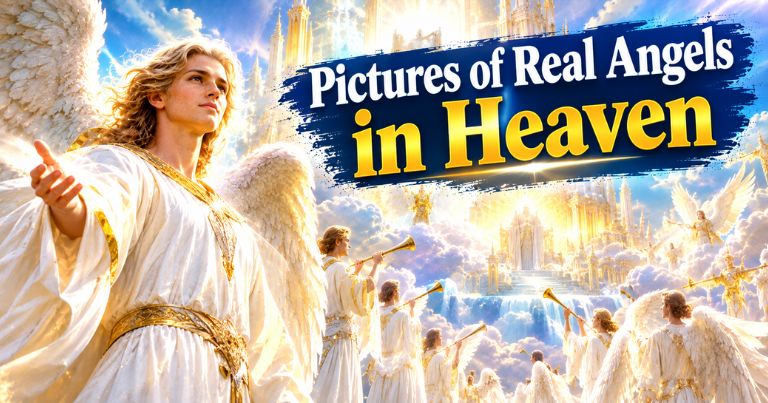
- No real photo of an angel exists. Every picture you see is an artist’s idea or a digital creation.
- Be careful with photos online that claim to show angels. Most are edited, staged, or made by computers.
- The Bible says no one can see God’s full glory and live. That includes the brightness around His throne.
- Angel pictures should be used as study aids only. They are not proof of how angels truly look.
- The best “pictures” are the word pictures in Scripture. Ezekiel, Isaiah, Daniel, and Revelation paint strong scenes.
- A good illustration follows the text. If a verse says four faces, the picture should show four faces.
- Drawings of the heavenly throne room often include seraphim, cherubim, and wheels. These come straight from the Bible.
- Look for illustrations that show fire, eyes, and wings, as the verses describe. Skip pictures that add cute extras.
- Be careful with images that claim visions or private revelations. The Bible warns us to test every spirit.
- First John 4:1 tells believers to test the spirits to see whether they are from God.
- Paul also warns in Galatians 1:8 that even an angel preaching a different gospel should be rejected.
- Art helps young readers learn Bible stories. Just add a short note about what comes from the verse and what comes from imagination.
- Museums hold famous angel paintings from the Renaissance. Many are beautiful, but they do not match every Bible detail.
- Modern digital artists now create “biblically accurate” angel images. These often follow Ezekiel closely and look quite dramatic.
- When you make your own drawing, start with the verse. Write down each detail before you sketch a single line.
- Heaven’s real beauty is far beyond any picture. Revelation 21 describes streets of gold and walls of jewels.
- Paul says in 1 Corinthians 2:9 that eyes have not seen what God has prepared for those who love Him.
- So enjoy the art, but hold it loosely. The real sight will be greater than anything on a page.
- Let pictures lead you back to the Bible. The text is the true source and the best guide.
- One day, faith will become sight. Until then, trust the words God has given us about His heavenly host.
Frequently Asked Questions
Which angels look like humans?
Many messenger angels look like regular men, like the three visitors in Genesis 18 and the two at Sodom. They often wear bright clothes but have no wings.
Which angel has 70,000 eyes?
The Bible does not name an angel with 70,000 eyes. That idea comes from later Jewish writings, while Ezekiel only says the wheels’ rims were full of eyes.
What do common angels look like?
Common angels usually look like men in white or shining clothes. They can walk, talk, and eat, and people often don’t realize who they are.
What are the 7 types of angels?
The Bible doesn’t give a set list of seven. It does name angels, archangels, cherubim, seraphim, thrones, dominions, and powers, which many people use as a simple list.
Who are the 13 fallen angels?
The Bible doesn’t list 13 fallen angels. It names Satan and mentions his angels, and any longer lists come from later writings and tradition.
Who is God’s strongest angel?
The Bible doesn’t rank angels by strength. Michael stands out as a great prince and warrior who leads God’s angels against the dragon in Revelation 12.
How to tell if a human is an angel?
The Bible says you often can’t tell, which is why Hebrews 13:2 urges us to welcome strangers. Treat everyone with kindness and let God handle the rest.
What are 7 signs that an angel is by your side?
The Bible gives no list of signs, so be careful with online claims. Scripture promises that God’s angels watch over His people, as Psalm 91:11 says, but it doesn’t give a checklist.
Has a human ever seen an angel?
Yes, many people in the Bible saw angels, including Abraham, Daniel, Mary, Peter, and the shepherds. Most of them were afraid at first and heard the words “do not be afraid.”
Conclusion
We have looked at many angels in the Bible. Some have wings, and some have wheels or flames. Some look like plain men. Each one shows us how great God is. They are not weak or cute. They are strong, holy, and full of light. Every verse proves they serve God with all their hearts.
Angels are real helpers in God’s plan. They guard His people and carry His words. They also praise Him day and night. But we must never worship them. All glory belongs to God alone. Angels always point us back to Him.
Now you know what the Bible truly says about angels. Keep these verses close to your heart. Read them again when you feel afraid or alone. Remember that God cares for you every day. His angels are near, as He commands. Let this truth fill you with peace and faith.
