

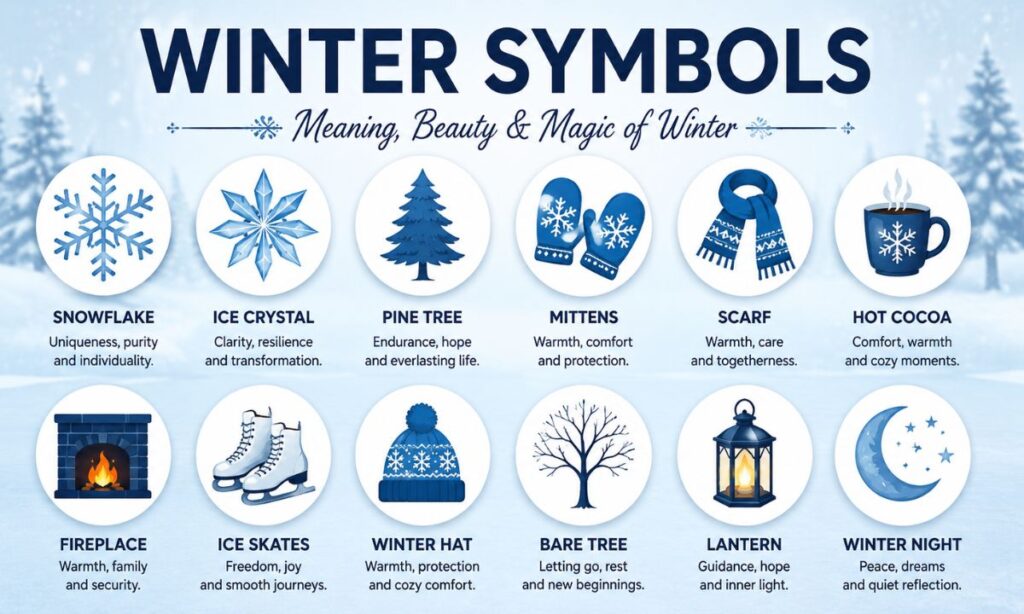
Winter has a language of its own. Snow falls quietly, but it speaks to something deep inside us. Fire flickers and reminds us that warmth can survive even the coldest nights. Silence, too, has meaning it slows us down and makes us listen. These winter symbols are not just pretty pictures. They carry old wisdom about rest, hope, and starting fresh.
This guide explores what snow, fire, and silence really mean beneath the surface. We will look at their spiritual roots and why they still matter today. Snow often stands for purity and letting go of the past. Fire represents light, protection, and inner strength during dark times. Silence teaches patience and gives space for reflection. By the end, you will see winter not just as a season, but as a quiet teacher.
❄️⛄What Are Winter Symbols?❄️⛄🌲🧣🧤❄️⛄🌲🧣🧤
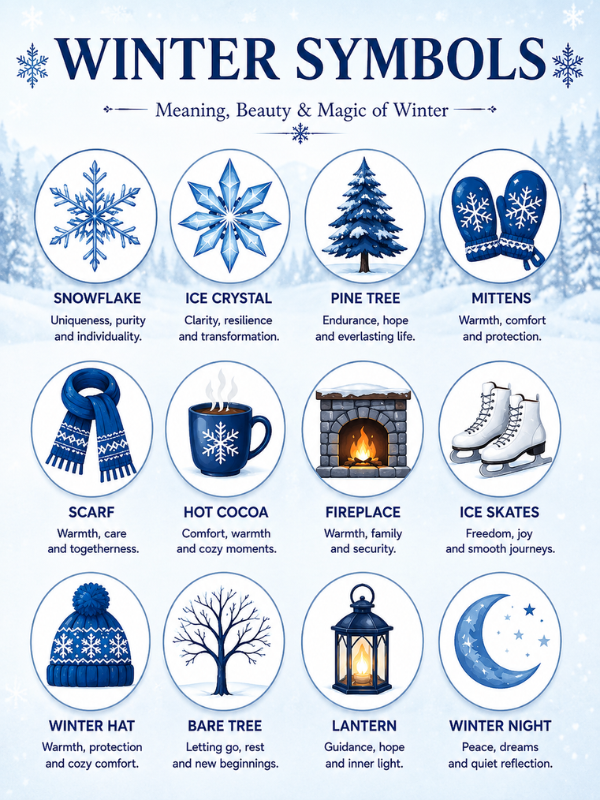
- Winter symbols are images, objects, and icons that people use to represent the cold season visually and emotionally in art.
- They include snowflakes, icicles, pine trees, mittens, snowmen, and frozen lakes, each carrying its own cultural weight and story.
- These symbols appear across greeting cards, home decor, clothing prints, and digital designs during the colder months of the year.
- People rely on winter symbols to instantly communicate a mood, a season, or a memory without needing to explain anything further in words.
- Many winter symbols originated from ancient traditions tied to solstice celebrations, harvest endings, and the changing rhythm of nature itself.
- Snowflakes represent uniqueness because no two are ever exactly alike, making them a favorite symbol for individuality and personal identity.
- Evergreen trees symbolize endurance and life continuing even when everything else around them appears frozen, bare, and lifeless.
- Winter symbols also show up heavily in branding, holiday marketing, and seasonal social media content designed to capture attention quickly.
- Some symbols, like snowflakes and stars, are used year-round in jewelry and tattoos to represent calmness, clarity, and quiet strength.
- Understanding winter symbols helps writers, designers, and marketers choose visuals that resonate emotionally with their intended audience.
- These symbols often blend natural elements with human traditions, creating a rich visual language tied to comfort and reflection.
- Winter symbolism can shift slightly depending on culture, religion, and geographic region, though core themes usually remain similar worldwide.
- Learning the meaning behind common winter symbols adds depth to seasonal storytelling, gift-giving, and creative projects throughout the year.
- This foundational understanding sets the stage for exploring deeper spiritual, cultural, and emotional interpretations of winter imagery.
Winter Symbols And Spiritual Meanings❄️⛄🌲🧣🧤❄️⛄🌲🧣🧤
- Winter symbols carry spiritual weight because the season itself is often associated with stillness, introspection, and quiet inner transformation.
- Many spiritual traditions view winter as a time for release, rest, and preparing internally for renewal that comes later.
- Snow blanketing the ground is often interpreted spiritually as a symbol of purification, clearing away old energy and past mistakes.
- The bare trees of winter represent vulnerability and honesty, showing that strength can exist even without outward decoration or display.
- Darkness during winter days is frequently linked to the spiritual practice of turning inward and reflecting on personal growth.
- Cold temperatures symbolize discipline and endurance, reminding people that difficult seasons of life eventually give way to warmth again.
- Ice, though hard and unmoving, is spiritually tied to clarity, patience, and the wisdom gained through waiting quietly.
- Winter’s silence is often described spiritually as a sacred pause, a moment where the soul can finally hear itself think.
- Many cultures see winter as a symbolic death before rebirth, mirroring the eventual arrival of spring and new life.
- The hibernation of animals during winter is used spiritually to represent conservation of energy and honoring personal limits.
- Frost patterns on windows are sometimes viewed as nature’s artwork, symbolizing beauty that emerges from harsh and difficult conditions.
- Winter solstice celebrations across the world highlight themes of light returning after darkness, hope following struggle.
- Spiritually, winter teaches patience because nothing blooms instantly, reminding people that meaningful growth takes quiet, unseen time.
- These layered spiritual meanings make winter symbols popular choices for meditation, journaling, and personal reflection practices.
Snowflake Symbol Text
- The snowflake symbol text ❄ is commonly used in digital messages to represent winter, individuality, and delicate natural beauty instantly.
What Does The Cold Symbolize?
- Cold symbolizes discipline, clarity, and emotional distance, often representing a season of pause, protection, and quiet inner strength.
What Does Snow Symbolise?
- Snow symbolizes purity, renewal, and stillness, often representing a fresh start after difficult or emotionally heavy periods of life.
Snow Symbolism Meaning
- Snow symbolism centers on purity, silence, and transformation, reflecting how harsh conditions can still create something quietly beautiful.
Spiritual Meaning Of Snow
- Spiritually, snow represents purification and emotional cleansing, encouraging people to release the past and welcome peaceful new beginnings.
❄️Winter Spiritual Representation❄️⛄🌲🧣🧤❄️⛄🌲🧣🧤
- Winter’s spiritual representation goes beyond simple imagery, touching on deeper themes of endurance, reflection, and eventual renewal within the soul.
- Across many belief systems, winter represents a necessary pause where growth slows down so that deeper internal work can quietly take place.
- The barrenness of winter landscapes spiritually symbolizes honesty, stripping away distractions to reveal what truly matters underneath.
- Cold weather is often seen as a spiritual test of patience, teaching resilience through discomfort rather than constant comfort and ease.
- Many traditions associate winter with ancestors and reflection, using the quiet season to honor memory, loss, and lasting legacy.
- The shortest days of winter symbolize humility, reminding people that even light needs rest before it can shine brightly again.
- Winter’s spiritual representation often includes themes of protection, much like snow insulating the earth until warmer seasons return.
- Frozen rivers and lakes symbolize temporary stillness, not permanent stagnation, since movement always resumes once conditions change naturally.
- Spiritually, winter invites introspection through silence, encouraging people to slow their pace and listen to inner guidance carefully.
- The return of light after the winter solstice is a powerful spiritual symbol of hope following hardship.
- Many spiritual practices use winter imagery to represent letting go, much like trees releasing leaves before the cold arrives.
- Winter also spiritually represents trust, since nature rests without knowing exactly when spring will officially begin again.
- This representation reminds people that uncertainty does not mean absence of growth, only growth happening quietly beneath the surface.
- Overall, winter’s spiritual symbolism teaches balance between rest and renewal, darkness and eventual light returning fully.
Spiritual Meaning Of Winter❄️⛄🌲🧣🧤❄️⛄🌲🧣🧤
- Winter spiritually represents rest, introspection, and quiet transformation, symbolizing a necessary pause before new growth eventually begins again.
Connotations Of Winter❄️⛄🌲🧣🧤❄️⛄🌲🧣🧤
- Winter often carries connotations of stillness, isolation, endurance, and quiet beauty, contrasting sharply with the energy of warmer seasons.
What Does Winter Represent Spiritually?❄️⛄🌲🧣🧤❄️⛄🌲🧣🧤
- Spiritually, winter represents introspection and renewal, encouraging people to slow down, reflect deeply, and prepare for future growth.
Copy Paste Winter Symbols❄️⛄🌲🧣🧤❄️⛄🌲🧣🧤
- Copy paste winter symbols like ❄ ☃ ⛄ ☕ 🌨 let users instantly add seasonal flair to messages and captions.
Winter Symbols Copy And Paste Ideas❄️⛄🌲🧣🧤❄️⛄🌲🧣🧤
- Winter symbols copy and paste ideas make it easy for people to add seasonal charm to texts, captions, and social posts instantly.
- Common copy paste symbols include snowflakes, snowmen, mittens, hot drinks, and stars, all instantly recognizable as winter-related visuals.
- These symbols work well in usernames, bios, greeting messages, and holiday cards where typing an emoji feels too casual or limited.
- Unicode symbols like ❄ and ☃ are popular because they display consistently across most devices, apps, and social media platforms.
- People often combine multiple winter symbols together to create small decorative text borders or seasonal-themed message signatures online.
- Copy paste winter symbols are especially popular during December and January when seasonal content dominates social feeds and marketing.
- Designers use these symbols in Canva graphics, Pinterest pins, and Instagram captions to quickly signal a cozy winter theme.
- Some copy paste symbol sets include aesthetic combinations like snowflake dividers, cold weather icons, and minimalist line-style winter graphics.
- These ready-to-use symbols save time for content creators who want seasonal visuals without needing custom design software or tools.
- Winter copy paste ideas also extend to text art, where symbols are arranged to form simple snowflake or tree shapes.
- Many websites now offer curated lists of winter symbols specifically for copying into bios, statuses, and seasonal greeting messages.
- Using copy paste symbols is a simple way to make ordinary text feel festive without adding actual images or graphics.
- These symbols remain popular because they are quick, free, and require no design skills to use effectively anywhere.
- Overall, copy paste winter symbols offer a lightweight, accessible way to bring seasonal charm into everyday digital communication.
Winter Symbols Copy And Paste❄️⛄🌲🧣🧤❄️⛄🌲🧣🧤
- Popular winter symbols to copy and paste include ❄ ☃ ⛄ 🌨 ☕, perfect for captions, bios, and greeting messages.
Copy And Paste Winter Symbols❄️⛄🌲🧣🧤❄️⛄🌲🧣🧤
- These ready-made winter symbols, like snowflakes and snowmen, add instant seasonal charm to any text without needing design tools.
Cute Winter Symbols Copy And Paste❄️⛄🌲🧣🧤❄️⛄🌲🧣🧤
- Cute winter symbols like ❄ ⛄ 🧣 🧤 ☕ bring a playful, cozy touch to captions, usernames, and holiday messages.
Simple Simple Winter Symbols❄️⛄🌲🧣🧤❄️⛄🌲🧣🧤
- Simple winter symbols such as ❄ and ☃ work well for minimalist designs, clean captions, and understated seasonal branding.
Winter Symbols Emoji And Aesthetic Designs❄️⛄🌲🧣🧤❄️⛄🌲🧣🧤
- Winter symbols, emoji and aesthetic designs have become essential tools for creators building cozy, cold-weather themed content across social platforms.
- Emojis like ❄️, ⛄, 🎿, and ☕ instantly communicate a winter mood without requiring any additional written explanation or context.
- Aesthetic winter designs often combine soft blue and white color palettes with minimalist snowflake icons to create a calm, clean visual atmosphere.
- These emoji-based designs are widely used in Instagram stories, Pinterest boards, and seasonal product packaging to attract attention quickly.
- Winter aesthetic trends often pair emojis with cozy imagery like candles, blankets, and warm drinks to build a relaxing seasonal feeling.
- Designers frequently use layered snowflake emojis to create decorative borders, dividers, and background patterns for winter-themed digital content.
- Aesthetic winter emoji combinations are popular in journaling apps, bullet journals, and digital planners for December and January entries.
- Many brands adopt winter emoji sets in email marketing to make seasonal promotions feel more festive, friendly, and visually appealing.
- Winter symbols in emoji form are also used heavily in texting and messaging apps to quickly convey mood or weather updates.
- The rise of aesthetic minimalism has made simple winter icons more popular than overly detailed or cluttered seasonal graphics.
- Soft pastel winter emoji palettes are especially trending among lifestyle bloggers and wellness content creators during colder months.
- These designs balance simplicity with warmth, making them appealing even to audiences who prefer subtle rather than bold seasonal themes.
- Winter emoji and aesthetic combinations continue evolving each year as new symbols and design trends emerge online.
- Ultimately, these small visual elements help creators build a consistent, recognizable winter mood across all their platforms.
Winter Symbols Aesthetic❄️⛄🌲🧣🧤❄️⛄🌲🧣🧤
- Aesthetic winter symbols combine soft colors, minimalist snowflakes, and cozy icons to create a calm, visually pleasing seasonal mood.
Winter Symbols PNG❄️⛄🌲🧣🧤❄️⛄🌲🧣🧤
- Winter symbols PNG files, like transparent snowflakes and snowmen, are widely used for design projects, printables, and digital scrapbooking.
Snowflake Symbols And Snow Meaning❄️⛄🌲🧣🧤❄️⛄🌲🧣🧤
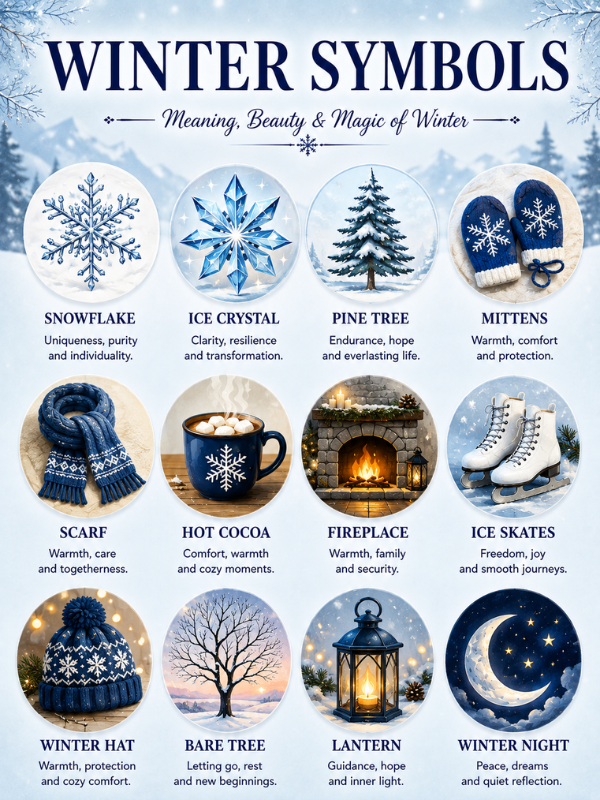
- Snowflake symbols and snow meaning are closely tied together, since snowflakes are the most recognizable representation of the entire winter season.
- Each snowflake forms a unique six-sided crystal structure, making it a popular symbol for individuality, uniqueness, and personal identity.
- Snowflakes are often used symbolically to represent fragile beauty, since they melt quickly yet remain memorable while they exist.
- In spiritual contexts, snowflakes symbolize clarity and precision, reminding people that even small details can hold significant meaning.
- Snow itself carries broader symbolism, often representing purity, silence, and a temporary pause in the usual rhythm of daily life.
- The white color of snow is frequently associated with cleanliness, innocence, and starting over after a difficult or heavy period.
- Snowflake symbols appear frequently in jewelry, tattoos, and home decor because they combine natural beauty with deep symbolic meaning.
- Snow covering the ground symbolizes protection, insulating what lies beneath until conditions become favorable for growth once again.
- Many cultures view falling snow as a peaceful, calming symbol, associated with quiet reflection and emotional stillness.
- Snowflake designs are also popular in wedding themes, symbolizing that no two relationships or love stories are ever truly identical.
- The temporary nature of snow reminds people that beauty does not need to be permanent to hold real meaning.
- Snow’s meaning often extends into literature and poetry, where it represents memory, nostalgia, and the passage of time.
- Snowflake symbols are commonly used in winter branding because they instantly evoke a recognizable, comforting seasonal feeling.
- Together, snowflake symbols and snow meaning create one of the richest visual languages associated with the winter season.
Snowflake Text Symbol❄️⛄🌲🧣🧤❄️⛄🌲🧣🧤
- The snowflake text symbol ❄ is widely used across platforms to represent winter, uniqueness, and delicate natural beauty visually.
What Does Snow Symbolize?❄️⛄🌲🧣🧤❄️⛄🌲🧣🧤
- Snow symbolizes purity, renewal, and stillness, often representing emotional cleansing and a fresh start after hardship or difficulty.
What Does Snow Represent?❄️⛄🌲🧣🧤❄️⛄🌲🧣🧤
- Snow represents quiet transformation and protection, covering the old to make space for new growth once conditions change.
Winter Symbolism And Spiritual Meaning❄️⛄🌲🧣🧤❄️⛄🌲🧣🧤
- Winter symbolism and spiritual meaning are deeply connected, with the season often representing rest, reflection, and preparation for future renewal.
- Across cultures, winter symbolizes endings that are not permanent, much like the temporary stillness before spring eventually returns again.
- The cold, quiet nature of winter is spiritually associated with introspection, encouraging people to slow down and look inward honestly.
- Bare trees and frozen landscapes symbolize vulnerability paired with resilience, showing strength that exists even without outward decoration.
- Winter’s darkness represents the unknown, teaching patience and trust that light will naturally return after difficult periods pass.
- Spiritually, winter is often seen as a symbolic death that precedes rebirth, mirroring nature’s larger cycle of renewal.
- The stillness of winter symbolizes emotional rest, giving people permission to pause without guilt during naturally slower periods of life.
- Snow blanketing the earth symbolizes protection and insulation, much like emotional boundaries protecting personal energy during difficult times.
- Winter represents discipline and endurance, reminding people that growth sometimes requires enduring discomfort before visible progress appears.
- The shortening days of winter symbolize humility, showing that even light needs periods of rest before shining fully again.
- Many spiritual traditions use winter imagery to represent letting go, similar to trees releasing leaves before the cold arrives.
- Winter symbolism also includes themes of trust, since nature rests without certainty about exactly when warmth will return.
- This spiritual meaning reassures people that quiet, unseen periods are just as important as visible growth and progress.
- Ultimately, winter symbolism teaches balance, showing that both rest and renewal are necessary parts of any meaningful cycle.
Winter Symbolism Meaning❄️⛄🌲🧣🧤❄️⛄🌲🧣🧤
- Winter symbolism centers on rest, endurance, and quiet transformation, representing a necessary pause before renewal naturally begins again.
What Does Winter Symbolize?❄️⛄🌲🧣🧤❄️⛄🌲🧣🧤
- Winter symbolizes stillness, introspection, and endurance, often representing a temporary pause before growth and renewal eventually return.
What Does Winter Represent?❄️⛄🌲🧣🧤❄️⛄🌲🧣🧤
- Winter represents rest, patience, and quiet resilience, reminding people that difficult seasons eventually give way to warmth again.
What Does Winter Symbolise?❄️⛄🌲🧣🧤❄️⛄🌲🧣🧤
- Winter symbolises reflection and inner stillness, often representing a necessary period of rest before renewal and growth resume.
What Represents Winter?❄️⛄🌲🧣🧤❄️⛄🌲🧣🧤
- Snow, bare trees, ice, and shorter days all represent winter, symbolizing stillness, endurance, and quiet seasonal transformation.
Winter Represents❄️⛄🌲🧣🧤❄️⛄🌲🧣🧤
- Winter represents rest, introspection, and patience, symbolizing a quiet pause that precedes eventual renewal and seasonal transformation ahead.
Symbolic Meaning Of Winter❄️⛄🌲🧣🧤❄️⛄🌲🧣🧤
- The symbolic meaning of winter centers on endurance, stillness, and reflection, representing rest before renewal naturally arrives again.
Winter Spiritual Meaning❄️⛄🌲🧣🧤❄️⛄🌲🧣🧤
- Winter’s spiritual meaning emphasizes introspection and patience, encouraging people to slow down and trust the process of renewal.
Cold Symbolism❄️⛄🌲🧣🧤❄️⛄🌲🧣🧤
- Cold symbolism represents discipline, emotional distance, and protection, often reflecting resilience built through enduring difficult, uncomfortable conditions.
Cultural And Unique Winter Symbols❄️⛄🌲🧣🧤❄️⛄🌲🧣🧤
- Cultural and unique winter symbols vary widely across the world, reflecting different traditions, climates, and historical relationships with the cold season.
- In Nordic cultures, symbols like the yule log and evergreen wreaths represent warmth, protection, and gathering during long dark winters.
- Japanese winter symbolism often includes plum blossoms, which bloom despite the cold, representing resilience and quiet hope during difficult times.
- Slavic traditions feature Frost figures and snow maidens, symbolizing the personification of winter as both beautiful and formidable simultaneously.
- Native American cultures often associate winter with storytelling season, using the quiet months for passing down oral history and traditions.
- Chinese winter symbolism includes themes of dormancy and balance, tied closely to the lunar calendar and seasonal transitions.
- In many European traditions, holly and mistletoe symbolize protection and life continuing even during the coldest, darkest months of the year.
- Scandinavian design often uses minimalist winter symbols like simple snowflakes and geometric ice patterns to represent calm and clarity.
- Some cultures view winter symbols as protective charms, believed to ward off negative energy during the harshest seasonal months.
- Unique winter symbols also include specific animals like the arctic fox and snowy owl, representing adaptability and quiet strength.
- Indigenous traditions in colder regions often symbolize winter through survival themes, honoring resilience, community, and shared resources.
- Cultural winter symbols frequently appear in festivals, food traditions, and seasonal clothing designed specifically for colder climates.
- These symbols carry meaning far beyond decoration, often representing deep-rooted beliefs about survival, community, and natural balance.
- Exploring cultural winter symbols reveals how differently societies interpret the same season based on geography and shared history.
- Together, these unique symbols highlight winter’s universal themes while celebrating distinct cultural perspectives worldwide.
Ancient Winter Symbols❄️⛄🌲🧣🧤❄️⛄🌲🧣🧤
- Ancient winter symbols like the yule log, evergreen wreaths, and holly represented protection, warmth, and life continuing through darkness.
Winter Symbols Not Christmas❄️⛄🌲🧣🧤❄️⛄🌲🧣🧤
- Non-Christmas winter symbols include snowflakes, icicles, frozen lakes, arctic animals, and evergreen trees representing the season itself broadly.
Winter Symbols And Meanings❄️⛄🌲🧣🧤❄️⛄🌲🧣🧤
- Common winter symbols and their meanings include snow for purity, ice for clarity, and evergreens for resilience and endurance.
Things That Represent Winter❄️⛄🌲🧣🧤❄️⛄🌲🧣🧤
- Snow, ice, bare trees, mittens, hot drinks, and shorter days all represent winter’s quiet, cold, and reflective seasonal nature.
Deep Symbolic Meaning of Winter Symbols❄️⛄🌲🧣🧤❄️⛄🌲🧣🧤
- The deep symbolic meaning of winter symbols often extends far beyond their visual appearance, touching on themes of endurance and transformation.
- Snow, for instance, symbolizes far more than cold weather, representing purification, emotional release, and a fresh start after hardship.
- Ice represents clarity forged through pressure, showing how difficult conditions can create something transparent, strong, and beautiful over time.
- Bare trees symbolize honesty and vulnerability, standing without decoration yet still demonstrating quiet strength through the harshest conditions.
- The darkness of winter days symbolizes introspection, encouraging deep reflection rather than avoidance of uncomfortable internal truths.
- Frozen water symbolizes temporary stillness, not permanent stagnation, since ice always eventually melts once conditions naturally change again.
- Winter symbols often represent the idea that rest is productive, even when nothing visible appears to be happening outwardly.
- The quietness associated with winter symbolizes emotional processing, giving space for healing that noisier seasons simply do not allow.
- Many winter symbols carry dual meanings, representing both hardship and beauty existing simultaneously within the same natural experience.
- Snowflakes symbolize individuality precisely because harsh conditions somehow still produce something entirely unique and unrepeatable every single time.
- The return of light after the winter solstice deeply symbolizes hope, showing that darkness is never truly permanent or endless.
- Winter symbols also represent trust, since nature moves forward without certainty, relying on natural rhythms and patient timing.
- This deeper symbolism explains why winter imagery remains popular in poetry, art, and personal reflection throughout generations.
- Ultimately, winter symbols teach that difficulty and beauty are not opposites but often exist together, side by side.
Types and Variations of Winter Symbols❄️⛄🌲🧣🧤❄️⛄🌲🧣🧤
- Winter symbols come in many types and variations, ranging from natural elements to man-made objects associated closely with the cold season.
- Natural winter symbols include snowflakes, icicles, frost, frozen lakes, and evergreen trees that remain green throughout the coldest months.
- Animal-based winter symbols feature creatures like the arctic fox, snowy owl, polar bear, and reindeer, representing adaptability and survival.
- Human-made winter symbols include mittens, scarves, hot beverages, sleds, and snowmen, reflecting how people physically respond to cold weather.
- Celestial winter symbols include stars and the moon, often associated with longer nights and quiet, reflective winter evenings.
- Color-based winter symbols typically use white, icy blue, and silver tones to visually represent snow, frost, and cold air.
- Seasonal food symbols also represent winter, including warm soups, spiced drinks, and comfort meals shared during colder months together.
- Decorative winter symbols like wreaths, garlands, and string lights represent gathering, celebration, and warmth despite the surrounding cold.
- Emotional winter symbols include imagery of cozy blankets and fireplaces, representing comfort found specifically during colder seasonal periods.
- Spiritual winter symbols include candles and light imagery, representing hope and guidance during the darkest days of the year.
- Cultural variations exist too, with different regions emphasizing unique symbols based on local climate, traditions, and available resources.
- Minimalist winter symbols favor simple line art and geometric shapes, popular in modern design and digital content creation.
- Vintage winter symbols often include classic imagery like horse-drawn sleighs, wool mittens, and old-fashioned snow globes.
- These varied types show how winter symbolism adapts across contexts while still maintaining recognizable, consistent seasonal themes throughout.
Winter Symbols Across Cultures❄️⛄🌲🧣🧤❄️⛄🌲🧣🧤
- Winter symbols across cultures reveal fascinating differences in how societies interpret and celebrate the same cold season worldwide.
- In Scandinavian countries, symbols like candles and fire represent light overcoming darkness during the long, dark winter months.
- Eastern European traditions often feature frost spirits and snow maidens, personifying winter as a powerful, sometimes unpredictable natural force.
- In Japan, winter symbolism includes camellias and plum blossoms, representing quiet resilience and beauty blooming despite harsh cold conditions.
- Chinese culture associates winter with the concept of yin energy, symbolizing rest, introspection, and balance within natural seasonal cycles.
- Native American traditions often use winter storytelling and star symbolism to represent guidance, patience, and community during colder months.
- In Celtic traditions, evergreen plants like holly and ivy symbolize eternal life continuing even through the darkest winter season.
- Slavic folklore features Father Frost, a symbolic figure representing both the harshness and generosity associated with deep winter conditions.
- Middle Eastern cultures, though experiencing milder winters, often symbolize the season through themes of rain, renewal, and agricultural preparation.
- Inuit and Arctic cultures symbolize winter through survival themes, honoring community cooperation and respect for harsh natural environments.
- Western holiday traditions blend religious and secular winter symbols, combining candles, evergreens, and snow imagery into shared celebrations.
- African winter symbolism, where seasons differ significantly, often focuses more on transition and preparation rather than extreme cold themes.
- These cross-cultural comparisons highlight how geography and history shape symbolic interpretation of the same natural season.
- Despite differences, most cultures share common winter themes of endurance, reflection, and eventual renewal returning again.
Winter Symbols in Art, Movies and Pop Culture❄️⛄🌲🧣🧤❄️⛄🌲🧣🧤
- Winter symbols in art, movies, and pop culture have shaped how audiences emotionally connect with the cold season across generations.
- Classic paintings often depict snow-covered landscapes to represent solitude, stillness, and quiet reflection within natural, peaceful settings.
- Movies frequently use winter symbolism to represent emotional turning points, pairing cold weather with themes of isolation or personal transformation.
- Snowfall in films often symbolizes a fresh start, appearing during pivotal scenes where characters experience change or renewal.
- Pop culture has embraced snowflakes and snowmen as friendly, approachable winter symbols suitable for family-oriented storytelling and entertainment.
- Animated films frequently use winter landscapes to symbolize magic, wonder, and childlike imagination associated with the holiday season.
- Music videos and album covers often incorporate winter imagery like frost and snow to convey emotional depth or melancholy.
- Fashion and photography use winter symbols like fur textures, icy tones, and bare branches to create dramatic visual contrast.
- Video games frequently feature winter-themed levels, using snow and ice symbolically to represent challenge, isolation, or hidden beauty.
- Literature has long used winter symbolism to represent aging, endings, or emotional distance between characters within a narrative.
- Advertising campaigns lean heavily on winter symbols during holiday seasons, using snow and warmth imagery to evoke nostalgia.
- Social media trends often popularize winter aesthetics, blending pop culture references with traditional symbolic elements like snowflakes and frost.
- These creative uses of winter symbolism keep the season culturally relevant far beyond its literal weather-related meaning.
- Overall, art and entertainment continue reinforcing winter’s symbolic association with reflection, transformation, and quiet emotional depth.
Spiritual and Dream Meaning of Winter Symbols❄️⛄🌲🧣🧤❄️⛄🌲🧣🧤
- Spiritual and dream meanings of winter symbols often reveal insights about rest, transition, and emotional processing happening beneath the surface.
- Dreaming of snow frequently symbolizes emotional clarity, suggesting that confusion or heavy feelings are beginning to settle and calm.
- Ice appearing in dreams can represent emotional distance or unresolved feelings that require gentle, patient attention over time.
- Dreaming about bare winter trees often symbolizes vulnerability, honesty, or a need to strip away unnecessary distractions in waking life.
- Cold weather in dreams may symbolize a need for emotional protection, boundaries, or temporary withdrawal from overwhelming situations.
- Snowfall in dreams frequently represents purification, suggesting that old patterns or emotional burdens are gently being released.
- Frozen water in dreams can symbolize stalled progress, encouraging patience rather than forcing movement before the right time arrives.
- Dreaming of winter darkness often represents introspection, hinting at unresolved questions requiring quiet reflection rather than immediate answers.
- Spiritually, winter dreams may signal a season of rest is needed, even if waking life feels demanding or busy.
- Snowflakes in dreams can symbolize uniqueness, reminding the dreamer that their personal path does not need to match others.
- Dreaming of winter light breaking through darkness often represents hope, signaling that difficult circumstances are beginning to improve.
- Many spiritual practitioners interpret winter dreams as invitations to slow down and honor natural emotional and energetic cycles.
- These interpretations vary by individual context, though common themes of rest, clarity, and renewal appear frequently across winter-related dreams.
- Understanding these meanings can help individuals process emotions more intentionally during naturally slower, more reflective periods of life.
Positive vs Negative Meaning of Winter Symbols❄️⛄🌲🧣🧤❄️⛄🌲🧣🧤
- Winter symbols carry both positive and negative meanings, depending on cultural context, personal experience, and the specific symbol being interpreted.
- Positively, snow represents purity, renewal, and a peaceful fresh start after emotionally heavy or difficult periods of time.
- Negatively, snow and cold can symbolize isolation, emotional distance, or feeling disconnected from warmth and meaningful human connection.
- Ice positively represents clarity and strength, while negatively it can symbolize emotional coldness, rigidity, or an inability to adapt.
- Bare winter trees positively symbolize honesty and resilience, though negatively they may represent loss, emptiness, or feeling exposed and vulnerable.
- Darkness during winter days positively encourages introspection, while negatively it can symbolize sadness, fatigue, or seasonal emotional heaviness.
- Frozen landscapes positively represent temporary rest, though negatively they may symbolize stagnation, feeling stuck, or fear of moving forward.
- Cold weather positively symbolizes discipline and endurance, while negatively it can represent harshness, hardship, or emotional withdrawal from others.
- Snowstorms positively can represent powerful transformation, though negatively they often symbolize chaos, disruption, or overwhelming uncontrollable circumstances.
- The quietness of winter positively supports rest and healing, while negatively it may symbolize loneliness or social disconnection.
- Winter’s shorter days positively symbolize patience, though negatively they can represent uncertainty or waiting without clear direction forward.
- Understanding both interpretations helps people use winter symbolism more thoughtfully in personal reflection, art, and storytelling contexts.
- Balancing positive and negative meanings allows for a more complete, realistic understanding of what winter truly represents symbolically.
- Ultimately, most winter symbols hold dual meanings, reflecting both the challenges and quiet beauty found within the season.
Why Humans Are Attracted to Winter Symbols❄️⛄🌲🧣🧤❄️⛄🌲🧣🧤
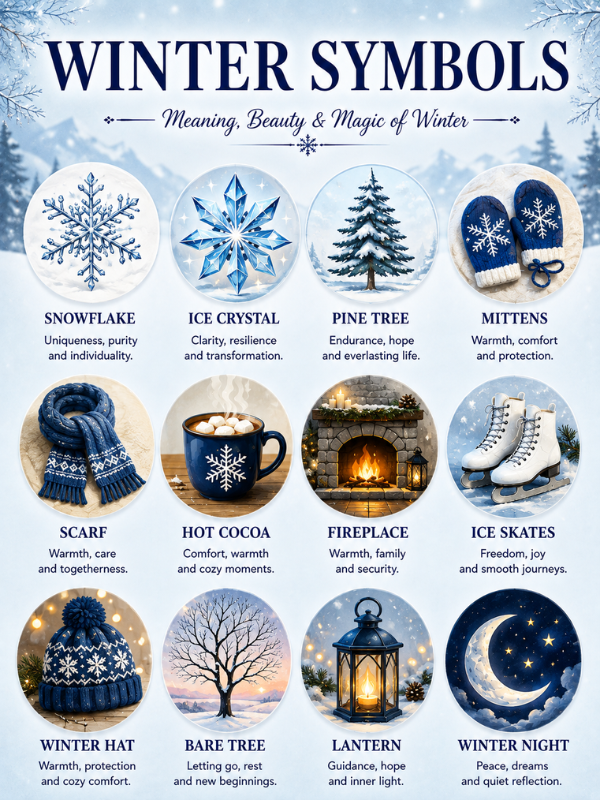
- Humans are naturally attracted to winter symbols because they evoke strong emotional associations tied to comfort, nostalgia, and shared memory.
- Winter symbols often trigger childhood memories of holidays, family gatherings, and cozy moments spent indoors during colder months.
- The visual simplicity of symbols like snowflakes appeals to people because they are instantly recognizable and easy to interpret.
- Humans are drawn to contrast, and winter symbols often represent beauty emerging from harsh, difficult, or challenging natural conditions.
- Cold weather naturally encourages slower living, and winter symbols visually represent this appealing shift toward rest and reflection.
- People are attracted to the uniqueness of snowflakes, which mirror the human desire to feel individually special and unrepeatable.
- Winter symbols also tap into a collective longing for warmth, connection, and togetherness during naturally quieter seasonal periods.
- The aesthetic appeal of icy blues, soft whites, and gentle sparkle makes winter symbols visually calming and pleasant.
- Humans often associate winter symbols with safety and shelter, representing the comfort of home during colder outdoor conditions.
- Symbols like hot drinks and blankets appeal emotionally because they represent self-care and intentional slowing down.
- Cultural conditioning through holidays and media reinforces positive associations with winter symbols from a very young age.
- People also enjoy winter symbols because they mark meaningful seasonal transitions, offering a sense of structure and anticipation.
- The mystery and quiet magic often associated with snowfall taps into deep-rooted human curiosity and wonder.
- Ultimately, humans are attracted to winter symbols because they blend comfort, beauty, and meaningful emotional storytelling together.
Frequently Asked Questions ❄️⛄🌲🧣🧤❄️⛄🌲🧣🧤
What is the main symbol of winter?
- Snow and snowflakes are widely considered the main symbols of winter, representing purity, stillness, and seasonal transformation.
What does a snowflake symbolize spiritually?
- Spiritually, a snowflake symbolizes individuality and clarity, showing that uniqueness can emerge even from cold, difficult conditions.
Is ice a symbol of strength or weakness?
- Ice is generally seen as a symbol of strength and clarity, though it can also represent emotional distance.
What animals represent winter symbolically?
- Animals like the arctic fox, polar bear, and snowy owl symbolically represent winter through resilience and adaptability.
Why is winter associated with new beginnings?
- Winter is associated with new beginnings because its stillness represents rest before the natural renewal of spring arrives.
What color best represents winter symbolically?
- White is the color most associated with winter, symbolizing purity, calmness, and a fresh, quiet start.
Are winter symbols the same in every culture?
- No, winter symbols vary by culture, though most share common themes of rest, endurance, and eventual renewal.
Can winter symbols be used outside the holiday season?
- Yes, winter symbols like snowflakes and ice are often used year-round in design, jewelry, and personal branding.
Conclusion❄️⛄🌲🧣🧤❄️⛄🌲🧣🧤
Winter symbols teach us more than we realize at first glance. Snow shows us that endings can be gentle and full of grace. Fire reminds us that warmth is possible even in hard times. Silence gives us space to think, heal, and grow quietly. Together, these symbols tell a simple story about life’s natural cycles. They remind us that rest is not weakness, but a needed part of growth.
As we move into 2026, these old symbols still hold real meaning. We live busy lives, but winter asks us to slow down for a while. Snow, fire, and silence are simple, yet they carry deep spiritual lessons. They remind us to trust quiet moments, even when nothing feels certain. Winter is not just cold weather passing by outside. It is a gentle reminder that every season, even the hardest one, has its own quiet purpose.
