
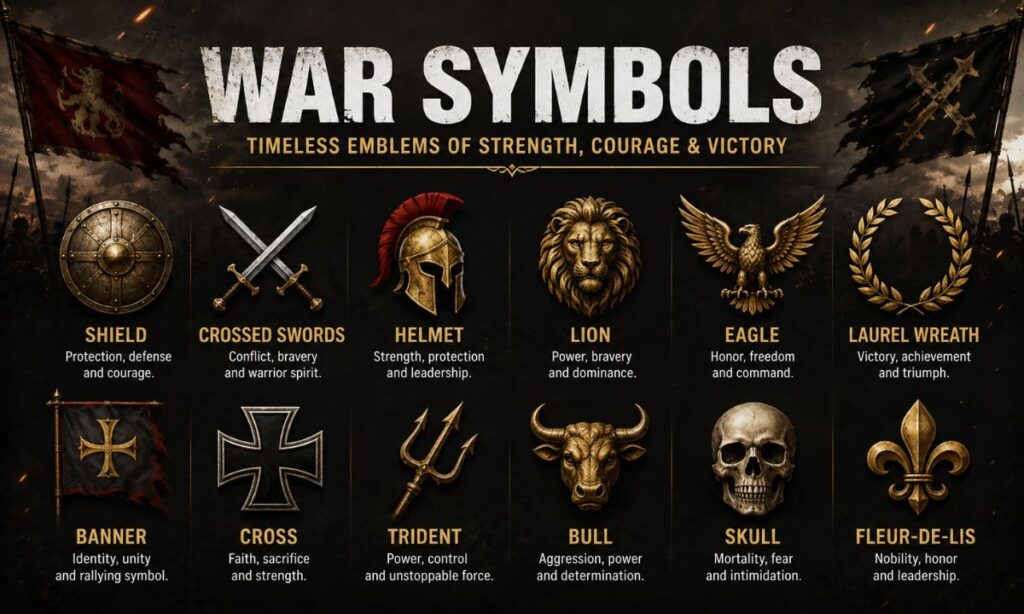
War symbols have fascinated people for thousands of years. From ancient swords to modern flags, these symbols carry deep meaning. Warriors once used them to show strength and courage in battle. Empires built entire identities around powerful signs and images. Every symbol tells a story of struggle, honor, and survival. This guide explores over 90 iconic war symbols from history.
You will learn about legendary warriors and the symbols they carried. You will also discover how great empires used symbols to show power. Each symbol has its own unique history and hidden meaning. Some represent courage, while others represent protection or victory. This journey covers ancient times all the way to modern culture. By the end, you will understand why these symbols still matter today
What Are War Symbols?
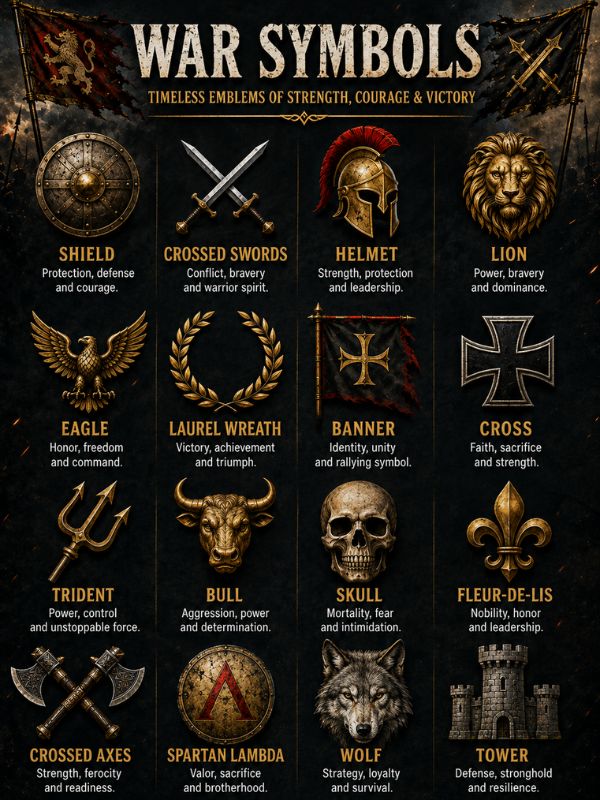
- War symbols are visual signs, objects, or images that represent conflict, battle, struggle, or armed confrontation between opposing groups or nations.
- They have existed since ancient times, appearing on shields, banners, weapons, and monuments across nearly every early civilization known to historians.
- These symbols often carry emotional weight, representing courage, sacrifice, aggression, victory, or loss depending on the cultural and historical context.
- Common examples include swords, shields, eagles, skulls, flags, and mythical creatures associated with strength and dominance in battle.
- Different cultures developed their own unique war symbols based on religion, mythology, geography, and available materials for craftsmanship.
- Some symbols were used purely for intimidation, while others carried deeper spiritual or protective meanings for warriors heading into battle.
- Over centuries, many war symbols evolved from practical battlefield markers into powerful cultural icons recognized worldwide today.
- Modern society still uses war symbols in tattoos, movies, literature, video games, and national emblems to convey strength.
- Understanding war symbols helps people appreciate history, mythology, psychology, and the human relationship with conflict and survival instincts.
- These symbols also appear in dreams, art, and pop culture, reflecting humanity’s ongoing fascination with power and struggle.
- Studying war symbols reveals how societies process fear, honor bravery, and remember the sacrifices made during times of war.
Symbols Of War And Their Deep Meanings
- War symbols carry layered meanings that go far beyond their surface appearance, often reflecting deep human emotions tied to conflict.
- Many symbols represent duality, showing both destruction and protection depending on how and where they are used.
- A sword can symbolize aggression in one context and justice or honor in another entirely different setting.
- Shields often represent defense, safety, and the protection of loved ones or homeland during dangerous and uncertain times.
- Skulls and bones frequently symbolize mortality, danger, and the harsh reality that war brings death to many people.
- Flags and banners represent unity, identity, and the collective spirit of a nation or group fighting together.
- Eagles and lions often symbolize power, dominance, and fearless leadership admired by warriors and military commanders throughout history.
- Dragons appear in many cultures as symbols of chaos, strength, and the overwhelming force associated with large-scale warfare.
- Poppies became a modern symbol of remembrance, honoring soldiers who died fighting in wars across generations.
- These deeper meanings shift across cultures, religions, and time periods, making war symbolism a rich and layered subject.
- Recognizing these hidden meanings helps people understand why war symbols remain powerful and emotionally resonant even today.
Symbols Of War
- Symbols of war include weapons, animals, colors, and mythological figures that represent conflict, strength, and battlefield courage throughout history.
- Swords remain one of the oldest and most recognized symbols, representing both violence and honor depending on cultural context.
- Shields symbolize protection and defense, often decorated with family crests or national emblems to show group identity.
- Eagles are frequently used by militaries worldwide to represent power, vision, and dominance over enemies during warfare.
- Skulls and crossbones warn of danger and death, often used on flags, uniforms, and weapons for intimidation.
- Red colors symbolize bloodshed and sacrifice, appearing frequently in war-related artwork, uniforms, and national flags.
- Fire and flames represent destruction and the burning aftermath commonly associated with battles and military conquest.
- Chains sometimes symbolize captivity or the breaking of bonds through victorious struggle and hard-fought battlefield triumph.
- Spears and arrows represent precision, hunting instincts, and the ancient roots of organized human warfare and combat.
- Together, these symbols form a visual language that communicates the intensity and consequences of armed conflict.
- Overall, this aspect of symbols of war continues to shape how people understand and interpret war symbolism today.
War Symbolism
- War symbolism refers to the deeper meanings attached to objects, colors, and images associated with conflict and military struggle.
- Symbolism allows complex emotions like fear, courage, and loss to be communicated visually without requiring lengthy explanation or words.
- Ancient warriors used symbolism on armor and banners to intimidate enemies while boosting their own troops’ morale.
- Religious groups often infused war symbolism with spiritual meaning, believing certain symbols offered divine protection during dangerous battles.
- Colors play a major role in war symbolism, with red representing blood, black representing death, and gold representing glory.
- Animals chosen for war symbolism, like wolves, lions, and eagles, reflect traits admired in fierce and successful warriors.
- War symbolism also appears in literature and mythology, where gods and heroes carry weapons representing justice, wrath, or protection.
- Modern war symbolism continues through military insignia, national flags, and memorial monuments honoring soldiers and historical battles.
- Tattoo culture has adopted war symbolism heavily, with people choosing swords, shields, or skulls to represent personal strength.
- Understanding war symbolism offers insight into how humans have historically processed violence, honor, and collective identity.
- Overall, this aspect of war symbolism continues to shape how people understand and interpret war symbolism today.
Symbols That Mean War
- Certain symbols are universally recognized as representing war, conflict, and the harsh realities of armed confrontation between groups.
- Crossed swords are among the most direct symbols meaning war, commonly used in military insignia and heraldry.
- A raised fist can symbolize resistance, rebellion, or readiness to fight against oppression or injustice.
- Broken chains sometimes represent the war fought for freedom, liberation, or breaking free from captivity.
- A blood-red flag has historically signaled war, danger, or a declaration of hostile intent between nations.
- The skull and crossbones symbol warns of death and is often associated with piracy, danger, and battlefield mortality.
- Cannons and artillery symbols represent large-scale organized warfare and the destructive power of modern military technology.
- A drawn bow or arrow symbolizes readiness for conflict, precision, and the ancient roots of combat traditions.
- Barbed wire has become a modern symbol of war, representing division, imprisonment, and battlefield boundaries.
- These symbols collectively communicate the seriousness, danger, and emotional weight carried by armed conflict throughout history.
- Overall, this aspect of symbols that mean war continues to shape how people understand and interpret war symbolism today.
War Symbols Copy And Paste
- Many people search for war symbols in emoji or text form to copy and paste into messages, social media, or designs.
- Common copy-paste war symbols include the crossed swords emoji, representing battle, conflict, or competitive rivalry between two parties.
- The shield emoji is often copied to represent protection, defense, or standing strong against opposition and challenges.
- The skull emoji is frequently used to symbolize danger, death, or intense competitive battles in gaming culture.
- Fire emojis are commonly paired with war symbols to represent destruction, intensity, or an aggressive fighting spirit.
- Flag emojis are used to represent national pride, military identity, or allegiance during symbolic online conflicts.
- The explosion emoji visually represents sudden conflict, chaos, or the destructive impact of war and battle.
- Dagger and knife emojis are popular copy-paste symbols representing sharp conflict, betrayal, or aggressive confrontation.
- People use these symbols creatively in usernames, captions, and gaming profiles to express a fierce or battle-ready persona.
- Copy-paste war symbols allow quick, universal communication of conflict-related emotions without needing detailed written explanation.
- Overall, this aspect of war symbols copy and paste continues to shape how people understand and interpret war symbolism today.
War Symbols Tattoos
- War symbol tattoos are popular choices for people wanting to express strength, resilience, and personal battles overcome in life.
- Sword tattoos often represent honor, discipline, and the wearer’s readiness to face challenges with courage and determination.
- Shield tattoos symbolize protection, loyalty, and a commitment to defending family, beliefs, or personal values fiercely.
- Skull tattoos with battle themes represent mortality, fearlessness, and acceptance of life’s inevitable struggles and hardships.
- Eagle tattoos are chosen to symbolize freedom, strength, and victorious triumph over difficult obstacles and adversaries.
- Dragon tattoos represent immense power, chaos, and the ability to overcome overwhelming odds through sheer will.
- Viking-themed war symbol tattoos, like axes and shields, represent ancestry, bravery, and a warrior spirit.
- Poppy tattoos are often chosen to honor fallen soldiers, representing remembrance, sacrifice, and eternal gratitude for service.
- Armor-themed tattoos symbolize emotional protection, resilience, and the wearer’s strength built through past personal battles.
- War symbol tattoos remain timeless because they visually represent inner strength forged through struggle and survival.
- Overall, this aspect of war symbol tattoos continues to shape how people understand and interpret war symbolism today.
Symbols For War
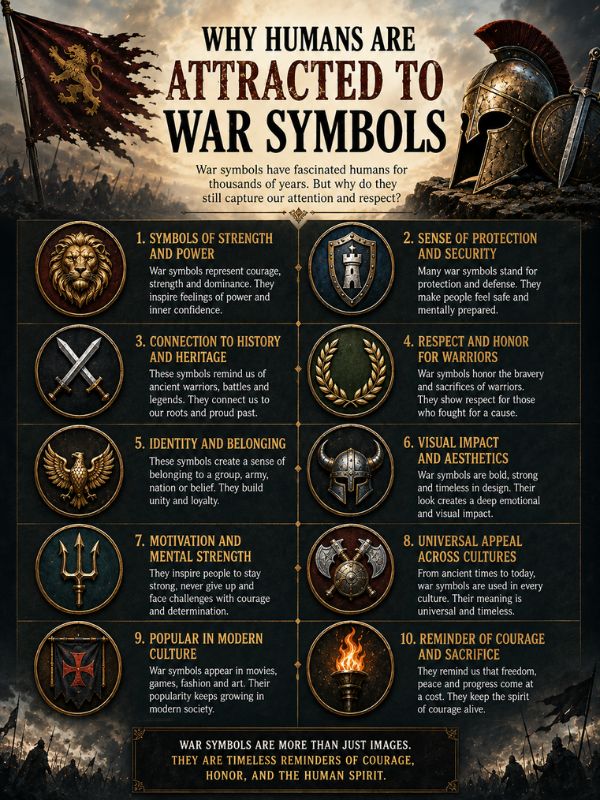
- Symbols for war are chosen based on their ability to represent power, aggression, protection, or the seriousness of conflict.
- Weapons like swords, spears, and axes are classic symbols for war, representing direct combat and physical strength.
- Shields represent defensive war symbols, showing preparation, protection, and readiness to withstand enemy attacks and pressure.
- National flags serve as symbols for war, rallying troops and citizens around a shared cause or identity.
- Military ranks and insignia act as symbols for war, showing authority, experience, and leadership within organized forces.
- Animal symbols, like wolves and lions, represent the ferocity and hunting instincts admired in successful warriors.
- Fire and explosions symbolize the destructive nature of war, representing chaos and the devastating impact of battle.
- Chains and shackles symbolize the war fought for freedom, representing oppression and the fight against captivity.
- Crosses and religious symbols have historically represented holy wars, crusades, and spiritually motivated military campaigns.
- These symbols for war collectively express humanity’s long and complicated relationship with organized conflict and struggle.
- Overall, this aspect of symbols for war continues to shape how people understand and interpret war symbolism today.
Famous Ancient And Historical War Symbols
- Ancient civilizations developed powerful war symbols that remain recognizable and influential in modern culture, art, and design today.
- The Roman eagle, known as the Aquila, symbolized imperial power, military strength, and the unstoppable force of Rome’s legions.
- Spartan shields featured the lambda symbol, representing Laconia and instilling fear in enemies who faced disciplined warriors.
- Viking warriors used the Valknut symbol, representing death in battle and passage into the afterlife of Valhalla.
- Egyptian pharaohs used the falcon god Horus as a war symbol, representing protection and divine battlefield authority.
- The Greek Spartan helmet became a lasting symbol of discipline, sacrifice, and unmatched military training and preparation.
- Celtic warriors used spiral and knot designs, believed to offer protection and spiritual strength during dangerous battles.
- Chinese dynasties used dragon imagery extensively, symbolizing imperial power, control, and dominance over rival kingdoms and enemies.
- Native American tribes used feathers and animal totems as war symbols, representing courage, wisdom, and spiritual guidance.
- These ancient historical war symbols continue to inspire modern military insignia, tattoos, and popular culture references worldwide.
- Overall, this aspect of famous ancient and historical war symbols continues to shape how people understand and interpret war symbolism today.
War Symbols Emoji
- War symbols emoji allow people to express conflict-related emotions quickly through simple, universally recognized digital pictures and icons.
- The crossed swords emoji is one of the most popular, representing battle, rivalry, or intense competition online.
- The shield emoji represents protection, defense, or standing firm against criticism, opposition, or online conflict.
- The explosion emoji visually communicates sudden chaos, destruction, or an intense emotional reaction during heated conversations.
- The skull emoji often represents danger, defeat, or dramatic exaggeration when discussing intense gaming or social battles.
- The fire emoji is frequently paired with war symbols to intensify meaning, representing aggression or overwhelming passion.
- The dagger emoji suggests betrayal, sharp conflict, or hidden tension between individuals in personal or public disputes.
- The bow and arrow emoji represents precision, readiness, and targeted conflict in both literal and figurative contexts.
- Flag emojis represent national pride, military service, or allegiance during symbolic conversations about history or politics.
- These war symbols emoji make it easy to communicate powerful conflict-related emotions instantly across digital platforms.
- Overall, this aspect of war symbols emoji continues to shape how people understand and interpret war symbolism today.
War Symbols WW2
- World War Two produced powerful and lasting symbols that still carry heavy historical and emotional significance today.
- The swastika became one of history’s most infamous war symbols, representing hatred, destruction, and unimaginable human suffering.
- The hammer and sickle represented Soviet military strength and ideology during intense battles fought across Eastern Europe.
- The rising sun flag symbolized Japanese imperial military power and aggressive expansion throughout the Pacific region.
- Victory rolls in hairstyles became a symbol of resilience among women supporting war efforts on the home front.
- The poppy flower became strongly associated with remembrance, honoring soldiers who died during the devastating global conflict.
- Barbed wire became a haunting symbol representing prison camps, division, and the brutal restriction of human freedom.
- Bomber planes and fighter jets became powerful symbols of technological advancement and destructive military capability during this era.
- Ration books and blackout curtains symbolized civilian sacrifice and the widespread impact of war beyond the battlefield.
- These WW2 war symbols remain historically significant, reminding people of both heroism and tremendous global tragedy.
- Overall, this aspect of war symbols ww2 continues to shape how people understand and interpret war symbolism today.
War Symbols And Meanings
- War symbols and their meanings vary widely depending on cultural background, historical period, and the specific context of use.
- A sword often means strength, honor, and the discipline required to master combat and protect others.
- A shield typically means protection, safety, and the responsibility of defending family, community, or homeland from harm.
- Skulls generally mean death, danger, or the harsh mortality faced by soldiers during intense and prolonged warfare.
- Eagles commonly mean power, vision, and fearless leadership admired across military organizations and national symbols worldwide.
- Red colors usually mean bloodshed, sacrifice, and the emotional cost paid by soldiers and their families.
- Chains often mean captivity, oppression, or the fight for freedom fought bravely during liberation movements.
- Fire typically means destruction, transformation, or the intense chaos experienced during large-scale military conflict and battle.
- Flags generally mean unity, identity, and the collective pride shared among soldiers fighting for a common cause.
- Understanding these meanings helps people interpret war symbols correctly across art, literature, tattoos, and historical monuments.
- Overall, this aspect of war symbols and meanings continues to shape how people understand and interpret war symbolism today.
Ancient War Symbols
- Ancient war symbols emerged from early civilizations that needed visual representations of strength, protection, and battlefield authority.
- The Egyptian Eye of Horus was believed to offer protection and guidance to warriors entering dangerous battles.
- Mesopotamian lion imagery represented royal power and the fierce strength required to defend growing early civilizations.
- Greek warriors used the Gorgon’s head symbol on shields, believed to frighten enemies and offer protection.
- Roman legions carried standards topped with eagles, symbolizing imperial authority and unstoppable military discipline and strength.
- Celtic warriors used triskele symbols, representing movement, progress, and continuous strength throughout difficult and prolonged battles.
- Norse warriors used runes believed to provide magical protection and strength during intense Viking raids and battles.
- Chinese warriors used dragon and tiger imagery, symbolizing dominance, power, and control over rival territories.
- Persian warriors used winged sun symbols representing divine protection and royal authority granted by their ruling gods.
- These ancient war symbols reveal how early humans combined spirituality, art, and combat into meaningful protective imagery.
- Overall, this aspect of ancient war symbols continues to shape how people understand and interpret war symbolism today.
War Symbols Greek
- Greek war symbols reflect the mythology, discipline, and military culture that shaped ancient Greek civilization and warfare traditions.
- The Spartan lambda symbol, painted on shields, represented the region of Laconia and struck fear into enemy soldiers.
- The owl symbolized Athena, goddess of wisdom and strategic warfare, guiding Greek warriors toward tactical victory.
- The Gorgon’s head, or Medusa symbol, was used on shields to frighten enemies and offer magical protection.
- The trident represented Poseidon, symbolizing power over both the sea and the chaos of naval warfare.
- The laurel wreath symbolized victory and honor, awarded to warriors and athletes who achieved great success.
- The phalanx formation itself became symbolic of Greek military discipline, unity, and coordinated battlefield strength.
- The Greek helmet design became an enduring symbol representing courage, protection, and disciplined military preparation.
- Ares, the god of war, symbolized aggression, bloodshed, and the brutal chaotic nature of armed conflict.
- These Greek war symbols reflect a civilization deeply connected to mythology, honor, and battlefield strategy.
- Overall, this aspect of war symbols greek continues to shape how people understand and interpret war symbolism today.
Symbols Of War In Mythology
- Mythology across cultures features powerful symbols representing gods, weapons, and creatures associated with conflict and destructive battlefield power.
- Norse mythology features Odin’s spear, Gungnir, symbolizing authority, wisdom, and unstoppable power during battle and conflict.
- Greek mythology features Ares, the god of war, representing aggression, bloodlust, and the chaotic nature of combat.
- Hindu mythology features Kartikeya’s spear, Vel, symbolizing victory over evil and protection during righteous spiritual battles.
- Egyptian mythology features Sekhmet, a lioness goddess symbolizing destruction, war, and fierce protective power over ancient Egypt.
- Celtic mythology features the Morrigan, a war goddess symbolizing prophecy, death, and battlefield transformation and fate.
- Japanese mythology features Hachiman, the god of war, symbolizing protection, honor, and guidance for samurai warriors.
- Aztec mythology features Huitzilopochtli, a war god symbolizing sun, sacrifice, and the necessity of continuous conflict.
- Slavic mythology features Perun, a thunder and war god symbolizing strength, justice, and battlefield authority and power.
- These mythological war symbols reveal how ancient cultures explained conflict through powerful divine and supernatural forces.
- Overall, this aspect of symbols of war in mythology continues to shape how people understand and interpret war symbolism today.
What Symbolizes War?
- Many objects and images symbolize war, each representing a different aspect of conflict, sacrifice, or battlefield experience.
- Weapons like swords and spears symbolize war directly, representing the physical tools used during armed combat.
- Shields symbolize the defensive side of war, representing protection and the instinct to survive dangerous situations.
- Flags symbolize war through national identity, rallying soldiers and citizens around a shared cause or mission.
- Fire and explosions symbolize the destructive chaos and devastation commonly experienced during intense military conflict.
- Skulls symbolize the mortality and death that inevitably accompany prolonged and large-scale warfare between opposing forces.
- Chains symbolize the loss of freedom, often representing the reasons nations and individuals choose to fight wars.
- Red colors symbolize bloodshed and sacrifice, frequently appearing in war memorials, uniforms, and historical artwork.
- Eagles and lions symbolize the strength, leadership, and dominance associated with successful military commanders and warriors.
- Together, these symbols create a visual language representing the complex emotional and physical realities of war.
- Overall, this aspect of what symbolizes war continues to shape how people understand and interpret war symbolism today.
Deep Symbolic Meaning of War Symbols
- War symbols carry meanings that extend far beyond their physical appearance, touching on spiritual, psychological, and emotional dimensions.
- These symbols often reflect humanity’s ongoing struggle between destruction and protection, chaos and order, fear and courage.
- Many war symbols were originally created to provide spiritual protection, believed to shield warriors from harm during dangerous battles.
- Psychologically, war symbols represent inner strength, resilience, and the human capacity to overcome overwhelming adversity and hardship.
- Culturally, war symbols preserve collective memory, honoring ancestors who fought and sacrificed for their communities and beliefs.
- Some symbols represent transformation, showing how conflict can lead to growth, change, and eventual peace afterward.
- Other symbols emphasize warning and caution, reminding people of the devastating consequences that accompany armed conflict.
- War symbols also express identity, helping individuals and groups define themselves through shared history and battlefield experience.
- The deep symbolic meaning behind these images explains why they remain powerful across centuries and countless cultures.
- Exploring these meanings offers valuable insight into how humans process fear, honor, and survival instincts.
- Overall, this aspect of deep symbolic meaning of war symbols continues to shape how people understand and interpret war symbolism today.
Spiritual Meaning
- The spiritual meaning of war symbols often centers on protection, guidance, and connection to divine or supernatural forces during battle.
- Many ancient warriors believed certain symbols offered magical protection, shielding them from injury or death in combat.
- Spiritual war symbols were often blessed by priests or shamans before battles, believed to strengthen warriors’ courage and resolve.
- Some cultures believed war symbols connected warriors to ancestors, drawing strength and guidance from those who fought before them.
- Symbols like the Valknut represented spiritual passage into the afterlife, offering comfort to warriors facing possible death.
- Religious war symbols, like crosses or crescents, represented divine approval and spiritual justification for fighting sacred battles.
- Totem animals used in war symbolism were believed to grant warriors specific spiritual traits like courage or ferocity.
- Many spiritual traditions viewed war symbols as tools for channeling protective energy during dangerous and uncertain times.
- The spiritual meaning behind war symbols reveals humanity’s deep need for comfort and guidance during violent conflict.
- These beliefs continue influencing modern spiritual practices, tattoos, and personal symbolism today.
- Overall, this aspect of spiritual meaning continues to shape how people understand and interpret war symbolism today.
Psychological Meaning
- The psychological meaning of war symbols often relates to inner strength, resilience, and the human response to fear and adversity.
- War symbols can represent personal battles fought internally, such as overcoming trauma, addiction, or significant life challenges.
- Choosing a sword tattoo, for example, may psychologically represent discipline, control, and readiness to face difficult situations.
- Shields often carry psychological meaning related to emotional protection, boundaries, and safeguarding oneself from harm or negativity.
- Skull imagery can psychologically represent acceptance of mortality, encouraging people to live boldly despite life’s uncertainties.
- Fire symbolism often reflects intense passion, transformation, or the emotional burning that accompanies major personal struggles.
- Chains can psychologically represent past limitations, while broken chains symbolize freedom achieved through overcoming difficult circumstances.
- War symbols provide psychological comfort by externalizing internal struggles into recognizable, powerful, and meaningful visual representations.
- These symbols help individuals process difficult emotions, giving shape and meaning to personal hardship and resilience.
- Understanding this psychological meaning explains why war symbols remain popular in tattoos and personal expression today.
- Overall, this aspect of psychological meaning continues to shape how people understand and interpret war symbolism today.
Cultural Meaning
- The cultural meaning of war symbols reflects the unique history, values, and beliefs of different societies throughout human history.
- Each culture developed war symbols based on available resources, religious beliefs, and the specific enemies they faced.
- Viking war symbols reflect a culture centered on honor, exploration, and preparation for the afterlife through battle.
- Japanese war symbols reflect samurai values like discipline, loyalty, and honor above personal safety or comfort.
- Native American war symbols reflect spiritual connection to nature, using animal totems to represent specific warrior qualities.
- Roman war symbols reflect a highly organized military culture focused on discipline, expansion, and imperial authority.
- Celtic war symbols reflect a culture deeply connected to nature, spirituality, and protective magical practices during battle.
- African war symbols often reflect community unity, ancestral respect, and the collective strength needed for tribal defense.
- These cultural meanings show how war symbols served practical, spiritual, and social purposes within their societies.
- Studying cultural meaning helps preserve historical understanding of how different civilizations approached conflict and survival.
- Overall, this aspect of cultural meaning continues to shape how people understand and interpret war symbolism today.
Powerful Types of War Symbols and Their Meanings
- War symbols come in many powerful forms, each representing different aspects of strength, protection, danger, and battlefield honor.
- These symbols range from real weapons and animals to mythical creatures and natural elements associated with conflict.
- Understanding the specific meaning behind each symbol helps clarify why certain images became so closely tied to war.
- Some symbols emphasize offensive power, representing the aggressive and destructive nature of armed combat and battle.
- Other symbols emphasize defense and protection, representing the instinct to survive and shield others from harm.
- Certain symbols carry spiritual weight, believed to offer supernatural protection or guidance to warriors facing danger.
- Animal symbols often represent specific traits admired in warriors, such as courage, ferocity, loyalty, or intelligence.
- Mythical creatures like dragons represent overwhelming power and chaos associated with large-scale, devastating military conflict.
- Natural elements like fire and blood-red colors visually represent the destruction and sacrifice inherent in warfare.
- Exploring these powerful war symbol types reveals the rich, layered history behind humanity’s relationship with conflict.
- Overall, this aspect of powerful types of war symbols and their meanings continues to shape how people understand and interpret war symbolism today.
Eagle Symbol
Visual Description
- The eagle symbol typically features sharp talons, powerful wings spread wide, and a fierce, forward-facing intense gaze.
- Eagles are often depicted mid-flight or perched atop weapons, shields, or national crests in artistic representations.
- The bird’s sharp beak and piercing eyes emphasize vigilance, strength, and unwavering focus during dangerous situations.
- Feathers are usually drawn in detailed, layered patterns, symbolizing precision and the eagle’s commanding aerial presence.
- Military versions often show the eagle gripping arrows or weapons, emphasizing readiness and battlefield authority visually.
- The wingspan is frequently exaggerated in artwork, representing dominance and the eagle’s far-reaching influence and power.
- Golden or dark bronze coloring is common, reinforcing themes of nobility, strength, and royal military authority.
- Some depictions include a crown or laurel wreath, combining the eagle with symbols of victory and honor.
- The overall visual impression conveys power, freedom, and fearless dominance over both sky and battlefield.
- This striking imagery explains why eagles remain popular across military insignia and national emblems worldwide.
- Overall, this aspect of visual description continues to shape how people understand and interpret war symbolism today.
Meaning
- The eagle symbol primarily represents power, vision, and fearless leadership admired throughout military history and national identity.
- Its keen eyesight symbolizes strategic foresight, representing leaders and warriors capable of seeing beyond immediate battlefield challenges.
- As a top predator, the eagle represents dominance, strength, and the ability to overcome rivals and enemies.
- Flight represents freedom, showing the eagle’s connection to independence and the pursuit of higher goals and victory.
- Many cultures associate eagles with divine authority, believing the bird carries messages or blessings from powerful gods.
- The eagle’s fierce nature symbolizes aggression balanced with control, representing disciplined strength rather than reckless violence.
- Military organizations use the eagle to represent national pride, unity, and the collective strength of armed forces.
- The symbol also represents protection, as eagles fiercely defend their territory and offspring from potential threats.
- Overall, the eagle meaning combines power, vision, freedom, and protective strength into one powerful image.
- This combination makes the eagle one of the most respected and widely used war symbols globally.
- Overall, this aspect of meaning continues to shape how people understand and interpret war symbolism today.
Where It Appears
- The eagle symbol appears prominently on national flags, military insignia, and government seals representing strength and authority worldwide.
- Ancient Roman legions carried eagle standards, known as Aquilas, symbolizing imperial power and unstoppable military discipline.
- The United States uses the bald eagle as its national emblem, representing freedom, strength, and independence.
- German military history also features eagle imagery extensively, symbolizing authority, power, and national pride during various periods.
- Eagles appear on coins, medals, and awards given to soldiers recognized for bravery and outstanding military service.
- Many police and military badges incorporate eagle imagery, representing vigilance, authority, and protective law enforcement.
- Eagle tattoos remain popular among military personnel, symbolizing personal strength, freedom, and battlefield pride and honor.
- Sports teams often adopt eagle mascots, borrowing the symbol’s association with power, dominance, and competitive strength.
- Eagle imagery also appears frequently in movies, literature, and artwork depicting themes of war and heroism.
- This widespread presence confirms the eagle’s lasting status as one of history’s most recognized war symbols.
- Overall, this aspect of where it appears continues to shape how people understand and interpret war symbolism today.
Sword Symbol
Visual Description
- The sword symbol typically features a long, sharp blade, a protective hilt, and a pointed tip designed for combat.
- Blades are often drawn straight and gleaming, emphasizing precision, sharpness, and the weapon’s deadly cutting potential.
- The hilt usually includes a crossguard, protecting the wielder’s hand while adding balance and structural strength visually.
- Some artistic depictions show the sword raised high, symbolizing readiness, aggression, or a declaration of battle.
- Other depictions show the sword planted into the ground, representing rest, mourning, or the end of conflict.
- Crossed swords are a common visual variation, representing rivalry, competition, or organized military conflict between forces.
- Decorative engravings on the blade often add symbolic detail, representing honor, lineage, or specific warrior achievements.
- The overall silhouette remains simple yet powerful, making the sword instantly recognizable across countless cultures and eras.
- Lighting and shading in artwork often emphasize the blade’s sharp edge, reinforcing danger and lethal precision.
- This striking visual design explains why swords remain one of the most iconic war symbols ever created.
- Overall, this aspect of visual description continues to shape how people understand and interpret war symbolism today.
Meaning
- The sword symbol primarily represents strength, honor, and the discipline required to master combat and protect others effectively.
- In many cultures, the sword represents justice, particularly when depicted alongside scales or held by authority figures.
- The sword also symbolizes power and leadership, historically carried by kings, knights, and respected military commanders.
- Drawing a sword traditionally represented a declaration of conflict, while sheathing it symbolized peace or resolution.
- The blade’s sharpness symbolizes precision, decisiveness, and the ability to cut through obstacles or difficult situations.
- Swords passed down through generations symbolize legacy, family honor, and the continuation of warrior traditions and values.
- In spiritual contexts, swords can represent truth, cutting through illusion or falsehood to reveal clarity and understanding.
- The sword’s dual edges sometimes symbolize balance, representing both the power to protect and the power to harm.
- Overall, the sword meaning combines honor, strength, and discipline into one of history’s most respected symbols.
- This deep symbolism explains the sword’s continued popularity in tattoos, literature, and modern storytelling.
- Overall, this aspect of meaning continues to shape how people understand and interpret war symbolism today.
Where It Appears
- The sword symbol appears throughout history on flags, coats of arms, and military insignia representing strength and authority.
- Medieval knights carried swords as both practical weapons and symbols of chivalry, honor, and noble duty.
- Many national emblems feature crossed swords, representing military strength, readiness, and a nation’s commitment to defense.
- Religious and ceremonial contexts often feature swords, symbolizing authority, justice, or the swearing of solemn oaths.
- Swords appear frequently in mythology and literature, wielded by legendary heroes representing courage and righteous battlefield victory.
- Museums worldwide display historical swords, preserving their cultural and symbolic significance across different civilizations and time periods.
- Sword tattoos remain popular choices, symbolizing personal strength, protection, and resilience through difficult life challenges.
- Video games and movies frequently feature sword imagery, reinforcing its association with heroism, adventure, and battle.
- Sports and competitive events sometimes use crossed swords logos, representing rivalry, skill, and competitive strength.
- This widespread presence confirms the sword’s lasting legacy as one of humanity’s most powerful war symbols.
- Overall, this aspect of where it appears continues to shape how people understand and interpret war symbolism today.
Skull and Crossbones
Visual Description
- The skull and crossbones symbol features a human skull positioned above two crossed bones, typically drawn in stark white.
- The skull’s hollow eye sockets and exposed teeth create an immediately recognizable and unsettling visual impression for viewers.
- The crossed bones beneath add balance to the design while reinforcing themes of death and mortality visually.
- This symbol is often drawn in bold black and white, maximizing contrast for quick and clear recognition.
- Some variations include additional details like cracks in the skull or shadows to increase dramatic visual intensity.
- The symbol is frequently placed on flags, warning signs, or weapons to communicate danger and serious threat.
- Pirate flags historically used this design prominently, combining it with other elements for added intimidation and effect.
- The simplicity of the design allows it to remain effective even at small sizes or from a distance.
- This striking, minimalist visual style explains why the skull and crossbones remain instantly recognizable worldwide today.
- Its stark imagery continues to communicate danger, death, and warning across countless modern applications and contexts.
- Overall, this aspect of visual description continues to shape how people understand and interpret war symbolism today.
Meaning
- The skull and crossbones symbol primarily represents death, danger, and mortality, serving as a warning to those who see it.
- Historically, this symbol warned of poison, toxic substances, or life-threatening danger in various practical and medical contexts.
- In warfare, the symbol represented the harsh reality that soldiers faced death as a constant possibility during battle.
- Pirates famously used this symbol to intimidate enemy ships, signaling ruthless intent and a willingness to kill.
- The symbol also represents rebellion and defiance, often adopted by groups challenging authority or established social norms.
- Some interpretations view the skull as a reminder of mortality, encouraging people to live boldly and fearlessly.
- Military units have historically used skull imagery to project fearlessness and intimidate opposing forces during conflict.
- The crossed bones beneath the skull reinforce finality, representing the irreversible consequences associated with death and danger.
- Overall, this symbol’s meaning centers on mortality, warning, and the serious consequences tied to dangerous situations.
- Its powerful and direct meaning explains its continued widespread use across many different modern contexts.
- Overall, this aspect of meaning continues to shape how people understand and interpret war symbolism today.
Where It Appears
- The skull and crossbones symbol appears widely on warning labels, poison bottles, and hazardous material signage for public safety.
- Historical pirate flags famously featured this symbol, striking fear into sailors and merchant ships during naval encounters.
- Military units, particularly certain elite or specialized forces, have used skull imagery on patches and unit insignia.
- The symbol appears frequently in tattoos, representing fearlessness, rebellion, or acceptance of life’s inevitable mortality and risk.
- Motorcycle clubs often incorporate skull and crossbones imagery, symbolizing freedom, danger, and a rebellious lifestyle choice.
- Video games and movies frequently use this symbol to represent danger zones, enemy factions, or deadly obstacles.
- Fashion brands sometimes use skull and crossbones designs, appealing to edgy, rebellious, and alternative style preferences.
- Halloween decorations commonly feature this symbol, reinforcing its cultural association with death and spooky imagery.
- Sports teams occasionally adopt skull mascots, representing fierce competitiveness and an intimidating presence toward opponents.
- This widespread modern usage confirms the skull and crossbones remains one of history’s most enduring warning symbols.
- Overall, this aspect of where it appears continues to shape how people understand and interpret war symbolism today.
Red Poppy Symbol
Visual Description
- The red poppy symbol features delicate, bright red petals surrounding a dark black center, creating striking visual contrast.
- The flower’s thin, papery petals appear fragile, contrasting sharply with its bold and vivid red coloring.
- Poppies are often depicted growing in fields, symbolizing resilience and life continuing despite surrounding destruction and hardship.
- Artistic representations sometimes show poppies scattered across battlefields, emphasizing the contrast between natural beauty and wartime devastation.
- The flower’s simple, elegant shape makes it easy to reproduce on pins, artwork, and memorial displays.
- Some depictions include multiple poppies clustered together, representing collective remembrance and shared sacrifice among many soldiers.
- The bright red color immediately draws attention, symbolizing both the beauty of life and the tragedy of bloodshed.
- Poppy pins are typically small and simple, worn on clothing during remembrance ceremonies and memorial events.
- This visual simplicity allows the poppy to remain a powerful, easily recognizable symbol across different countries.
- Its striking appearance continues to evoke strong emotional responses tied to memory, loss, and remembrance today.
- Overall, this aspect of visual description continues to shape how people understand and interpret war symbolism today.
Meaning
- The red poppy symbol primarily represents remembrance, honoring soldiers who died fighting in wars throughout modern history.
- This meaning originated from World War One battlefields, where poppies famously grew despite the surrounding devastation and destruction.
- The flower’s resilience became symbolic, representing hope and life continuing even after tremendous loss and hardship.
- Red coloring specifically represents bloodshed, symbolizing the sacrifice made by soldiers who gave their lives in battle.
- Wearing a poppy shows respect and gratitude toward veterans and fallen soldiers who served their countries bravely.
- The symbol also represents collective memory, encouraging communities to reflect on the true cost of war.
- Poppies symbolize peace as well, reminding people of the importance of avoiding future unnecessary conflict and suffering.
- In many countries, the poppy has become closely tied to annual remembrance ceremonies and national days of mourning.
- Overall, this symbol’s meaning combines sacrifice, resilience, and remembrance into one deeply respected and emotional image.
- Its powerful symbolism continues to unite people in honoring those who served during wartime.
- Overall, this aspect of meaning continues to shape how people understand and interpret war symbolism today.
Where It Appears
- The red poppy symbol appears prominently during annual remembrance ceremonies held in countries like the United Kingdom and Canada.
- Poppy pins are widely worn on clothing throughout November, particularly around Remembrance Day and Veterans Day events.
- War memorials often feature poppy imagery, carved into stone or displayed through wreaths laid during ceremonies.
- Museums dedicated to military history frequently include poppy displays, honoring soldiers who died during various global conflicts.
- The poppy appears in literature and poetry, most famously in the poem referencing fields where poppies grow.
- Charitable organizations use poppy imagery on fundraising materials, supporting veterans and families affected by war.
- Poppies are planted in memorial gardens near military cemeteries, creating living tributes to fallen soldiers worldwide.
- The symbol appears on flags, banners, and public displays during national remembrance events and solemn ceremonies.
- Poppy tattoos have also become popular, allowing individuals to permanently honor family members who served in wars.
- This widespread presence confirms the poppy’s lasting role as a global symbol of wartime remembrance.
- Overall, this aspect of where it appears continues to shape how people understand and interpret war symbolism today.
Shield Symbol
Visual Description
- The shield symbol typically features a rounded or pointed design, often decorated with crests, colors, or protective imagery.
- Shields are usually drawn with a solid, sturdy structure, emphasizing durability and reliable battlefield protection visually.
- Decorative elements like family crests, animals, or geometric patterns are commonly added to personalize shield designs.
- The outer edge is often reinforced with thick borders, representing strength and the shield’s protective battlefield function.
- Colors used on shields often carry symbolic meaning, with red representing courage and blue representing loyalty and trust.
- Some shields feature crossed weapons behind them, combining defensive and offensive imagery into one powerful visual design.
- The overall shape remains instantly recognizable, allowing quick identification even from a distance during chaotic battlefield situations.
- Artistic shading often emphasizes curvature and depth, making the shield appear solid, strong, and dependable visually.
- This distinctive visual design explains why shields remain popular symbols across military, heraldic, and modern protective contexts.
- Their strong, structured appearance continues to represent safety and reliable protection across countless cultures worldwide.
- Overall, this aspect of visual description continues to shape how people understand and interpret war symbolism today.
Meaning
- The shield symbol primarily represents protection, defense, and the responsibility of safeguarding others from harm or danger.
- Historically, shields protected warriors during battle, making them natural symbols of safety and physical defense.
- Beyond battle, shields symbolize emotional and psychological protection, representing boundaries and resilience against life’s difficult challenges.
- Family crests displayed on shields represent legacy, honor, and the responsibility of protecting one’s heritage and reputation.
- Shields also symbolize loyalty, often used to represent allegiance to a group, nation, or shared cause.
- In many cultures, shields represent unity, as warriors historically formed protective walls using overlapping shields together.
- The shield’s sturdy structure symbolizes reliability, representing steadfast strength during uncertain or dangerous circumstances and situations.
- Some interpretations view shields as symbols of faith, offering spiritual protection against unseen dangers and challenges.
- Overall, the shield’s meaning combines protection, loyalty, and resilience into one widely respected and trusted symbol.
- This deep symbolism explains why shields remain popular in military, corporate, and personal branding contexts today.
- Overall, this aspect of meaning continues to shape how people understand and interpret war symbolism today.
Where It Appears
- The shield symbol appears widely on military insignia, national emblems, and police badges representing protection and authority.
- Medieval knights carried decorated shields into battle, displaying family crests and symbols of noble heritage and honor.
- Many national coats of arms prominently feature shields, symbolizing a country’s defense and protective governmental authority.
- Sports teams frequently use shield logos, representing strength, unity, and a competitive protective team spirit.
- Corporate branding often incorporates shield imagery, symbolizing trust, reliability, and strong protective business values and practices.
- Shield tattoos remain popular, symbolizing personal protection, resilience, and commitment to defending loved ones or beliefs.
- Security companies and law enforcement agencies commonly use shield symbols, reinforcing themes of safety and public protection.
- Video games and movies frequently feature shield imagery, representing defensive strategies and protective character abilities.
- Museums display historical shields, preserving their cultural significance and connection to past military traditions and battles.
- This widespread presence confirms the shield’s lasting status as a universally recognized symbol of protection.
- Overall, this aspect of where it appears continues to shape how people understand and interpret war symbolism today.
Dragon Symbol
Visual Description
- The dragon symbol typically features a large, serpentine body, sharp claws, powerful wings, and an intimidating, fire-breathing mouth.
- Dragons are often depicted with detailed scales, emphasizing strength, durability, and the creature’s overwhelming physical power visually.
- Long, curved horns and sharp teeth add to the dragon’s fierce and intimidating overall visual appearance.
- Wings are usually drawn large and detailed, representing the dragon’s ability to dominate both land and sky.
- Fire or smoke is frequently shown emerging from the dragon’s mouth, emphasizing destructive power and battlefield intensity.
- Coloring varies by culture, with red, gold, and black being common choices representing power and danger.
- Eastern dragon depictions often show longer, snake-like bodies without wings, emphasizing flowing movement and elemental control.
- Western dragon depictions typically emphasize bulkier bodies, sharp claws, and aggressive, battle-ready stances and posturing.
- The overall visual design combines multiple intimidating features, creating one of mythology’s most powerful and recognizable creatures.
- This striking imagery explains why dragons remain popular symbols across art, literature, and modern entertainment worldwide.
- Overall, this aspect of visual description continues to shape how people understand and interpret war symbolism today.
Meaning
- The dragon symbol primarily represents immense power, chaos, and the ability to overcome overwhelming odds through sheer strength.
- In Western cultures, dragons often symbolize destructive forces, representing chaos and the dangerous unpredictability of large-scale conflict.
- In Eastern cultures, dragons typically symbolize wisdom, prosperity, and benevolent protective power over communities and rulers.
- Dragons frequently represent guardianship, believed to protect treasures, sacred sites, or important knowledge from unworthy individuals.
- The creature’s immense size and strength symbolize dominance, representing rulers and warriors capable of controlling vast territories.
- Fire-breathing abilities symbolize transformative destruction, representing both the danger and creative power associated with intense conflict.
- Dragons also symbolize resilience and adaptability, as mythological dragons often survive countless battles and challenges throughout stories.
- In many myths, defeating a dragon symbolizes overcoming tremendous adversity, representing courage and heroic personal transformation.
- Overall, dragon symbolism combines power, wisdom, and chaos into one of mythology’s most complex and respected symbols.
- This rich meaning explains why dragons remain compelling symbols across countless cultures and storytelling traditions.
- Overall, this aspect of meaning continues to shape how people understand and interpret war symbolism today.
Where It Appears
- The dragon symbol appears prominently in Chinese culture, representing imperial power, prosperity, and protective authority throughout history.
- Welsh national flags feature a red dragon, symbolizing strength, pride, and national identity throughout Welsh history.
- European heraldry frequently includes dragon imagery, representing power, protection, and noble family strength and reputation.
- Mythology and literature across cultures feature dragons as powerful antagonists or protectors within legendary hero stories.
- Dragon tattoos remain extremely popular, symbolizing personal strength, transformation, and the ability to overcome significant challenges.
- Video games and movies frequently feature dragons, reinforcing their association with power, adventure, and epic battles.
- Asian festivals often feature dragon dances and parades, celebrating prosperity, protection, and community strength and unity.
- Dragon imagery appears on flags, coats of arms, and military insignia representing formidable strength and authority.
- Fantasy novels consistently feature dragons as central characters, representing both danger and awe-inspiring mythical power.
- This widespread cultural presence confirms the dragon’s lasting status as one of history’s most powerful symbols.
- Overall, this aspect of where it appears continues to shape how people understand and interpret war symbolism today.
War Symbols Across Cultures
- Different cultures around the world developed unique war symbols shaped by their specific history, religion, and battlefield experiences.
- These cultural differences reveal how geography, available resources, and spiritual beliefs influenced the symbols each society created.
- Some cultures emphasized animal imagery, believing warriors could inherit specific traits through symbolic connection to powerful creatures.
- Other cultures focused on weapons and armor, creating symbols directly tied to their specific fighting styles and traditions.
- Religious beliefs heavily influenced many cultural war symbols, with warriors seeking spiritual protection or divine approval before battle.
- Social structures also shaped war symbolism, as symbols often represented rank, honor, or specific achievements within military hierarchies.
- Comparing these cultural differences reveals fascinating insights into how various societies processed fear, courage, and collective identity.
- Despite their differences, many cultures share surprisingly similar themes, including protection, honor, sacrifice, and remembrance of fallen warriors.
- Exploring war symbols across cultures highlights humanity’s shared struggle with conflict despite vastly different historical backgrounds.
- This comparative study offers valuable insight into both cultural diversity and universal human experiences during wartime.
- Overall, this aspect of war symbols across cultures continues to shape how people understand and interpret war symbolism today.
Ancient Roman Culture
- Ancient Roman culture developed some of history’s most influential and enduring war symbols, reflecting disciplined military organization and imperial power.
- The eagle, known as the Aquila, served as Rome’s most sacred military symbol, representing strength and unstoppable legionary discipline.
- Roman shields, called scutums, featured detailed designs representing specific legions, reinforcing unity and collective battlefield identity among soldiers.
- The laurel wreath symbolized victory, awarded to successful generals and emperors following significant military achievements and conquests.
- Roman standards, carried into battle, represented honor and were fiercely protected, as losing one brought tremendous shame.
- The she-wolf symbol represented Rome’s mythological origins, connecting military strength to the city’s legendary founding story.
- Gladius swords became iconic symbols of Roman military efficiency, representing precision and disciplined close-combat fighting techniques.
- Roman armor design, including the segmented lorica segmentata, symbolized advanced military engineering and organized battlefield preparation.
- Triumphal arches celebrated military victories, becoming lasting architectural symbols representing Rome’s imperial power and conquest.
- These Roman war symbols continue influencing modern military insignia, architecture, and national symbols across many countries today.
- Overall, this aspect of ancient roman culture continues to shape how people understand and interpret war symbolism today.
Viking Culture
- Viking culture produced powerful war symbols deeply connected to mythology, honor, and preparation for both battle and afterlife.
- The Valknut symbol represented death in battle, believed to guide fallen warriors safely into Valhalla’s great hall.
- Odin’s raven symbols, Huginn and Muninn, represented wisdom and knowledge gained through observation during dangerous military campaigns.
- Thor’s hammer, Mjolnir, symbolized protection and strength, worn by warriors seeking divine favor before entering battle.
- Viking shields featured bold geometric patterns, representing both practical battlefield identification and spiritual protective symbolism.
- Longships carried carved dragon heads, symbolizing intimidation and the fierce reputation Vikings held during naval raids.
- Runic inscriptions on weapons and armor were believed to provide magical protection and enhanced battlefield strength.
- The wolf symbol represented ferocity and loyalty, traits highly valued among Viking warriors during combat situations.
- Braided hair and beard styles became symbolic markers, representing status and battlefield experience within Viking warrior society.
- These Viking war symbols reflect a culture deeply focused on honor, courage, and spiritual preparation for battle.
- Overall, this aspect of viking culture continues to shape how people understand and interpret war symbolism today.
Japanese Samurai Culture
- Japanese samurai culture developed war symbols emphasizing discipline, honor, and unwavering loyalty toward one’s lord and community.
- The katana sword became the ultimate symbol of samurai identity, representing precision, discipline, and lifelong martial dedication.
- Samurai armor, decorated with family crests called mon, symbolized heritage, honor, and battlefield identification during chaotic combat.
- The cherry blossom symbolized the samurai’s acceptance of mortality, representing beauty and the fleeting, honorable nature of life.
- Bushido, the samurai code, symbolized loyalty, courage, and honor through actions rather than physical objects alone.
- Helmet designs, called kabuto, often featured intimidating horns or crests, symbolizing status and battlefield authority visually.
- The dragonfly symbol represented victory, as it could only move forward, reflecting samurai determination and unwavering courage.
- Hachiman, the god of war, symbolized divine protection and guidance sought by samurai before major battles.
- The folding fan, called, symbolized command authority, used by leaders to direct troops during battle.
- These samurai war symbols reflect a deeply disciplined culture centered on honor, loyalty, and spiritual preparation.
- Overall, this aspect of Japanese samurai culture continues to shape how people understand and interpret war symbolism today.
Native American Cultures
- Native American cultures developed war symbols deeply connected to nature, spirituality, and the specific traits admired in warriors.
- Eagle feathers symbolized honor and achievement, earned through brave and significant actions during battle or important events.
- War paint patterns varied by tribe, representing specific spiritual protection, personal achievements, or intimidation toward enemies.
- Animal totems, like wolves and bears, represented traits warriors hoped to embody, such as strength or cunning.
- The tomahawk became a practical and symbolic weapon, representing both combat readiness and ceremonial tribal significance.
- Shields decorated with painted symbols offered spiritual protection, believed to shield warriors from harm during dangerous battles.
- Thunderbird imagery symbolized powerful protective spirits, associated with strength, storms, and supernatural battlefield guidance and assistance.
- Coup sticks symbolized bravery, used to touch enemies during battle as a demonstration of exceptional courage.
- Drumming and specific war songs symbolized spiritual preparation, unifying warriors before entering dangerous and uncertain combat situations.
- These Native American war symbols reflect deep spiritual connections between warriors, nature, and community survival throughout history.
- Overall, this aspect of native american cultures continues to shape how people understand and interpret war symbolism today.
Medieval European Culture
- Medieval European culture developed war symbols closely tied to chivalry, heraldry, and the feudal social structures of the time.
- Coats of arms became essential war symbols, allowing knights to be identified during chaotic and confusing battlefield situations.
- Lions frequently appeared on medieval crests, symbolizing courage, strength, and noble leadership admired throughout European kingdoms.
- Crosses symbolized religious motivation, particularly during crusades, representing holy justification for military campaigns and conquest.
- Castle imagery symbolized strength and defensive strategy, representing the fortified strongholds central to medieval warfare.
- Knightly orders adopted specific symbols, representing shared values like honor, loyalty, and religious devotion during battle.
- Tournament banners displayed symbolic colors and imagery, representing noble families competing for honor and recognition.
- The sword remained central to medieval symbolism, representing knighthood, justice, and the responsibility of protecting the weak.
- Dragon imagery appeared frequently, symbolizing both danger and the heroic triumph knights achieved by defeating evil.
- These medieval war symbols reflect a culture deeply structured around honor, religion, and noble battlefield responsibility.
- Overall, this aspect of medieval European culture continues to shape how people understand and interpret war symbolism today.
War Symbols in Art, Movies and Pop Culture
- War symbols have become deeply embedded in modern art, film, literature, and popular culture across the world today.
- These symbols allow creators to quickly communicate themes of conflict, heroism, danger, or sacrifice without lengthy explanation.
- Filmmakers use war symbolism visually, incorporating flags, weapons, and battlefield imagery to enhance storytelling and emotional impact.
- Artists throughout history have painted war scenes filled with symbolic imagery representing courage, tragedy, and historical significance.
- Authors frequently use war symbols in literature, weaving powerful imagery into narratives exploring conflict, loss, and resilience.
- Tattoo culture has embraced war symbolism heavily, allowing individuals to express personal strength and battlefield-inspired resilience visually.
- Fashion designers incorporate war symbols into clothing lines, creating edgy, rebellious styles inspired by military and battlefield aesthetics.
- Video games rely heavily on war symbolism, using recognizable imagery to quickly establish factions, threats, and narrative stakes.
- Music and album artwork sometimes feature war symbols, representing themes of struggle, rebellion, or personal battles overcome.
- This widespread presence across pop culture confirms war symbolism’s lasting relevance and emotional power in modern society.
- Overall, this aspect of war symbols in art, movies and pop culture continues to shape how people understand and interpret war symbolism today.
In Movies
- War symbols appear extensively throughout movies, helping filmmakers quickly establish themes of conflict, heroism, and battlefield tension visually.
- Flags are frequently used symbolically, representing national identity, loyalty, and the emotional stakes involved in military conflict.
- Weapons like swords and shields often symbolize character traits, showing bravery, discipline, or transformation throughout a film’s narrative.
- Skull imagery frequently represents danger or villainous characters, immediately signaling threat and darkness within a story.
- Eagle and lion imagery often represents heroic characters, symbolizing strength, leadership, and admirable moral qualities.
- Fire and explosions symbolize chaos and destruction, visually reinforcing the devastating consequences of on-screen military conflict.
- Dragon symbolism frequently represents overwhelming antagonistic power, creating dramatic tension between heroes and seemingly unstoppable threats.
- Poppy imagery occasionally appears in war films, symbolizing remembrance and honoring soldiers who died during historical conflicts.
- Armor and battle scars symbolize resilience, showing characters who have survived significant hardship and personal struggle.
- These war symbols enhance cinematic storytelling, allowing audiences to emotionally connect with themes of conflict and courage.
- Overall, this aspect of movies continues to shape how people understand and interpret war symbolism today.
In Paintings
- War symbols have appeared throughout art history, allowing painters to capture the emotional intensity and significance of armed conflict.
- Historical battle paintings often feature flags and banners, symbolizing national pride and the collective spirit of soldiers.
- Swords and shields frequently appear in classical artwork, representing honor, heroism, and the physical reality of combat.
- Skulls occasionally appear in war-themed paintings, symbolizing mortality and the harsh consequences faced by soldiers during battle.
- Eagle imagery has been used symbolically in propaganda and commemorative artwork, representing national strength and military authority.
- Fire and smoke are commonly depicted in battle scenes, visually emphasizing destruction and the chaotic intensity of war.
- Red color palettes are frequently used symbolically in war paintings, representing bloodshed and emotional sacrifice.
- Religious war symbols, like crosses, appear in historical paintings depicting crusades and holy military campaigns.
- Poppies have appeared in remembrance-themed artwork, symbolizing loss and honoring soldiers who died in battle.
- These artistic war symbols continue preserving historical memory while emotionally connecting viewers to past conflicts and sacrifices.
- Overall, this aspect of paintings continues to shape how people understand and interpret war symbolism today.
In Books
- War symbols appear extensively throughout literature, helping authors convey complex themes of conflict, honor, and human resilience.
- Swords frequently symbolize a character’s growth, representing their journey from weakness toward strength and personal mastery.
- Shields often symbolize protection, representing a character’s role in safeguarding others throughout the story’s unfolding narrative.
- Dragons commonly represent overwhelming challenges, symbolizing obstacles that test a character’s courage and determination throughout their journey.
- Flags and banners symbolize loyalty and identity, representing the causes characters fight for throughout dramatic wartime narratives.
- Fire imagery often symbolizes transformation, representing significant turning points within a story’s central conflict and resolution.
- Skulls occasionally symbolize mortality, reminding readers of the serious stakes involved in battlefield decisions and consequences.
- Poppies sometimes appear symbolically in literature, representing remembrance and honoring characters lost during fictional wartime conflicts.
- Chains frequently symbolize captivity, representing struggles for freedom central to many historical and fantasy war narratives.
- These literary war symbols deepen storytelling, allowing readers to emotionally connect with themes of conflict and courage.
- Overall, this aspect of books continues to shape how people understand and interpret war symbolism today.
In Tattoos
- War symbols remain extremely popular tattoo choices, allowing individuals to permanently express personal strength and life experiences.
- Sword tattoos often represent discipline and personal growth, symbolizing the wearer’s journey through significant life challenges.
- Shield tattoos symbolize protection, representing a commitment to defending loved ones, beliefs, or personal values fiercely.
- Skull tattoos with battlefield themes represent acceptance of mortality, encouraging bold living despite life’s inevitable uncertainties.
- Eagle tattoos symbolize freedom and strength, popular among military veterans representing pride and battlefield service.
- Dragon tattoos represent power and transformation, symbolizing the wearer’s ability to overcome significant personal obstacles.
- Poppy tattoos are often chosen to honor fallen family members, symbolizing remembrance and eternal gratitude for sacrifice.
- Viking-themed tattoos, including axes and shields, represent ancestry, bravery, and connection to warrior heritage and tradition.
- Chain tattoos, especially broken chains, symbolize freedom achieved after overcoming significant personal struggles or hardships.
- These war symbol tattoos remain timeless because they visually represent resilience forged through real personal battles.
- Overall, this aspect of tattoos continues to shape how people understand and interpret war symbolism today.
In Fashion
- War symbols have significantly influenced fashion trends, inspiring edgy, rebellious, and powerful clothing designs across various style movements.
- Military-inspired jackets and boots incorporate war symbolism, representing strength, discipline, and a bold fashion statement.
- Skull imagery frequently appears on clothing and accessories, symbolizing rebellion, fearlessness, and alternative style preferences among wearers.
- Camouflage patterns, originally practical military designs, became popular fashion symbols representing toughness and battlefield-inspired aesthetics.
- Eagle and dragon graphics appear frequently on jackets and shirts, symbolizing power, strength, and dominant personal style.
- Chain accessories symbolize rebellion and freedom, often paired with edgy, battlefield-inspired fashion statements and designs.
- Metal studs and spikes on clothing symbolize toughness, drawing inspiration from armor and protective battlefield gear.
- Sword and shield graphics occasionally appear in streetwear, symbolizing strength, protection, and a bold personal identity statement.
- Poppy pins remain a meaningful fashion accessory, symbolizing remembrance during annual commemorative events and ceremonies.
- This fashion influence confirms war symbolism’s lasting impact on modern style, identity, and personal self-expression.
- Overall, this aspect of fashion continues to shape how people understand and interpret war symbolism today.
Spiritual and Dream Meaning of War Symbols
- War symbols frequently appear in dreams and spiritual practices, often representing internal conflicts, personal growth, or significant life transitions.
- Dream interpretation suggests that war-related imagery reflects unresolved tension, stress, or major decisions currently affecting the dreamer’s life.
- Spiritual traditions often view war symbols as metaphors for personal battles fought against fear, doubt, or negative emotions.
- These symbols encourage self-reflection, prompting individuals to examine internal struggles rather than literal violent conflict or danger.
- Many spiritual practitioners believe dreaming about war symbols signals upcoming change, growth, or the need for personal courage.
- Swords appearing in dreams often symbolize clarity, decisiveness, or the need to confront difficult truths directly.
- Shields in dreams frequently represent protection, suggesting the dreamer feels vulnerable or seeks safety from emotional harm.
- Battles and armor in dreams symbolize resilience, representing the dreamer’s strength during challenging personal circumstances or situations.
- Flags and banners in dreams often represent identity, loyalty, or important decisions regarding personal values and beliefs.
- Understanding these spiritual and dream meanings offers valuable insight into subconscious thoughts and emotional processing patterns.
- Overall, this aspect of spiritual and dream meaning of war symbols continues to shape how people understand and interpret war symbolism today.
Seeing Swords in Dreams
- Seeing swords in dreams often symbolizes clarity, decisiveness, and the need to confront difficult situations or truths directly.
- A sharp, gleaming sword may represent confidence, suggesting the dreamer feels prepared to face upcoming challenges bravely.
- A broken sword in a dream might symbolize feelings of powerlessness or a recent significant personal setback.
- Holding a sword confidently often represents personal strength, suggesting the dreamer is ready to assert themselves boldly.
- Being threatened by a sword in a dream may symbolize anxiety, fear, or feeling attacked in waking life.
- Sheathing a sword can symbolize peace, suggesting resolution of ongoing conflict or emotional tension recently experienced.
- Multiple swords appearing together might represent complicated decisions, suggesting the dreamer faces several important choices simultaneously.
- A rusty sword could symbolize neglected skills or strength that requires renewed attention and personal development.
- Receiving a sword as a gift in a dream may symbolize newfound confidence or empowerment gained recently.
- Overall, sword dreams encourage reflection on personal strength, decisiveness, and the courage needed to face challenges.
- Overall, this aspect of seeing swords in dreams continues to shape how people understand and interpret war symbolism today.
Seeing Flags or Banners
- Seeing flags or banners in dreams often symbolizes identity, loyalty, and important values the dreamer holds close personally.
- A waving flag might represent pride, suggesting the dreamer feels confident and connected to their beliefs or community.
- A torn or damaged flag could symbolize conflict, representing challenges to the dreamer’s identity or personal values recently.
- Raising a flag in a dream may symbolize achievement, suggesting recognition or success following significant personal effort.
- A lowered or falling flag might represent defeat, suggesting feelings of disappointment or a recent personal setback experienced.
- Multiple flags appearing together could symbolize competing loyalties, suggesting the dreamer faces conflicting priorities or difficult decisions.
- An unfamiliar flag might represent new beginnings, suggesting upcoming changes or unfamiliar territory entering the dreamer’s life soon.
- A white flag traditionally symbolizes surrender, suggesting the dreamer feels ready to let go of ongoing conflict.
- Carrying a banner into battle in a dream may symbolize leadership, representing responsibility taken on recently.
- Overall, flag dreams encourage reflection on identity, loyalty, and the values guiding important personal decisions.
- Overall, this aspect of seeing flags or banners continues to shape how people understand and interpret war symbolism today.
Seeing Battles or Armor
- Seeing battles or armor in dreams often symbolizes internal conflict, resilience, and the dreamer’s response to significant life challenges.
- Witnessing a battle from a distance might represent observing conflict in waking life without direct personal involvement.
- Actively fighting in a dream battle could symbolize the dreamer’s determination to overcome current obstacles or difficulties.
- Wearing armor in a dream often represents feeling protected, suggesting the dreamer has built emotional defenses recently.
- Damaged or broken armor might symbolize vulnerability, suggesting the dreamer feels exposed or unprotected during difficult circumstances.
- Removing armor in a dream could symbolize openness, suggesting readiness to lower defenses and embrace vulnerability willingly.
- Winning a dream battle often represents confidence, suggesting the dreamer feels capable of overcoming current real-life challenges.
- Losing a dream battle might symbolize feelings of defeat, suggesting recent struggles with confidence or personal setbacks.
- A chaotic battlefield could symbolize overwhelming stress, representing multiple simultaneous challenges affecting the dreamer’s daily life significantly.
- Overall, battle and armor dreams encourage reflection on resilience, protection, and personal strength during difficult times.
- Overall, this aspect of seeing battles or armor continues to shape how people understand and interpret war symbolism today.
Positive vs Negative Meaning of War Symbols
- War symbols carry both positive and negative meanings, depending on context, culture, and the specific way they are used.
- Positive interpretations often emphasize courage, honor, protection, and the resilience shown by individuals facing significant challenges.
- Negative interpretations typically emphasize destruction, violence, oppression, and the tragic consequences associated with armed conflict and war.
- Understanding both perspectives provides a balanced view, showing how the same symbol can carry contrasting emotional meanings.
- Cultural context significantly influences interpretation, as symbols considered positive in one society may carry negative connotations elsewhere.
- Personal experience also shapes interpretation, as individuals connect war symbols to their own unique life circumstances and history.
- Historical events heavily influence symbolic meaning, particularly when symbols become associated with specific tragic or triumphant moments.
- Modern usage often reclaims war symbols positively, transforming historical pain into empowering personal or cultural symbols today.
- Recognizing both positive and negative meanings helps ensure respectful and accurate interpretation of powerful war-related imagery.
- This balanced understanding allows for deeper appreciation of war symbolism’s complex emotional and cultural significance.
- Overall, this aspect of positive vs negative meaning of war symbols continues to shape how people understand and interpret war symbolism today.
Positive Meanings
- Positive meanings of war symbols often emphasize courage, resilience, protection, and honor gained through overcoming significant personal challenges.
- Swords positively represent discipline and personal growth, symbolizing strength developed through dedication and consistent effort over time.
- Shields positively symbolize protection, representing the responsibility of safeguarding loved ones, beliefs, or important personal values.
- Eagles positively represent freedom and vision, symbolizing leadership qualities admired across military and civilian contexts alike.
- Poppies positively symbolize remembrance and gratitude, honoring soldiers who sacrificed their lives protecting others and their communities.
- Broken chains positively represent freedom, symbolizing liberation achieved after overcoming oppression or significant personal struggle.
- Fire can positively symbolize transformation, representing personal growth achieved through overcoming difficult and challenging life circumstances.
- Dragons positively represent overcoming adversity, symbolizing the strength required to face and defeat overwhelming personal obstacles.
- Flags positively symbolize unity and pride, representing shared identity and collective strength within communities or nations.
- These positive meanings highlight how war symbols can inspire courage, resilience, and personal empowerment despite difficult origins.
- Overall, this aspect of positive meanings continues to shape how people understand and interpret war symbolism today.
Negative Meanings
- Negative meanings of war symbols often emphasize destruction, violence, oppression, and the tragic consequences associated with armed conflict.
- Swords negatively represent aggression and violence, symbolizing the harm inflicted during battles and armed confrontations throughout history.
- Skulls negatively symbolize death and danger, representing the harsh mortality and loss experienced during prolonged military conflict.
- Fire negatively represents destruction, symbolizing the devastating impact war has on communities, homes, and innocent lives.
- Chains negatively symbolize captivity and oppression, representing the loss of freedom experienced by those affected by conflict.
- Red coloring negatively represents bloodshed, symbolizing the painful sacrifice and suffering endured by soldiers and civilians alike.
- Dragons can negatively represent chaos and overwhelming destruction, symbolizing forces beyond human control during large-scale conflict.
- Barbed wire negatively symbolizes division and imprisonment, representing the harsh restrictions imposed during wartime conflict.
- Certain historical symbols carry deeply negative associations, representing hatred, oppression, and tremendous human suffering and tragedy.
- These negative meanings remind society of war’s harsh realities, encouraging reflection on peace and conflict prevention.
- Overall, this aspect of negative meanings continues to shape how people understand and interpret war symbolism today.
Why Humans Are Attracted to War Symbols
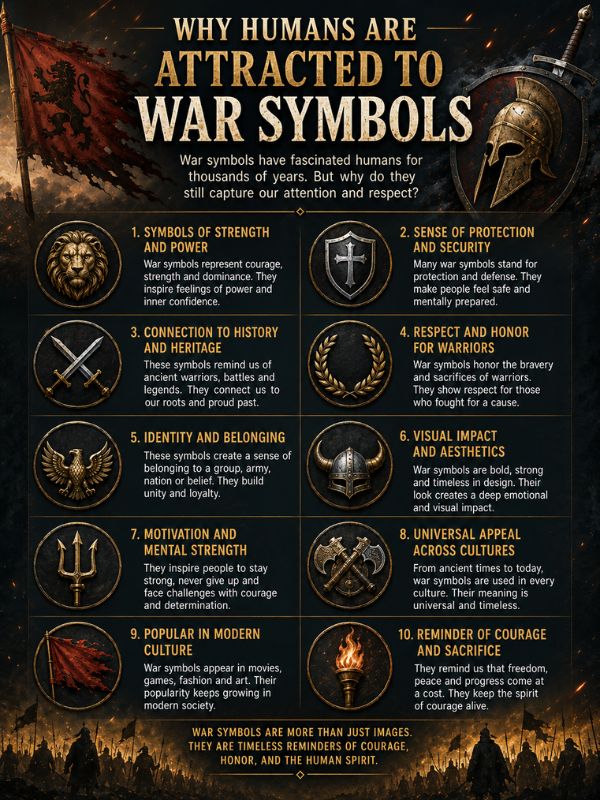
- Humans are naturally drawn to war symbols because they represent powerful emotions like courage, strength, and personal resilience.
- These symbols offer a visual way to process complex feelings related to struggle, survival, and overcoming adversity.
- War symbols often represent transformation, appealing to people who have overcome significant personal challenges or difficult circumstances.
- Many people connect emotionally to war symbols because they represent protection, loyalty, and the desire to defend loved ones.
- The psychological appeal of war symbols lies in their association with power, control, and the ability to face fear.
- Historical and cultural significance also attracts people, as war symbols connect individuals to ancestry, heritage, and shared community identity.
- War symbols provide a sense of identity, allowing individuals to express personal values through recognizable and meaningful imagery.
- The dramatic, bold visual style of war symbols naturally attracts attention, making them popular in art and fashion.
- People are also drawn to the storytelling aspect of war symbols, connecting them to legends, mythology, and heroism.
- This widespread attraction confirms war symbolism’s lasting emotional, psychological, and cultural significance across human societies worldwide.
- Overall, this aspect of why humans are attracted to war symbols continues to shape how people understand and interpret war symbolism today.
Frequently Asked Questions
What is the most common symbol of war?
- The crossed swords symbol is among the most widely recognized, representing conflict, battle, and military rivalry across cultures.
What animal symbolizes war?
- The eagle, lion, and wolf frequently symbolize war, representing strength, dominance, and fearless leadership admired throughout military history.
What color symbolizes war?
- Red commonly symbolizes war, representing bloodshed, sacrifice, and the intense emotional cost experienced during armed conflict.
What flower symbolizes war?
- The red poppy symbolizes war and remembrance, honoring soldiers who died fighting during historical global conflicts.
Why is the eagle a war symbol?
- The eagle symbolizes power, vision, and fearless leadership, traits historically admired in successful military commanders and warriors.
What does a broken sword symbolize?
- A broken sword often symbolizes defeat, loss of power, or the end of conflict following a significant battle.
Are war symbols always negative?
- No, many war symbols carry positive meanings, representing courage, resilience, protection, and honor rather than pure violence.
Why do people get war symbol tattoos?
- People choose war symbol tattoos to represent personal strength, resilience, and battles overcome throughout their own lives.
Conclusion
War symbols have shaped human history in powerful ways. They tell stories of brave warriors and mighty empires. Each symbol carries meaning that goes beyond its simple design. Some represent courage, while others represent protection or deep loss. These signs helped people express strength during difficult and dangerous times. Together, they show how humans have always found ways to express conflict.
Even today, these symbols continue to influence art, fashion, and personal style. People still use them in tattoos, movies, and everyday conversations. They remind us of sacrifice, honor, and the cost of war. Learning about these symbols helps us understand history more deeply. It also helps us appreciate the courage shown by warriors long ago. In the end, war symbols remain timeless reminders of human strength and resilience.
