

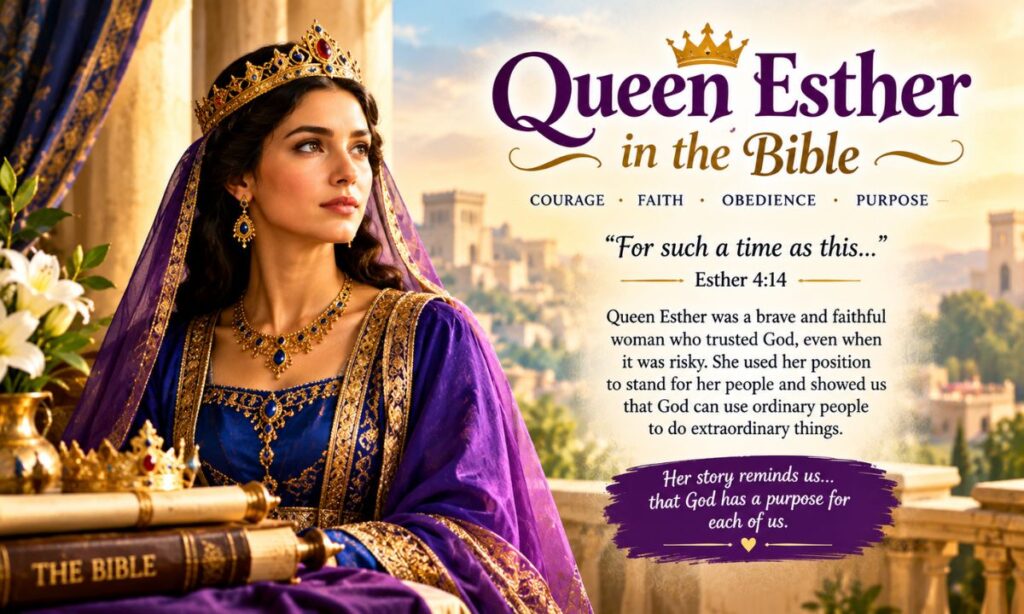
Queen Esther is one of the bravest women in the Bible. She was a young Jewish girl who became queen of Persia. Her story shows how God can use anyone. She did not plan to be a hero. Yet she stood up when her people needed her most. Her life still inspires many people today.
Esther faced a hard choice. She could stay silent and stay safe. Or she could speak up and risk her life. She prayed, fasted, and asked others to pray with her. Then she walked into the king’s court with faith. Her courage saved a whole nation from harm.
In this post, you will find over 150 powerful lessons from her story. Some teach faith and trust in God. Others show wisdom, humility, and bold action. Each lesson is simple and easy to apply. Use them in your own life and walk with courage. May Esther’s story give you strength today.
Who Was Queen Esther in the Bible?
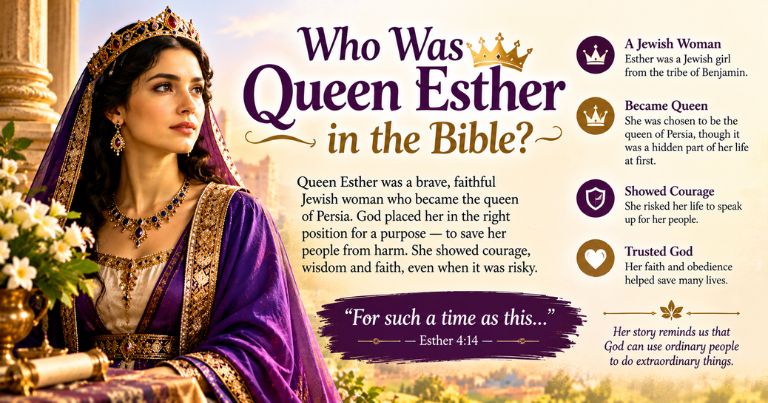
- Queen Esther was a Jewish woman who became queen of Persia. Her story fills the Book of Esther in the Old Testament.
- Her Hebrew name was Hadassah. She took the name Esther when she entered the king’s palace in Susa.
- Esther lost both of her parents when she was young. Her cousin Mordecai adopted her and raised her as his own daughter.
- She lived among the Jewish exiles in Persia. Her people had been carried away from their homeland years before.
- King Ahasuerus, also known as Xerxes, ruled a huge empire. It stretched from India to Ethiopia, with 127 provinces.
- Esther was known for her beauty and her gentle spirit. Everyone who met her in the palace liked her.
- She won the king’s favor and became his queen. The crown changed her life overnight.
- Esther did not tell anyone she was Jewish. Mordecai had told her to keep that secret for her own safety.
- When a wicked official named Haman planned to destroy the Jews, Esther faced the biggest test of her life.
- She chose to act, even though it could cost her life. That choice made her a hero of the Bible.
- The Book of Esther never mentions God by name. Yet His quiet hand guides every part of the story.
- Esther is one of only two women with a whole Bible book named after her. The other is Ruth.
- Jewish people celebrate her story every year during the holiday of Purim. They read the book aloud in synagogues.
- Christians love Esther’s story because it shows faith in action. It reminds us that God works through ordinary people.
- Her story teaches that courage is not the lack of fear. It means doing the right thing even when you are afraid.
- Esther was young, but she showed deep wisdom. She listened, prayed, planned, and then acted with great care.
- She did not lead an army or work a miracle. Her weapons were faith, patience, and a well-timed request.
- Her life shows how God can use a quiet person. You do not need to be loud to be brave.
- Scholars believe the events took place around the fifth century BC. The Persian Empire was at the height of its power.
- Today, Queen Esther still inspires people around the world. Her courage speaks to every generation that faces hard choices.
| Character | Role in the Story | Key Trait |
|---|---|---|
| Esther | Jewish orphan who became queen of Persia | Courageous and wise |
| Mordecai | Esther’s cousin and guardian | Faithful and loyal |
| King Ahasuerus | Ruler of the Persian Empire | Powerful but easily influenced |
| Haman | Royal official who plotted against the Jews | Proud and cruel |
| Queen Vashti | The first queen, removed after refusing the king | Dignified and bold |
The Story of Esther Explained Clearly and Simply
- The story begins with a grand feast. King Ahasuerus threw a six-month celebration to show off his wealth and power.
- At the end of the feast, he ordered Queen Vashti to appear before his guests. She refused to come.
- Angry, the king removed Vashti as queen. His advisors suggested he search for a new queen across the empire.
- Beautiful young women from all over Persia were brought to the palace. Esther was one of them.
- Esther spent a full year in beauty treatments. Then she met the king, and he chose her above all the others.
- Meanwhile, Mordecai overheard two guards plotting to kill the king. He told Esther, and she warned the king in Mordecai’s name.
- The plot was exposed, and the guards were punished. The event was written down in the royal records.
- Soon after, the king promoted a man named Haman. Haman demanded that everyone bow down to him.
- Mordecai refused to bow. Haman became furious and decided to destroy all the Jewish people in the empire.
- Haman cast lots to choose a date for the attack. He then persuaded the king to sign a decree.
- When Mordecai heard the news, he put on sackcloth and ashes. He mourned in the streets of the city.
- Esther learned about the decree and sent word to Mordecai. He urged her to go to the king and plead for her people.
- Esther knew the danger. Anyone who entered the king’s court without an invitation could be put to death.
- She asked all the Jews in Susa to fast for three days. She and her maids fasted, too.
- Esther then went before the king. He held out his golden scepter, and she was safe.
- She invited the king and Haman to a banquet, then to a second one the next day.
- At the second banquet, Esther revealed her identity and exposed Haman’s plot. The king was shocked and furious.
- Haman was hanged on the very gallows he built for Mordecai. Justice came at last.
- The king gave Mordecai a high position and allowed the Jews to defend themselves. They won a great victory.
- The Jewish people celebrated with joy. That celebration became the holiday of Purim, which Jews still keep today.
| Event | What Happened | Why It Mattered |
|---|---|---|
| Vashti removed | The queen refused the king’s command | Opened the door for Esther |
| Esther crowned | She won the king’s favor | Placed her in a position to help |
| Haman’s decree | He planned to destroy the Jews | Created the crisis |
| Three-day fast | Esther and the Jews prayed and fasted | Prepared Esther for bold action |
| Banquets | Esther invited the king and Haman | Set the stage to reveal the truth |
| Haman’s fall | He was hanged on his own gallows | Saved the Jewish people |
She Became Queen of Persia Through God’s Hidden Plan
- Esther did not plan to become queen. She was simply a young woman living a quiet life with her cousin.
- When the king’s servants gathered young women for the palace, Esther was taken with them. She had little choice.
- Yet Esther quickly won the favor of those around her. Even the palace officials liked and helped her.
- Hegai, the man in charge of the women, gave her special treatment. He offered her the best food and care.
- Nothing in the story shows Esther pushing herself forward. She listened, followed advice, and trusted the process.
- After a full year of preparation, she appeared before the king. He loved her more than all the others.
- The king placed a royal crown on her head. A simple orphan girl was now the queen.
- It looks like luck, but the Bible hints at something deeper. God was quietly arranging every detail.
- If Vashti had not refused, Esther would never have been chosen. One bold choice opened the way for another.
- If Esther had not been in the palace, no one could have saved the Jews. Her timing was perfect.
- The Book of Esther does not say “God did this.” But readers see His hand in the story’s turns.
- Think about how many things had to line up. A feast, a refusal, a search, and a crown all fit together.
- God often works through ordinary events. What looks like coincidence may be His careful planning.
- Esther’s rise teaches us not to despise hard seasons. Even painful changes can prepare us for a purpose.
- She entered the palace without power. Yet her position gave her the chance to speak for others.
- God does not waste our circumstances. He can use our jobs, homes, and relationships for His plans.
- Esther’s story encourages us to trust God when we cannot see the whole picture.
- Her crown was not just a gift. It was an assignment, and she needed courage to use it well.
- Sometimes God places us in unexpected spots. Our task is to stay faithful and ready for His moment.
- Esther’s path from orphan to queen proves that God can lift anyone for a greater good.
- Queen Esther in the Bible Queen Esther in the Bible Queen Esther in the Bible Queen Esther in the Bible Queen Esther in the Bible Queen Esther in the Bible Queen Esther in the Bible Queen Esther in the Bible Queen Esther in the Bible Queen Esther in the Bible Queen Esther in the Bible Queen Esther in the Bible Queen Esther in the Bible Queen Esther in the Bible Queen Esther in the Bible Queen Esther in the Bible Queen Esther in the Bible Queen Esther in the Bible Queen Esther in the Bible Queen Esther in the Bible Queen Esther in the Bible Queen Esther in the Bible
Esther Was a Jewish Orphan Raised by Mordecai
- Esther lost her mother and father at a young age. Few details about their death appear in Scripture.
- Mordecai, her older cousin, took her in. He treated her like his own daughter and raised her with care.
- Mordecai belonged to the tribe of Benjamin. His family had been carried away from Jerusalem during the exile.
- Growing up in a foreign land, Esther learned to live between two worlds. She was Jewish, yet surrounded by Persian culture.
- Mordecai likely taught her the faith and stories of her people. He set an example of loyalty to God.
- He worked at the king’s gate, a place where officials gathered. That job kept him close to royal news.
- Mordecai watched over Esther even after she entered the palace. He checked on her every day.
- She continued to follow his instructions. Esther respected his wisdom and trusted his love for her.
- Their bond shows the power of a caring guardian. A stable, loving home shaped Esther’s strong character.
- Many children today grow up without parents. Esther’s story gives them hope that God can use their lives, too.
- Being an orphan did not stop her from becoming a hero. Her past did not define her future.
- Mordecai’s courage also stands out. He refused to bow to Haman even when the risk was great.
- He taught Esther by example. She saw what it looks like to stand firm for God.
- When the crisis came, Mordecai pushed her to act. He reminded her that her silence would not save her.
- He also believed that deliverance would come from somewhere, even if Esther chose not to act.
- Esther listened to his challenge and grew into her role. Good mentors help us step into bigger callings.
- Their relationship shows the value of family, whether by blood or by love.
- If you mentor someone, remember Mordecai. Your words and example can shape a person who changes lives.
- If you need guidance, look for a Mordecai. Wise voices help us find courage when we feel small.
- Esther’s story proves that God sees every orphan and places each one with purpose.
- Queen Esther in the Bible Queen Esther in the Bible Queen Esther in the Bible Queen Esther in the Bible Queen Esther in the Bible Queen Esther in the Bible Queen Esther in the Bible Queen Esther in the Bible Queen Esther in the Bible Queen Esther in the Bible Queen Esther in the Bible Queen Esther in the Bible Queen Esther in the Bible Queen Esther in the Bible Queen Esther in the Bible Queen Esther in the Bible Queen Esther in the Bible Queen Esther in the Bible Queen Esther in the Bible Queen Esther in the Bible Queen Esther in the Bible Queen Esther in the Bible
Why Esther Kept Her Jewish Identity Hidden
- Mordecai told Esther not to reveal her people or family background. She obeyed him and kept the secret.
- At that time, Jews lived as a minority in Persia. Being different could bring danger.
- Hiding her identity likely helped Esther stay safe in the palace. Open prejudice could have ended her chances.
- Esther’s silence was not a lack of faith. It was a careful choice during a risky season.
- She did not deny who she was. She simply waited for the right moment to speak.
- Some readers wonder if she compromised her values. The Bible does not criticize her for staying quiet.
- The secret also set up the story’s big reveal. When Esther finally spoke, the impact was powerful.
- Haman had no idea that the queen belonged to the people he planned to destroy.
- Her hidden identity put her in a unique position. She could reach the king from the inside.
- Esther’s choice shows that timing matters. Wise people know when to speak and when to wait.
- It also shows how hard it can be to live as a believer in a culture that disagrees.
- Many people today hide their faith out of fear. Esther’s story reminds us that courage often comes later.
- She eventually shared her identity at the right moment. She declared her faith and her people with bold honesty.
- In the end, truth had to come out. God used Esther’s secret to protect, not harm.
- Hiding does not last forever. Real courage means stepping forward when your moment arrives.
- Esther teaches us to be patient but ready. We should not stay silent when others are in danger.
- Her story also warns us not to let fear control us. Silence has a limit.
- Esther’s secret reminds us that God sees the heart. He knew who she was all along.
- If you feel pressure to hide your beliefs, pray for wisdom. Ask God for courage when it is time to speak.
- Esther’s reveal shows that bold honesty can turn a hopeless situation into a victory.
- Queen Esther in the Bible Queen Esther in the Bible Queen Esther in the Bible Queen Esther in the Bible Queen Esther in the Bible Queen Esther in the Bible Queen Esther in the Bible Queen Esther in the Bible Queen Esther in the Bible Queen Esther in the Bible Queen Esther in the Bible Queen Esther in the Bible Queen Esther in the Bible Queen Esther in the Bible Queen Esther in the Bible Queen Esther in the Bible Queen Esther in the Bible Queen Esther in the Bible Queen Esther in the Bible Queen Esther in the Bible Queen Esther in the Bible Queen Esther in the Bible
Esther’s Character: Courage, Wisdom, and Self-Control
- Esther showed deep courage when she faced the king. She knew the danger, yet she chose to step forward.
- She was also wise. Esther did not rush into the king’s court with angry words or a loud plan.
- She planned her approach carefully. Her two banquets show that she knew how to wait for the right time.
- Esther showed humility. She listened to Mordecai and accepted his guidance, even though she was now a queen.
- She had self-control. Esther held back her emotions and spoke calmly when the stakes were high.
- Her character was shaped in quiet seasons. She learned patience and respect long before her big moment.
- Esther was obedient. She followed Mordecai’s advice about keeping her identity secret until it was time.
- She also showed grace under pressure. Her calm presence won the king’s favor again and again.
- Esther cared about people more than her own comfort. She did not hide in the palace while her people suffered.
- She respected authority yet remained loyal to God. That balance is not easy to keep.
- Esther was teachable. When Mordecai challenged her, she changed her mind and moved toward action.
- She leaned on prayer and community. Fasting with others showed she did not trust her own strength alone.
- Esther was strategic. She used her words, timing, and position to protect her people.
- She was brave enough to say, “If I perish, I perish.” That line shows total surrender to God.
- Her kindness opened doors. People trusted Esther because she treated them with respect.
- Esther also displayed integrity. She told the king the truth, even when it was risky.
- Her faith was personal and steady. She did not need a miracle to believe God was near.
- She avoided revenge in her tone. Esther focused on justice and protection rather than anger.
- Esther’s character reminds us that true strength is gentle, wise, and rooted in faith.
- If you want to grow like Esther, practice humility, patience, and prayer every day.
- Queen Esther in the Bible Queen Esther in the Bible Queen Esther in the Bible Queen Esther in the Bible Queen Esther in the Bible Queen Esther in the Bible Queen Esther in the Bible Queen Esther in the Bible Queen Esther in the Bible Queen Esther in the Bible Queen Esther in the Bible Queen Esther in the Bible Queen Esther in the Bible Queen Esther in the Bible Queen Esther in the Bible Queen Esther in the Bible Queen Esther in the Bible Queen Esther in the Bible Queen Esther in the Bible Queen Esther in the Bible Queen Esther in the Bible Queen Esther in the Bible
She Risked Her Life to Save the Jewish People

- When Esther learned of Haman’s plan, fear shook her. She knew entering the king’s court uninvited could mean death.
- Persian law was strict. Anyone who approached the king without a summons could be killed unless he held out his scepter.
- Esther had not been called to see the king for thirty days. She worried she had lost his favor.
- At first, she hesitated. She told Mordecai about the risk and showed him how dangerous the plan was.
- Mordecai answered with a powerful challenge. He said that she would not escape just because she lived in the palace.
- He asked whether she had come to the kingdom “for such a time as this.” Those words shook her heart.
- Esther changed her mind. She chose to trust God and stand with her people.
- She asked Mordecai to gather the Jews in Susa and fast for her. They did not eat or drink for three days.
- Esther declared that she would go to the king, even if it was against the law. She accepted the danger.
- She said, “If I perish, I perish.” This showed that she had placed her life in God’s hands.
- On the third day, Esther put on her royal robes and stood in the inner court of the palace.
- The king saw her and held out his golden scepter. Esther was safe, and her heart must have raced with relief.
- She touched the tip of the scepter and waited. The king offered her up to half of his kingdom.
- Rather than blurt out her request, Esther invited him and Haman to a banquet. She showed patience and wisdom.
- Every step carried risk. One wrong move could have sealed the fate of her entire people.
- Her sacrifice shows that real courage costs something. Esther gave up comfort and safety to protect others.
- She did not know the outcome in advance. She simply obeyed and trusted God with the result.
- Her willingness to risk everything changed history. Thousands of lives were saved because of one brave choice.
- We may never face a king, but we all meet moments that demand courage. Esther shows us how to respond.
- When you face a hard decision, remember her. God can turn your risk into rescue.
The Strategic Banquets That Changed the Fate of a Nation
- Esther did not rush to the king with her request. She planned two banquets to prepare the way.
- The first banquet gave her a chance to win the king’s attention. She invited both the king and Haman.
- At the banquet, the king asked for her petition again. He promised to give her whatever she wanted.
- Instead of answering right away, Esther invited them to a second banquet the next day. She kept her cards close.
- Her patience built suspense and trust. The king grew more curious, and Haman grew more confident.
- Haman felt honored to dine with the king and queen. He bragged about it to his family and friends.
- Yet his pride was growing. Not even the queen’s invitation could ease his hatred toward Mordecai.
- That night, the king could not sleep. He asked for the royal records to be read aloud.
- The servants read about Mordecai exposing the plot against the king. The king realized Mordecai had never been rewarded.
- The next morning, Haman arrived to ask the king to hang Mordecai. Instead, the king asked what should be done for a man he wanted to honor.
- Haman assumed the king meant him. He suggested a grand parade through the city.
- The king told him to do all of that for Mordecai. Haman was crushed and humiliated.
- This shocking reversal prepared the way for Esther’s request. God’s timing was unfolding behind the scenes.
- At the second banquet, Esther finally spoke. She asked for her life and the lives of her people.
- The king asked who dared to threaten the queen. Esther pointed to Haman, the wicked enemy.
- The king stormed out in anger. Haman begged Esther for mercy, but it was too late.
- Haman’s plot collapsed. He was hanged on the same gallows he had built for Mordecai.
- Esther’s strategy shows that wise planning and prayer can work together. She trusted God and used her mind.
- Her banquets teach us to wait for the right moment. Rushing can ruin a good cause.
- God used a sleepless night and a careful queen to change the fate of a nation.
How God Worked Behind the Scenes in Esther’s Story
- The Book of Esther never uses God’s name. Yet His fingerprints appear on every page.
- Vashti’s refusal opened the door for Esther. What looked like a royal mistake became part of God’s plan.
- Esther won favor with everyone she met. That favor did not come only from her beauty, but from God’s care.
- Mordecai overheard an assassination plot at just the right time. His quick action saved the king’s life.
- That heroic deed was recorded in the royal records. No one thought much about it until years later.
- Haman cast lots, called “pur,” to pick the day of destruction. The lot fell on a date nearly a year away.
- That delay gave Esther time to act. God’s timing protected His people.
- The king’s sleepless night was no accident. It led him to read about Mordecai at the perfect moment.
- Haman’s pride led him into a trap. His own words suggested the very honor given to his enemy.
- Esther walked into the court and received the king’s favor when it mattered most.
- The king’s new decree allowed the Jews to defend themselves. This turned the whole situation around.
- Every detail lined up in ways no one could have planned. Readers see God’s hand even when He stays hidden.
- This theme is called “divine providence.” It means God guides history even through ordinary events.
- Esther’s story reminds us that silence does not mean absence. God works even when we cannot see Him.
- If your life feels confusing, take heart. The same God who worked for Esther is working for you.
- God may use sleepless nights, small choices, and unexpected people to guide your story.
- He often waits until the moment is right. Then He moves with perfect timing.
- Trust grows when we look back and see His care. Esther’s story invites us to do that.
- You can pray, wait, and act in faith. God will handle what you cannot control.
- No matter how hidden His hand seems, He is always there, working for your good and His glory.
10 Powerful Lessons of Courage from Queen Esther in the Bible
- Courage often starts quietly. Esther grew brave long before anyone noticed, and so can you.
- God places people in key positions for a reason. Your place of influence may be part of His plan.
- True courage grows from humility. Esther listened to wise counsel and did not rely on her own strength.
- Prayer gives strength for bold decisions. Esther fasted and asked others to pray before she acted.
- Wise advisors help courage grow. Mordecai’s words pushed Esther toward her purpose.
- Fear must not silence the truth. Esther spoke up even when staying quiet felt safer.
- God works behind the scenes. Many events in the story show His quiet guidance.
- Courage protects others. Esther risked her life for her people, not just for herself.
- Faithful courage leads to victory. Esther’s boldness brought rescue and joy to a whole nation.
- Courage requires action. Esther did not just feel brave. She moved, spoke, and trusted God.
- These ten lessons show that bravery is a mix of faith, wisdom, and love. Each one shaped Esther’s story.
- The following sections explore nine of these lessons in depth. Each one offers practical ideas for daily life.
- You will see how Esther’s choices connect to your own. The challenges may look different, but the heart is the same.
- You do not need a palace or a crown to live with courage. Faith is enough to begin.
- Small steps count. A kind word, a stand for truth, or a quiet prayer can be an act of courage.
- Courage grows with practice. Every brave choice makes the next one easier.
- You are not alone on this journey. God, family, and friends can walk with you.
- Use these lessons as a guide. Read them slowly and think about how they apply to you.
- Write down one lesson that speaks to you. Come back to it when you feel afraid.
- Let Esther’s example inspire you to live boldly for God and love others well.
Courage Often Begins in Silence
- Esther did not start as a bold speaker. Her courage first grew in quiet moments of prayer and thought.
- Silence can be a place of strength. It gives us time to listen to God before we act.
- Esther spent years in the palace learning, watching, and waiting. Those quiet years prepared her for the big moment.
- She kept her identity hidden, and that silence protected her. It also positioned her for a later reveal.
- Silence does not mean weakness. Wise people know when to hold their words and when to share them.
- Before she approached the king, Esther fasted for three days. She spent that time in quiet dependence on God.
- Courage often forms in the unseen places. Early mornings, late nights, and private prayers build inner strength.
- You may feel stuck in a quiet season now. Do not worry. God may be preparing you.
- Silence helps us hear God’s direction. We make better choices when we pause and listen first.
- Esther’s quiet obedience to Mordecai also built trust. She learned to follow wise counsel before she led.
- Silence is not the same as fear. Fear freezes us, but holy silence prepares us to move.
- Many great acts of bravery begin with a still moment. A deep breath, a short prayer, a calm heart.
- When you face a big decision, give yourself time to be still. Ask God what He wants you to do.
- Silence also protects us from rash words. Esther held back until the time was right.
- Do not rush the quiet times in your life. They shape the person you will become.
- Esther’s silence ended when her people needed her voice. She knew the difference between waiting and hiding.
- If you are in a waiting season, stay faithful. Your moment may be closer than you think.
- Courage grows in secret before it shows in public. God sees what no one else sees.
- Take time each day to sit quietly with God. That habit builds a brave heart.
- Silence may be the first step of courage, but action must follow. Esther moved when it was time.
God Positions Us for a Purpose
- Esther’s rise to queen was not random. God placed her in the palace at the right moment.
- Mordecai’s famous question still speaks today: Maybe you are here “for such a time as this.”
- Your job, your school, and your neighborhood may be part of God’s plan. He puts people where He needs them.
- Esther had no idea why she was chosen at first. She only understood when the crisis came.
- God often reveals purpose after we step forward. We learn the plan by walking in faith.
- Do not despise your current place. Even an ordinary job can become a platform for good.
- Esther could have used her position for comfort. Instead, she used it to protect others.
- Being positioned does not mean being perfect. God uses people who are willing, not flawless.
- Ask yourself, “Why am I here?” Then look for needs you can meet with the gifts you have.
- Positions come with responsibility. Esther’s crown gave her influence, and influence calls for courage.
- Sometimes God puts us in uncomfortable seats. He knows we will grow there.
- Look at the people around you. God may have placed you near them to help or encourage them.
- Esther’s story reminds us that nothing is wasted. Every season prepares us for something.
- If you feel out of place, pray for clarity. God may be setting you up for something great.
- Use your voice, your time, and your talents where you are. That is how purpose begins.
- God’s timing is perfect. Esther arrived at the palace right before her people needed her.
- Trust that He is guiding your path, even when you cannot see where it leads.
- Do not wait for a perfect platform. Start serving where you stand today.
- Purpose is not only about big moments. Small, daily acts of kindness matter too.
- When your moment comes, be ready. Esther’s readiness helped save a nation.
True Courage Is Rooted in Humility

- Esther never bragged about her crown. She stayed humble and respectful, even as queen.
- She listened to Mordecai’s advice instead of ignoring it. Humble people welcome wise counsel.
- When she approached the king, Esther did not demand. She asked with respect and patience.
- Humility does not mean weakness. It means knowing that God is greater than we are.
- Esther relied on prayer and the support of others. She did not trust her own strength alone.
- She admitted her fear and asked others to fast with her. Humble people are not afraid to ask for help.
- True courage serves others. Esther acted for her people, not for her own fame.
- Pride makes us rush ahead. Humility helps us wait for God’s timing.
- Haman showed what pride looks like. His arrogance led him straight to his downfall.
- Esther showed the opposite. Her humble approach won favor and saved lives.
- A humble heart is open to correction. Esther took Mordecai’s challenge seriously and changed course.
- Humility keeps us honest about our limits. We cannot save the world, but we can do our part.
- Bold people can still be gentle. Esther’s quiet strength shows that humility and courage work together.
- When we serve with humility, God lifts us up at the right time.
- Respect for others, even those in power, opens doors that force cannot open.
- Ask God to keep your heart humble. It protects you from pride and prepares you for bold action.
- Humility makes room for God to work. Esther stepped aside so His plan could unfold.
- Thank others when they help you. Esther honored Mordecai even when she was queen.
- Admit when you do not know the answer. Humble people ask for wisdom and listen.
- The most courageous people often walk softly. Their strength comes from God, not from ego.
Prayer Strengthens Bold Decisions
- Before Esther spoke to the king, she prayed and fasted. She knew she needed more than her own strength.
- She asked Mordecai and the Jews in Susa to fast for three days. Prayer became a team effort.
- Prayer calms the heart. Esther walked into the court with peace because she had given her fear to God.
- When we pray, we invite God into our decisions. He gives wisdom that we cannot find alone.
- Esther’s prayer was not a quick request. She gave God time and attention before she acted.
- Fasting helped her focus. By setting aside food, she set aside distractions and leaned on God.
- Prayer does not remove danger. It gives us courage to walk through it with trust.
- Esther chose prayer before planning. She sought God first, and then she used her wisdom.
- When you face a tough choice, pause and pray. Ask God to guide your words and steps.
- Praying with others multiplies strength. Share your burden with friends, family, or your church.
- Esther’s prayer shaped her words. She approached the king with grace, and that grace opened his heart.
- Prayer also prepares us for any outcome. Esther said, “If I perish, I perish,” showing complete trust.
- You can pray anywhere. In the car, at work, or in a quiet room, God hears you.
- Short prayers count. Even a one-line request like “Lord, help me” shows faith.
- Prayer builds confidence that God is in control. We act boldly because we know who is leading.
- Write down your prayers and watch for answers. You will see how God works over time.
- Do not wait for a crisis to start praying. Build the habit now so strength is ready when you need it.
- Esther’s story proves that prayer and action work together. She prayed, then she moved.
- When you feel afraid, remember her three days of fasting. God honors those who seek Him.
- Bold decisions grow from quiet prayer. Spend time with God, and courage will follow.
Courage Grows Through Wise Counsel
- Mordecai was Esther’s wise counselor. His words pushed her to step into her calling.
- Esther listened even when the message was hard. He told her that silence would not protect her.
- Good advisors tell the truth with love. They help us see what fear tries to hide.
- Esther did not ignore Mordecai just because she was now queen. She respected his wisdom and experience.
- Wise counsel balances courage with care. It reminds us to plan well before we act.
- Surround yourself with people who love God and tell you the truth. They help you grow.
- Esther’s counselors in the palace, like Hegai, also helped her succeed. She welcomed good guidance there, too.
- Do not be afraid to ask for advice. Even the queen needed wise voices in her life.
- Listen to people who have walked the road before you. Their stories can save you from mistakes.
- Mordecai also trusted Esther’s choice. He guided her, but he allowed her to decide.
- Good counselors do not control. They encourage, challenge, and then support your decision.
- If you feel stuck, talk to a mentor, pastor, or trusted friend. A fresh perspective can spark courage.
- Be a Mordecai to someone else. Offer wise words and gentle push when they need it.
- Counsel works best when paired with prayer. Seek God’s wisdom first, then listen to godly people.
- Esther’s story shows that bold people are not lone rangers. They lean on community.
- Do not let pride block good advice. Esther’s humility helped her receive and act on it.
- Sometimes counsel comes through hard words. Be open, even when it stings.
- Check your advice against Scripture. God’s Word is the best guide for any decision.
- Thank the people who guide you. Their wisdom is a gift that shapes your future.
- When courage feels out of reach, seek counsel. A wise voice can help you take the next step.
Fear Should Not Silence Truth
- Esther felt real fear. She knew speaking up could cost her life, and she did not pretend otherwise.
- Fear is normal. Even the bravest people feel it. Courage means moving forward in spite of it.
- Mordecai warned Esther that silence would not keep her safe. Hiding would not solve the problem.
- Esther chose truth over comfort. She revealed her identity and exposed Haman’s plot.
- Truth can be risky, but silence can cost even more. Many people suffered because someone stayed quiet.
- Speak the truth with love and wisdom. Esther was bold, yet she was also respectful and careful.
- Do not let fear of rejection stop you. Some truths need to be spoken for the sake of others.
- Esther’s story shows that one honest voice can change a nation. Your voice matters too.
- Ask God to give you the right words. He promised wisdom to those who ask.
- Fear often grows when we keep quiet. Speaking up can bring relief and clarity.
- Stand for what is right, even when the crowd disagrees. Haman had many followers, but he was wrong.
- Truth protects the vulnerable. Esther spoke for people who had no voice at the palace.
- You do not need to be loud to be brave. Calm, steady honesty can be powerful.
- When you feel afraid, remember that God is with you. He promised never to leave His people.
- Choose your moment wisely. Esther waited for the right time, then she spoke without hesitation.
- Pray for courage before you speak. Ask God to steady your heart and guide your words.
- Silence can be a sin when others are in danger. Esther understood that and chose to speak.
- Honesty builds trust. The king believed Esther because she spoke plainly and sincerely.
- Do not let fear write your story. God gave you a voice for a reason.
- Speak truth, trust God with the results, and walk forward in faith like Esther.
God Works Behind the Scenes
- Esther’s story reminds us that God works even when we cannot see Him. He is never absent.
- Her whole journey was filled with hidden moments. Each one prepared the way for her rescue mission.
- God used a sleepless night to change the king’s heart. A small detail turned the whole story around.
- He worked through a hated enemy’s own plan. Haman’s pride led to his downfall.
- God also used Mordecai’s good deed from years earlier. Nothing done for good is ever wasted.
- You may not see what God is doing in your life. Trust that He is already at work.
- Delays do not mean denial. The date for the attack was months away, giving Esther time to act.
- God often hides His hand so that faith can grow. We learn to trust Him without seeing everything.
- When you feel overlooked, remember Mordecai. His reward came later, at exactly the right time.
- God can use closed doors, strange timing, and surprising people to guide your steps.
- Look back at your own story. Where did God guide you in ways you did not notice at the time?
- Behind the scenes, God protects. Esther could not see all the dangers, but He was watching over her.
- Rest in His care. You do not have to control every detail of your life.
- Faith means trusting God’s plan even when the picture looks unclear.
- God’s silence does not mean He is distant. Sometimes He is preparing something great.
- Keep doing what is right. God will weave your faithful acts into His bigger story.
- Thank Him for the unseen blessings. Many answered prayers happen quietly, without fanfare.
- When circumstances change suddenly, ask whether God might be opening a door.
- Esther’s story shows that God is the true hero. He moves hearts, kings, and nations.
- Take comfort in knowing that the God of Esther is your God, too.
Courage Protects Others, Not Just Yourself
- Esther’s bravery was never about herself. She stepped forward to save thousands of people she loved.
- She could have stayed safe in the palace. Instead, she chose to stand with her people.
- Real courage thinks about others. It asks, “Who needs my help?” and then acts.
- Esther knew her position gave her a unique chance. She used her influence for good.
- Protecting others sometimes means paying a price. Esther was willing to risk everything for them.
- You can be someone’s protector in daily life. Speak up for a friend, a coworker, or a neighbor.
- Courage for others shows love in action. Esther’s love moved her from fear to faith.
- When we protect the weak, we reflect God’s heart. He cares for the vulnerable and the oppressed.
- Esther did not only plead for her own life. She asked for the lives of her whole nation.
- Think about people who depend on you. Your courage could change their future.
- Parents, teachers, and leaders carry this calling. Brave choices set an example for those watching.
- Protecting others also means refusing to join in harm. Mordecai refused to bow to Haman.
- Courage that serves others brings lasting joy. Esther’s people celebrated their rescue for generations.
- Do not wait for a big crisis. Protect others with small acts, like kindness and honesty.
- Use your skills, time, and voice to lift others up. You may never know the full impact.
- Ask God to open your eyes to needs around you. Then be ready to respond.
- Esther’s story proves that one person can make a difference. Your courage matters more than you think.
- When we stand together, we become stronger. Esther’s fast united the Jewish community.
- Protecting others often leads to unexpected blessings. God honors those who care for His people.
- Let Esther’s example move you to act. Someone out there needs your courage today.
Faithful Courage Leads to Victory
- Esther’s faithful courage brought a dramatic turn. Haman fell, and her people found safety.
- The king allowed the Jews to defend themselves. They stood together and overcame their enemies.
- Mordecai received honor and a high position. His faithfulness was finally recognized.
- Esther’s bravery changed the mood of a nation. Fear turned into joy, and mourning became celebration.
- Victory did not come from Esther’s strength alone. It came from God working through her obedience.
- Faithful courage may not bring instant results. Esther’s story took days, but God finished what He started.
- Her people celebrated with feasting, gifts, and gladness. They called the holiday Purim, which still lives today.
- Faith makes a lasting impact. Jewish families still retell her story each year.
- When you act in faith, God can bring victory in ways you cannot predict.
- Courage opens the door, but God finishes the work. Do your part and trust Him with the rest.
- Victory often follows obedience. Esther obeyed the nudge to act, and the outcome changed everything.
- Not every battle ends exactly as we hope. Still, God honors our faithfulness every time.
- Esther’s win was shared. Mordecai, the Jews, and Esther worked together, and everyone celebrated.
- Remember to give thanks after the victory. Esther and Mordecai made sure the people honored God.
- Faith and courage build a legacy. Your brave choices can inspire generations to come.
- Be patient in the waiting. Esther’s victory arrived after days of prayer, planning, and risk.
- Do not give up when things look bleak. In Esther’s story, the darkest moment came right before the turn.
- God turns mourning into dancing. The Jews went from fear and sorrow to joy and feasting.
- Celebrate your victories, big and small. They remind you how faithful God has been.
- Faithful courage always matters. Keep trusting, keep acting, and expect God to move on your behalf.
How Queen Esther’s Faith Shaped Her Courageous Decisions
- Esther’s faith showed up in her actions. She did not just talk about trust. She put it into practice.
- She believed that God cared about her people. That belief gave her a reason to risk everything.
- Her faith did not erase fear. It gave her a place to take that fear.
- Esther listened to Mordecai’s reminder that deliverance would come, one way or another. She trusted that God’s plan was bigger than hers.
- She turned to fasting and prayer before making a move. Faith guided her first step.
- Esther believed that her life had purpose. That conviction pushed her from comfort into calling.
- Her faith made her willing to surrender. “If I perish, I perish” is a statement of deep trust.
- She did not demand a guaranteed outcome. Faith meant doing the right thing and leaving the results with God.
- Her faith was also practical. She planned banquets, chose her words, and timed her request with care.
- Esther trusted that God could work through a king’s heart. That trust gave her calm in a stressful moment.
- Her faith connected her to her community. She asked others to join her fast and stand together.
- She remembered who she was. Her Jewish heritage anchored her identity when the world tried to erase it.
- Esther’s faith also gave her humility. She knew she could not save her people by her own power.
- Her courage grew from steady trust, not from sudden confidence. Small acts of faith built up over time.
- God honored her faith with favor. The king welcomed her, listened to her, and acted on her request.
- Faith shaped her view of success. She cared more about saving lives than keeping her position.
- Her faith still speaks today. It shows that ordinary believers can make extraordinary choices.
- When you struggle with fear, look to Esther. Faith is not feeling brave. It is trusting God and stepping out.
- Let your faith shape your decisions at work, at home, and in your community.
- Esther’s story encourages us to act with faith, one brave step at a time.
The Spiritual Significance of the Fast of Esther
- In Jewish tradition, the Fast of Esther honors the three days Esther and the Jews fasted before she approached the king.
- It takes place on the 13th day of the Hebrew month of Adar. That is the day before Purim.
- The fast usually lasts from dawn until nightfall. Observers do not eat or drink during that time.
- The fast also remembers the Jews who gathered to defend themselves on the day set for their destruction.
- Fasting shows humility before God. It reminds believers that they depend on Him for protection.
- Esther’s fast was a call for unity. Everyone in Susa joined her, and no one stood alone.
- Fasting helps us focus on what matters most. Setting food aside makes room for prayer and reflection.
- Many Christians also fast and pray when they face big decisions. Esther’s example gives them a model.
- The Fast of Esther prepares the heart for joyful Purim. Sorrow and prayer come first, then celebration.
- It teaches that spiritual victories often follow seasons of sacrifice. Esther’s three days led to rescue.
- The fast is not about earning God’s favor. It is about seeking His help with a humble heart.
- Jewish communities often use this day to remember suffering and to pray for protection today.
- Fasting can also build empathy. When we feel hunger, we remember people who struggle every day.
- If you choose to fast, pray for wisdom first. Talk to your doctor if you have any health concerns.
- You can fast from more than food. Some people fast from social media or distractions to focus on God.
- The key is the heart behind the fast. God looks at our sincerity, not our performance.
- Esther’s fast reminds us that prayer is powerful. Her community prayed, and God moved.
- Fasting together builds community. Joining others in prayer strengthens everyone involved.
- Whether you fast or not, learn from Esther’s example. Seek God before you take a big step.
- The Fast of Esther points to a simple truth. Humble prayer prepares the way for bold courage.
What Esther Teaches Believers About Courage and Faith Today
- Esther teaches that courage is available to everyone. You do not need a title, a crown, or special training.
- She shows us that faith and action belong together. Pray first, then take the next step.
- Her story reminds us that God can use us wherever we are. Your workplace can be your palace.
- Esther shows that people matter more than comfort. Courage looks out for others.
- She teaches us to listen. Wise counsel, prayer, and Scripture all help us make good choices.
- Esther models patience. She waited for the right moment instead of rushing into a risky move.
- She also teaches us to speak up. Silence is not always safe, especially when others are in danger.
- Her story encourages us to face fear with God’s help. Fear loses power when we trust Him.
- She reminds us that God is in control. Even when His name is not mentioned, He is present.
- Esther shows that small decisions matter. Each step of obedience leads toward something bigger.
- She teaches us to value community. Fasting together helped her find strength for the task.
- Modern believers face many pressures. Esther’s story helps us stand firm without losing kindness.
- She reminds us that identity matters. Knowing who we are in God helps us act with confidence.
- Esther’s example applies to parents, students, employees, and leaders. Courage fits every season.
- She proves that gentle people can be brave. Quiet strength can move mountains.
- Her story calls us to use our influence for good. Whatever you have, offer it to God.
- Esther encourages us to trust God’s timing. He knows exactly when to open doors.
- She shows that fear and faith can exist together. Choose faith, and keep moving forward.
- Her legacy challenges us to leave the world better than we found it.
- Take Esther’s lessons to heart. Live with courage, love boldly, and trust God every day.
| Esther’s Moment | A Modern Challenge | A Courageous Response |
|---|---|---|
| Hiding her identity | Feeling afraid to share your faith | Pray for wisdom and speak when the time is right |
| Hearing about Haman’s plot | Seeing someone treated unfairly | Stand up for them with kindness and truth |
| Fasting for three days | Facing a major decision | Seek God through prayer before acting |
| Approaching the king | Having a hard conversation | Plan carefully, speak with respect, and trust God |
| Hosting two banquets | Needing patience in a big situation | Wait for the right moment instead of rushing |
| Saying “If I perish, I perish” | Fear of losing something important | Surrender the outcome to God and move forward |
Final Reflection on the Courage and Legacy of Queen Esther

- Queen Esther’s story still inspires millions. Her courage crosses centuries, cultures, and faith traditions.
- She began as an orphan with no power. She ended as a queen who saved a nation.
- Her legacy shows what God can do with a willing heart. He does not need perfect people.
- Her story reminds us that every season has a purpose. Even quiet years prepare us for big moments.
- Esther’s courage was not loud. It was steady, prayerful, and full of love for others.
- She shows us how to blend wisdom with boldness. Planning and trust work well together.
- Her legacy lives on in the holiday of Purim. Each year, families celebrate God’s rescue of His people.
- Her words, “If I perish, I perish,” still challenge readers to hold their lives loosely.
- Esther teaches that fear does not have the final say. Faith can lead us through the hardest moments.
- The story also honors Mordecai, whose faithfulness and wisdom shaped the outcome. Supporting roles matter greatly.
- Think about your own life. Where might God be asking you to show courage today?
- You may not face a royal court, but your choices still matter. Small acts of bravery add up.
- Remember that God is working, even when He seems silent. Esther’s story proves that He guides every detail.
- Let her example move you to pray more, listen better, and speak with grace.
- Your courage can protect someone else. A kind word or brave stand may change a life.
- Esther’s story ends with joy and celebration. Faithful courage often leads to unexpected gladness.
- Keep learning from her life. Return to the Book of Esther and look for new insights each time.
- Share her story with your family and friends. Courage grows when we encourage one another.
- Ask God to give you a brave heart. He is more than willing to answer that prayer.
- You may be in the right place for such a time as this. Step forward with faith.
Frequently Asked Questions
Who was Queen Esther in the Bible?
Esther was a Jewish orphan who became queen of Persia. She risked her life to stop a plot to destroy her people.
What makes Esther a role model for courage?
Esther chose to act even though she was afraid. She prayed, planned wisely, and risked her life to protect others.
Why did Esther hide her Jewish identity?
Mordecai told her to keep it secret for her safety. Being Jewish in Persia could have put her at risk.
What are the key lessons from Esther’s story?
Key lessons include trusting God, praying before big decisions, listening to wise counsel, speaking truth, and using your position to help others.
How did God work in Esther’s life?
God worked behind the scenes through timing, favor, and surprising events. He placed Esther in the palace and guided every detail toward rescue.
How can modern believers apply Esther’s courage today?
Pray before big choices, seek wise advice, and speak up for others. Trust God with the outcome, even when fear shows up.
When is Esther remembered in Jewish tradition?
Jews remember Esther during Purim in the month of Adar, usually in February or March. The Fast of Esther comes the day before.
Conclusion
Queen Esther’s story reminds us that courage is a choice. She felt afraid, yet she moved forward anyway. She trusted God with the outcome. Her bravery changed the lives of her people. You can show that same courage in your own life. Small acts of faith can lead to big results.
Take these lessons with you each day. Pray before you make big decisions. Speak up when it matters, and do it with wisdom. Remember that God placed you where you are for a reason. You may be in the right place for such a time as this. Thank you for reading, and may God bless you!
