

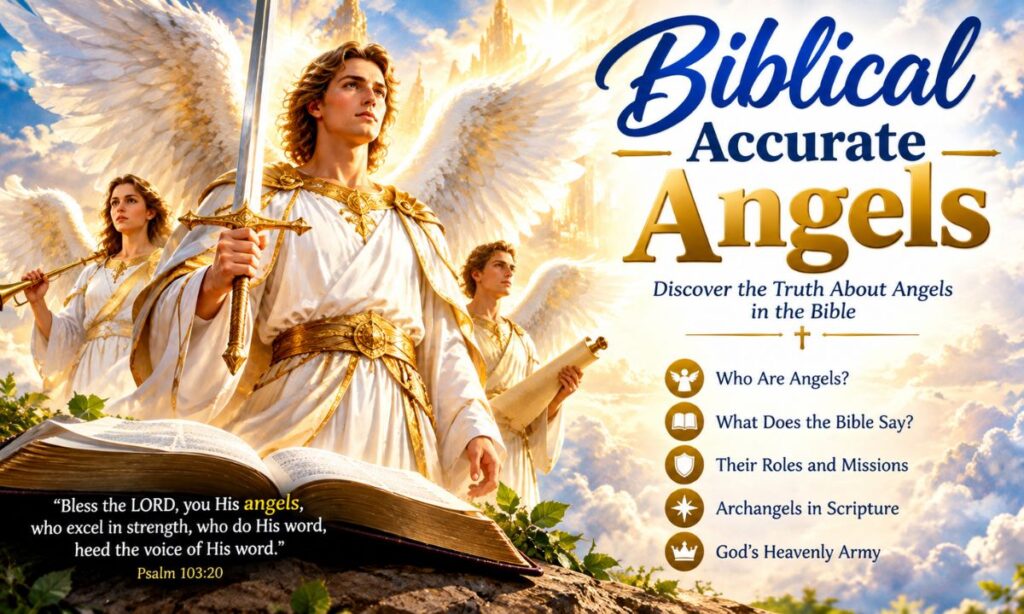
Angels are not what most people expect. Popular art shows soft, human-looking figures with feathery wings and gentle smiles. But the Bible often paints a very different picture. Scripture describes beings that are strange, powerful, and sometimes frightening to look at. Many people who meet them in the Bible react with fear, not comfort. This gap between art and text is where our journey begins.
This list looks closely at what Scripture actually says about angels. We will explore over 230 details drawn straight from biblical passages. Some angels have many eyes or several faces. Others burn like fire or shine like polished metal. We will separate popular myths from real biblical descriptions. The goal is to see angels as the Bible presents them, not as culture has reimagined them.
Understanding true angelic descriptions can deepen your reading of Scripture. It also helps explain why humans in the Bible often fall down in awe or terror. These are not cute cherubs floating on clouds. They are messengers, warriors, and guardians tied closely to God’s presence. As you read on, expect surprises, vivid imagery, and a fresh sense of wonder about these heavenly beings.
Why “Biblical Accurate Angels” Became a Trend
- A wave of online art started showing angels as wheels of eyes and fire instead of soft, gentle figures.
Biblical Accurate Angels
- People were shocked because pop culture had taught them angels are calm, pretty beings with white feathered wings.
- Artists began pulling directly from scripture instead of centuries of paintings, statues, and greeting card imagery.
- The phrase “biblically accurate angels” spread fast because it felt like a secret the church never told anyone.
- Social media users shared these strange designs because they looked more like horror movie monsters than holy messengers.
- Curiosity grew when people realized the Bible never once describes angels as chubby babies with tiny wings.
Biblical Accurate Angels
- Many readers went straight to their Bibles to check if these wild depictions were actually true or exaggerated.
- The trend forced a bigger question: has art quietly rewritten what scripture actually says about heavenly beings.
- Younger generations especially wanted raw, unfiltered truth instead of the softened version taught in Sunday school.
- Some viewers found the accurate versions comforting because they showed a God who created wonders beyond imagination.
- Others found the images unsettling, which oddly matches how humans react to angels throughout the Bible itself.
Biblical Accurate Angels
- The trend also sparked debate among Christians about how literally these ancient descriptions should be taken today.
- Pop culture angels are simple and safe, but scripture gives something far more strange and powerful.
- This shift in imagery reflects a larger hunger for biblical literacy in a culture full of watered-down spirituality.
- People wanted to separate cultural tradition from what the actual text of the Bible communicates about angels.
- The trend also intersects with growing interest in ancient Hebrew and Christian mysticism among casual internet users.
Biblical Accurate Angels
- Many creators used real verses as captions, turning viral art into an accidental Bible study for millions.
- The visual shock value helped the topic spread far beyond typical religious or church-going audiences online.
- It reminded people that angels in scripture are warriors and messengers, not decorative holiday ornaments.
- This renewed interest is exactly why breaking down the real biblical descriptions matters so much right now.
What the Bible Actually Says Angels Look Like
- Scripture rarely gives one single universal appearance because angels seem to take different forms for different purposes.
Biblical Accurate Angels
- Some angels look like regular human men, walking, eating, and speaking with people directly and normally.
- Other angels are described with wings, fire, wheels, and multiple faces that feel almost impossible to picture.
- The word “angel” itself simply means messenger, which explains why appearance changes based on the message being delivered.
- Many biblical angels are described as shining or radiant, causing people nearby to feel immediate fear or awe.
- Their presence often triggers the phrase “fear not,” suggesting their natural appearance is overwhelming to witness.
- Angels appear as men in Genesis when they visit Abraham and later warn Lot about Sodom’s destruction.
Biblical Accurate Angels
- In Daniel and Revelation, angelic beings appear with eyes like fire and bodies described in dazzling detail.
- Ezekiel gives some of the strangest angel descriptions, including creatures with four faces and wheels covered in eyes.
- Isaiah describes six-winged beings that cover their faces because even they cannot fully look upon God.
- The Bible treats angelic appearance as something tied to rank, duty, and closeness to God’s throne.
- Lower-ranking angels who deliver messages to humans tend to look far more ordinary and approachable.
Biblical Accurate Angels
- Higher-ranking beings guarding God’s presence appear far more alien, powerful, and difficult to describe in human words.
- This variety shows that angels are not one uniform species but a category of spiritual beings with roles.
- Scripture consistently avoids soft, cute imagery, favoring descriptions rooted in power, fire, light, and divine authority.
- Understanding this variety helps explain why paintings and cartoons feel so disconnected from the original texts.
- The Bible’s descriptions were written for ancient audiences trying to process encounters beyond normal human experience.
Biblical Accurate Angels
- Because of this, translators and artists often simplified angels into shapes people could easily recognize and paint.
- Reading the original passages restores the sense of mystery and terror that early believers actually experienced.
- Once you study these texts, you realize angels were never meant to look comforting or familiar at all.
Angels Who Appear as Ordinary Men
- Some of the most famous angel encounters in the Bible involve beings who look completely and utterly human.
- In Genesis eighteen, three men visit Abraham, and he treats them as normal travelers needing food and rest.
Biblical Accurate Angels
- Abraham washes their feet and prepares a meal, unaware at first that he is hosting heavenly visitors.
- These men eat real food, walk real roads, and speak in ordinary conversation throughout the encounter.
- Later in Genesis nineteen, two angels arrive in Sodom looking like ordinary men seeking shelter for the night.
- Lot invites them into his home, again unaware that these guests are angelic beings sent to warn him.
- The men of Sodom try to assault these visitors, proving how convincingly human the angels appeared.
Biblical Accurate Angels
- Hebrews thirteen tells believers to show hospitality to strangers, noting some have entertained angels without knowing it.
- This verse suggests human-looking angels were common enough that people needed a direct warning about it.
- Angels appearing as men allowed them to interact with humans without causing panic, fear, or worship confusion.
- This disguised form let angels deliver warnings, blessings, and guidance without overwhelming the people they visited.
- It also raises an interesting question about how many “ordinary” encounters in scripture were secretly angelic visits.
Biblical Accurate Angels
- Unlike the terrifying imagery in Ezekiel or Isaiah, these angels blend in completely with everyday human life.
- This form seems reserved for direct, personal interactions rather than grand displays of heavenly power or judgment.
- The contrast shows angels are flexible beings whose appearance changes based on their specific assigned task.
- Human-form angels remind readers that divine messengers can walk among ordinary people without being noticed at all.
- This idea has fascinated believers for centuries, inspiring countless stories about hidden angelic encounters in daily life.
Biblical Accurate Angels
- It also softens the terrifying imagery elsewhere in scripture, showing angels can be gentle and approachable too.
- These accounts prove appearance in the Bible always serves purpose rather than simply looking impressive or beautiful.
- Ordinary-looking angels remind us that divine presence can hide in the most unexpected and humble moments.
Cherubim: Guardians of God’s Throne
- Cherubim are not the chubby baby angels seen on Valentine’s Day cards and Renaissance-era paintings.
- In Genesis, a cherub with a flaming sword guards the entrance to Eden after Adam and Eve are exiled.
Biblical Accurate Angels
- Ezekiel describes cherubim with four faces each: a man, a lion, an ox, and an eagle combined.
- These beings also have four wings and straight legs with feet resembling the sole of a calf’s foot.
- Their bodies reportedly gleam like polished bronze, giving them a metallic, otherworldly appearance unlike anything human.
- Cherubim are closely associated with guarding sacred spaces, including Eden and the throne room of God himself.
- Two golden cherubim statues sit atop the Ark of the Covenant, their wings stretching over the mercy seat.
Biblical Accurate Angels
- This placement shows cherubim were seen as protectors of God’s presence and holiness within Israelite worship.
- Their multiple faces likely symbolize complete awareness, seeing every direction at once without needing to turn.
- Ezekiel’s vision links cherubim directly to wheels covered in eyes, tying these two angelic descriptions together.
- Unlike common imagery, cherubim in scripture are intimidating guardians rather than sweet, harmless companions.
- Their role centers on protection, judgment, and maintaining the boundary between holy and unholy spaces.
Biblical Accurate Angels
- The idea of a cherub blocking Eden shows their function as enforcers of divine decisions and boundaries.
- Ancient Near Eastern art shows similar guardian creatures, suggesting cherubim reflect real cultural imagery of the time.
- This context helps explain why cherubim were carved onto temple walls and woven into temple curtains.
- Their fearsome design served as a visual reminder that God’s presence demands reverence and careful approach.
- Modern depictions strip away this power, turning fierce guardians into decorative, harmless infant figures instead.
- Returning to the original text restores their true identity as powerful protectors of sacred divine space.
Biblical Accurate Angels
- Cherubim remind readers that holiness is guarded seriously, not casually decorated with soft, cute imagery.
- Their description alone proves how far modern art has drifted from the Bible’s original angelic imagery.
Seraphim: The Six-Winged Burning Ones
- Seraphim appear directly in Isaiah’s vision of God’s throne room, described in vivid and overwhelming detail.
- The word “seraph” is connected to burning, suggesting these beings radiate intense heat, light, or fiery energy.
- Isaiah describes seraphim with six wings: two covering their faces, two covering their feet, two used for flying.
Biblical Accurate Angels
- Covering their faces suggests even these powerful beings cannot fully gaze upon God’s overwhelming glory and holiness.
- Covering their feet may symbolize humility or reverence while standing directly in God’s holy presence.
- Seraphim are shown calling out “holy, holy, holy” continuously, emphasizing God’s complete and perfect holiness.
- Their voices are described as so powerful that the temple’s foundations shake and doorposts physically move.
- One seraph takes a burning coal from the altar and touches Isaiah’s lips to cleanse his sin.
Biblical Accurate Angels
- This act shows seraphim serve a purifying role connected closely to fire, judgment, and holiness itself.
- Unlike cherubim, seraphim appear only rarely in scripture, making their imagery even more mysterious and striking.
- Their association with fire suggests a burning intensity that would be dangerous for humans to witness directly.
- Seraphim’s six wings differ from the traditional two-wing imagery seen in most popular angel artwork today.
- This detail alone proves how disconnected common depictions are from the actual biblical description given.
Biblical Accurate Angels
- Their constant worship suggests seraphim exist primarily to glorify God rather than deliver messages to humans.
- This makes them different in function from the messenger angels who appear as ordinary men elsewhere.
- Seraphim represent the terrifying beauty of God’s throne room, far removed from any gentle, comforting image.
- Their description forces readers to reconsider what “heavenly beauty” truly means within a biblical worldview.
- Artists attempting biblically accurate seraphim often depict fiery, wing-covered figures that feel closer to horror imagery.
Biblical Accurate Angels
- This reaction shows how far removed modern comfort is from the raw power described in Isaiah’s vision.
- Seraphim remind believers that God’s holiness is not soft or safe but blazing, intense, and world-shaking.
Ophanim: The Wheels Within Wheels
- Ophanim, often called “wheels,” come directly from Ezekiel’s vision beside the four living creatures near God’s throne.
- Ezekiel describes wheels within wheels, moving together in perfect coordination without ever needing to turn separately.
- These wheels are described as tall, awe-inspiring, and completely covered with eyes around their entire rim.
Biblical Accurate Angels
- The presence of eyes suggests complete awareness, watching every direction constantly without any blind spots at all.
- Ophanim move wherever the spirit leads them, showing complete obedience and connection to God’s divine will.
- Their sound is described as loud, like rushing water or an army, whenever they move together.
- This imagery is unlike almost anything found in modern angel art, cartoons, or popular religious imagery today.
- Many biblically accurate angel illustrations focus heavily on ophanim because they look so strange and mechanical.
Biblical Accurate Angels
- The eye-covered wheel design has become one of the most viral images tied to this entire trend.
- Scholars debate whether ophanim are angels themselves or symbolic elements tied closely to the throne of God.
- Regardless of classification, their description reinforces how alien and overwhelming God’s throne room truly appears.
- Ophanim appear alongside cherubim, suggesting a connected system of guardianship, mobility, and awareness around God’s presence.
- Their wheel-like form may represent constant motion, showing God’s presence is active and never static or still.
Biblical Accurate Angels
- This imagery contrasts sharply with peaceful, floating angel depictions common in traditional religious paintings.
- Ezekiel’s vision as a whole reads more like an encounter with something beyond human comprehension entirely.
- The prophet even struggles to describe what he sees, using comparisons instead of direct, simple description.
- This struggle shows the vision exceeded normal human language and understanding at the time it was written.
- Ophanim remind readers that biblical angels often defy simple categorization or comfortable artistic representation.
Biblical Accurate Angels
- Their strange design has helped fuel renewed interest in reading Ezekiel’s original prophetic text directly.
- Understanding ophanim helps explain why “biblically accurate” angel art looks so shocking to modern audiences.
Types of Angels in the Bible: Quick Comparison
- Angels in scripture are not one single category but include several distinct types with different roles.
- Cherubim guard sacred spaces and appear with four faces, four wings, and bronze-like gleaming skin.
- Seraphim surround God’s throne, have six wings, and continuously proclaim his holiness through worship and fire.
Biblical Accurate Angels
- Ophanim appear as wheels covered in eyes, closely tied to movement and awareness around God’s throne.
- Archangels like Michael and Gabriel carry out major missions, battles, and important divine announcements to humanity.
- Messenger angels often appear in human form, delivering warnings, blessings, or guidance directly to specific people.
- The four living creatures in Revelation combine features similar to cherubim, tied closely to worship and judgment.
- Watchers, mentioned briefly in Daniel, appear connected to observation and reporting within heavenly courts.
- Each type seems ranked by closeness to God’s throne, with fiery beings closest and human-form angels furthest.
Biblical Accurate Angels
- This ranking helps explain why appearances range from ordinary men to terrifying, multi-winged creatures of fire.
- Comparing these types shows the Bible presents a structured, organized heavenly hierarchy rather than a single angel type.
- Popular culture often flattens all these categories into one generic image of a winged, glowing figure.
- Scripture instead offers rich variety, each type suited to a specific divine function or assigned purpose.
- Understanding these categories helps readers recognize references throughout the Bible that are often overlooked or missed.
Biblical Accurate Angels
- It also explains why biblically accurate art varies so widely depending on which angel type is depicted.
- Some types focus on worship, others on protection, and others on direct communication with human beings.
- This comparison reveals a far more complex angelic world than most casual Bible readers ever realize.
- Recognizing these differences adds depth to Bible study, especially in prophetic books like Ezekiel and Revelation.
- Each type reinforces the same core idea that angels exist to serve and glorify God completely.
Biblical Accurate Angels
- This quick comparison offers a helpful map for exploring deeper into each individual angelic category later.
Common Myths the Bible Corrects
- Myth one claims all angels have two feathered wings, but scripture describes wing counts ranging from two to six.
- Myth two claims angels are always gentle and comforting, though many biblical encounters cause immediate fear and trembling.
- Myth three claims humans become angels after death, an idea never supported anywhere within the biblical text.
- Myth four claims cherubim are cute baby-like figures, though Ezekiel describes them as powerful four-faced guardians.
Biblical Accurate Angels
- Myth five claims all angels look human, ignoring the wheel-like, fiery, and multi-eyed beings described in prophecy.
- Myth six claims angels have halos, an artistic addition never actually mentioned anywhere within scripture itself.
- Myth seven claims female angels are common, though the Bible never explicitly assigns gender to angelic beings.
- Myth eight claims guardian angels protect only good people, though scripture shows angels serving God’s purposes broadly.
- Myth nine claims Satan is a red creature with horns, an image with no direct biblical description at all.
Biblical Accurate Angels
- Myth ten claims angels sing constantly, though scripture more often describes them speaking, warning, or delivering direct messages.
- These myths largely developed through centuries of art, literature, and popular culture rather than scripture itself.
- Correcting these myths helps readers approach biblical angels with fresh eyes instead of inherited cultural assumptions.
- Many myths softened frightening imagery into something more comfortable for casual, non-serious religious consumption.
- This softening created a gap between what people believe and what the original biblical text actually says.
Biblical Accurate Angels
- Reading Ezekiel, Isaiah, and Revelation directly quickly dismantles many of these long-standing cultural myths.
- Understanding these corrections helps explain why the “biblically accurate” trend felt so shocking to so many people.
- It also shows how important it is to return directly to scripture rather than relying on tradition.
- These corrections do not diminish angels but instead restore their true, powerful, and awe-inspiring biblical identity.
- Myths often make angels smaller and safer than scripture ever intended them to be.
Biblical Accurate Angels
- Clearing up these myths gives readers a much richer, more accurate picture of the heavenly realm.
Named and Ranked Angels in Scripture
- Michael is described as an archangel and a powerful warrior who leads God’s forces against evil.
- Daniel describes Michael as a “great prince” who stands guard specifically over the people of Israel.
- Gabriel appears as a messenger angel, delivering major announcements to figures like Daniel, Zechariah, and Mary.
- Gabriel’s appearances are tied closely to major turning points in biblical history and prophecy.
Biblical Accurate Angels
- Lucifer, meaning “morning star,” is often associated with a powerful angel who later rebels against God.
- This rebellion narrative, though debated, shapes much of Christian understanding of fallen angels and spiritual conflict.
- Revelation mentions Michael leading angels in battle against a dragon identified as Satan himself.
- Some traditions also reference Raphael, though his role appears more clearly in extra-biblical Jewish texts.
- Archangels appear to hold higher authority, often leading other angels during major spiritual conflicts or missions.
Biblical Accurate Angels
- Named angels are relatively rare in scripture compared to the many unnamed messenger and guardian angels.
- This rarity suggests named angels hold especially significant roles within God’s broader plans and purposes.
- Ranking among angels seems tied to closeness to God’s throne and the importance of assigned tasks.
- Michael’s role as a warrior contrasts with Gabriel’s role as a communicator and divine messenger.
- These differences show angelic hierarchy includes specialized roles rather than one single, generic angelic function.
- Fallen angels, including demons, are described as former heavenly beings who rebelled against God’s authority.
Biblical Accurate Angels
- This rebellion explains why scripture treats spiritual warfare as a real, ongoing conflict between good and evil.
- Named and ranked angels give structure to what could otherwise feel like a vague, mysterious spiritual realm.
- Studying these figures helps readers understand key moments throughout both Old and New Testament narratives.
- Their appearances often mark pivotal, world-changing events within the overall biblical storyline and prophecy.
- Understanding these names adds clarity to often-confusing angelic references scattered throughout scripture.
Biblical Accurate Angels
Key Bible Verses About Angels (KJV)
- Genesis eighteen describes three men visiting Abraham, later understood as angelic messengers bringing important news.
- Genesis nineteen shows two angels warning Lot before Sodom’s destruction, appearing fully as ordinary men.
- Isaiah six describes seraphim above God’s throne, each having six wings and calling out continuously.
- Ezekiel one describes four living creatures with four faces, four wings, and wheels covered completely in eyes.
- Ezekiel ten connects these creatures directly to cherubim, describing their movement alongside blazing coals of fire.
Biblical Accurate Angels
- Daniel ten describes an angel with a body like beryl, a face like lightning, and eyes like fire.
- Daniel twelve mentions Michael as the great prince who stands watch over Daniel’s people.
- Luke one describes Gabriel appearing to Zechariah and later to Mary, announcing major prophetic news.
- Hebrews thirteen reminds believers to show hospitality, since some have entertained angels without realizing it.
- Revelation four describes four living creatures surrounding God’s throne, full of eyes and constant worship.
Biblical Accurate Angels
- Revelation twelve describes Michael leading angels in battle against a dragon identified as Satan.
- Psalm ninety-one references angels guarding believers, protecting them in all their ways according to God’s promise.
- Matthew twenty-eight describes an angel with an appearance like lightning and clothing white as snow.
- These verses together paint a picture far more complex than simple, generic winged figures.
- Reading these passages directly helps separate cultural assumptions from the Bible’s actual descriptive language.
Biblical Accurate Angels
- Each verse offers unique details that, combined, create a fuller picture of angelic appearance and purpose.
- Many of these passages are frequently referenced in discussions about biblically accurate angel imagery online.
- Studying them in context helps readers avoid misinterpreting isolated verses outside their full biblical setting.
- These key verses serve as a strong starting point for anyone wanting deeper personal Bible study.
- Returning to KJV language also preserves some of the poetic, awe-filled tone found in original translations.
Biblical Accurate Angels
What do angels really look like according to the Bible
- According to scripture, angels take multiple forms depending on their specific role and divine assignment.
- Some appear as ordinary men, walking and speaking naturally without any dramatic or frightening presence.
- Others appear as fiery, multi-winged beings whose presence alone causes fear, trembling, or physical collapse.
- Ezekiel and Isaiah offer the most detailed, overwhelming descriptions found anywhere within the biblical text.
- These descriptions include wheels covered in eyes, multiple faces, and wings that cover both face and feet.
Biblical Accurate Angels
- The common thread across all descriptions is power, awe, and a presence far beyond normal human experience.
Angels in human form in the Bible
- Angels frequently appear as ordinary men throughout both Old and New Testament narratives and stories.
- Abraham hosts three men who turn out to be divine messengers delivering important prophetic news.
- Lot welcomes two angels disguised as travelers seeking shelter before Sodom’s eventual destruction.
- These human-form angels eat, speak, and interact naturally without revealing their true heavenly identity immediately.
Biblical Accurate Angels
- Hebrews thirteen directly warns believers that strangers shown hospitality might actually be angels in disguise.
- This human disguise allowed angels to interact personally without overwhelming the people they visited.
Can angels take human form Bible
- Yes, scripture clearly shows angels appearing convincingly as regular human men on multiple occasions.
- Genesis eighteen and nineteen both feature angels who look, speak, and act completely human.
- These angels are only recognized as heavenly beings after their identity becomes clear through actions or context.
Biblical Accurate Angels
- This ability shows angels are flexible spiritual beings capable of adapting appearance for specific purposes.
- Hebrews thirteen reinforces this idea, warning that unknown guests might secretly be angelic visitors.
- This biblical pattern strongly supports the idea that human-form angelic appearances are entirely possible.
Why do angels look scary
- Angels often appear frightening because their true nature reflects overwhelming holiness and divine power.
- Their first words to humans are frequently “fear not,” showing fear is a natural, expected reaction.
Biblical Accurate Angels
- Descriptions involving fire, multiple wings, many eyes, and shining bodies naturally overwhelm normal human senses.
- This fear reflects humanity’s limited ability to process something entirely outside normal physical experience.
- Scripture treats this fear as reasonable, never scolding people for reacting strongly to angelic presence.
- Their appearance reminds readers that holiness itself can feel intense, powerful, and difficult to fully comprehend.
Angels in human form Bible verses
- Genesis eighteen describes three men visiting Abraham who are later understood to be angelic messengers.
- Genesis nineteen describes two angels appearing as men before warning Lot about Sodom’s destruction.
Biblical Accurate Angels
- Hebrews thirteen encourages hospitality toward strangers, noting some have entertained angels without realizing it.
- Judges thirteen shows an angel appearing to Manoah and his wife, initially mistaken for a man.
- These verses together confirm human-form angelic appearances occur multiple times throughout biblical history.
- Studying them directly shows this pattern is consistent rather than a single isolated biblical event.
Do angels appear in human form in the Bible
- Yes, multiple biblical passages confirm angels appearing convincingly as ordinary human men.
Biblical Accurate Angels
- These appearances allowed angels to deliver messages, warnings, or blessings without causing immediate fear or panic.
- Abraham, Lot, and Manoah’s family all experience angels who initially appear completely human.
- Their true identity is often revealed only after specific actions, statements, or miraculous confirmations occur.
- This pattern shows human form serves a practical, relational purpose within specific biblical narratives.
- It remains one of the clearest, most repeated examples of angelic appearance throughout scripture.
Biblical Accurate Angels
Angels in human form quotes
- Genesis eighteen states that Abraham looked up and saw three men standing near him.
- Genesis nineteen describes two angels arriving at Sodom in the evening, appearing as ordinary travelers.
- Hebrews thirteen reminds readers that some have entertained angels unaware while showing hospitality to strangers.
- These passages consistently describe angels using normal human language like “men” rather than heavenly terms.
- This word choice reinforces just how convincingly human these angelic appearances truly were.
Biblical Accurate Angels
- Exploring these passages directly offers the clearest biblical evidence for angels appearing as people.
What do angels look like according to Revelation
- Revelation describes angels using powerful, dramatic imagery tied closely to fire, light, and authority.
- Some angels appear with faces like the sun and legs like blazing pillars of fire.
- Others are shown holding trumpets, bowls, or swords, symbolizing judgment and major prophetic events.
- The four living creatures surrounding God’s throne are covered completely in eyes and constantly worship him.
Biblical Accurate Angels
- These descriptions emphasize overwhelming power rather than gentle, comforting imagery common in popular culture.
- Revelation’s angelic imagery reinforces the Bible’s consistent theme of awe-inspiring, powerful heavenly beings.
Why Angels Look So Overwhelming in Scripture
- Angels exist primarily in God’s direct presence, absorbing and reflecting his overwhelming holiness and power.
- Their appearance often mirrors elements associated with God himself, including fire, light, and radiant glory.
- This connection explains why encounters frequently leave people trembling, falling down, or physically overwhelmed.
Biblical Accurate Angels
- Scripture treats angels as messengers of a holy God, not simply pleasant spiritual companions or decorations.
- Their overwhelming appearance reinforces the seriousness and weight of the messages they are sent to deliver.
- Isaiah, Ezekiel, and Daniel all describe reactions of fear, weakness, or collapse during angelic encounters.
- This consistent reaction shows overwhelming appearance is intentional rather than accidental or exaggerated storytelling.
- Angels often need to immediately reassure people, saying “fear not,” before delivering their actual message.
Biblical Accurate Angels
- This pattern suggests their natural appearance alone is enough to terrify unprepared human witnesses.
- The intensity reflects the seriousness of operating directly within God’s holy, powerful presence and authority.
- Modern audiences find these descriptions shocking because centuries of art softened this original biblical intensity.
- Restoring this imagery helps readers understand why biblical writers used dramatic, almost indescribable language.
- Their overwhelming nature also reinforces the vast gap between human limitation and divine power.
Biblical Accurate Angels
- This gap is a recurring theme throughout scripture, especially in prophetic and apocalyptic literature.
- Understanding this overwhelming nature deepens appreciation for the courage angels required to approach humans directly.
- It also highlights why God’s reassurance often accompanies these encounters throughout biblical history.
- This overwhelming imagery ultimately points back to God’s own limitless power and holiness.
- Angels reflect glory rather than possess it independently, acting as messengers of something far greater.
Biblical Accurate Angels
- Recognizing this helps modern readers approach angelic imagery with renewed reverence instead of casual comfort.
- This overwhelming portrayal remains one of the most compelling reasons the biblical accuracy trend spread so widely.
How This Changes the Way We Picture Angels
- Learning these details shifts angels from decorative symbols into powerful, purposeful spiritual beings with real function.
- It becomes harder to picture angels as simple, cute figures once their full biblical descriptions are understood.
- This shift encourages readers to approach angelic imagery with more reverence, curiosity, and careful biblical study.
Biblical Accurate Angels
- Understanding variety among angel types helps explain confusing or overwhelming passages found throughout prophetic scripture.
- This new perspective also deepens appreciation for God’s creativity in designing such diverse heavenly beings.
- Readers often find their faith strengthened after realizing scripture contains far richer imagery than expected.
- This shift also encourages believers to read entire books like Ezekiel and Revelation more carefully.
- Understanding true angelic appearance helps separate personal assumptions from what scripture actually communicates directly.
- This deeper understanding often leads to greater respect for God’s holiness and overwhelming power.
Biblical Accurate Angels
- It also helps explain why biblical writers struggled to fully describe what they were witnessing.
- This renewed perspective makes Bible study feel more exciting, mysterious, and genuinely rewarding to explore.
- It challenges long-held cultural assumptions built more on art history than actual scriptural text.
- This shift ultimately draws readers closer to the original intended meaning behind these ancient passages.
- Many people report feeling both more amazed and more reverent after learning these accurate descriptions.
Biblical Accurate Angels
- This change in perspective also affects how believers imagine spiritual warfare and heavenly authority overall.
- It reinforces that angels serve God’s purposes rather than existing simply for human comfort or decoration.
- This shift encourages ongoing curiosity, pushing readers toward deeper theological study and honest scriptural reflection.
- Ultimately, this new picture of angels feels more consistent with the God described throughout scripture.
- It replaces soft, familiar imagery with something far more mysterious, powerful, and spiritually significant.
Biblical Accurate Angels
- This lasting change in perspective is likely why the biblically accurate angel trend continues growing today.
Frequently Asked Questions
Why do angels appear as men?
Angels appear as men to interact naturally with humans without causing fear. This form allowed direct, personal communication during important biblical events.
What are the 9 types of angels?
Traditional Christian angelology lists nine ranks: seraphim, cherubim, thrones, dominions, virtues, powers, principalities, archangels, and angels. This system comes from later theology, not a single Bible passage.
Who are the top 7 strongest angels?
Named archangels like Michael and Gabriel are considered among the most powerful in scripture and tradition. Extra-biblical Jewish texts add names like Raphael and Uriel to this group.
Who are the 13 fallen angels?
The Bible does not list exactly thirteen fallen angels by name. Extra-biblical texts like the Book of Enoch provide more detailed names and numbers.
Biblical Accurate Angels
Who is God’s highest angel?
Michael is often considered the highest-ranking angel, described as a great prince and powerful warrior. He leads God’s forces in both Daniel and Revelation.
What are the 72 names of angels?
This number comes from later Jewish mystical tradition, not directly from the Bible itself. It relates to interpretations of God’s name found in Kabbalistic texts.
Are there any female angels?
The Bible never assigns clear gender to angels, generally referring to them using male pronouns. Angels are spiritual beings, not physical, gendered creatures like humans.
What are 7 signs that angels are with you?
Common signs people describe include sudden peace, unexplained protection, timely warnings, and a strong sense of comfort during hardship. Scripture supports angelic protection but does not list exact signs.
Why can’t God forgive angels?
Scripture suggests fallen angels made a permanent, deliberate rebellion against God’s authority. Unlike humans, angels are not offered the same path of redemption described in the Bible.
Biblical Accurate Angels
Conclusion
Scripture paints a picture of angels that is far bigger than popular imagination. These are not soft, winged humans floating peacefully in the clouds. They are wheels within wheels, eyes covering wings, faces of lions and oxen, and bodies bright as fire. Such descriptions remind us that angels belong to a realm beyond our normal senses. Their strangeness is not meant to scare us away from faith. Instead, it points to the vast difference between heaven and earth.
Looking closely at these 230-plus details helps us read the Bible with new eyes. We see why people fell down in fear before these beings. We also understand why angels so often say, “Do not be afraid.” Their true appearance reflects God’s power, order, and holiness. This deeper view does not remove wonder from angels; it adds to it. May this study encourage you to read Scripture more carefully and marvel at the beings God created to serve and worship Him.
